Bell Canada Expands Data Centre in Saskatchewan Amid Local Opposition
📅 Today
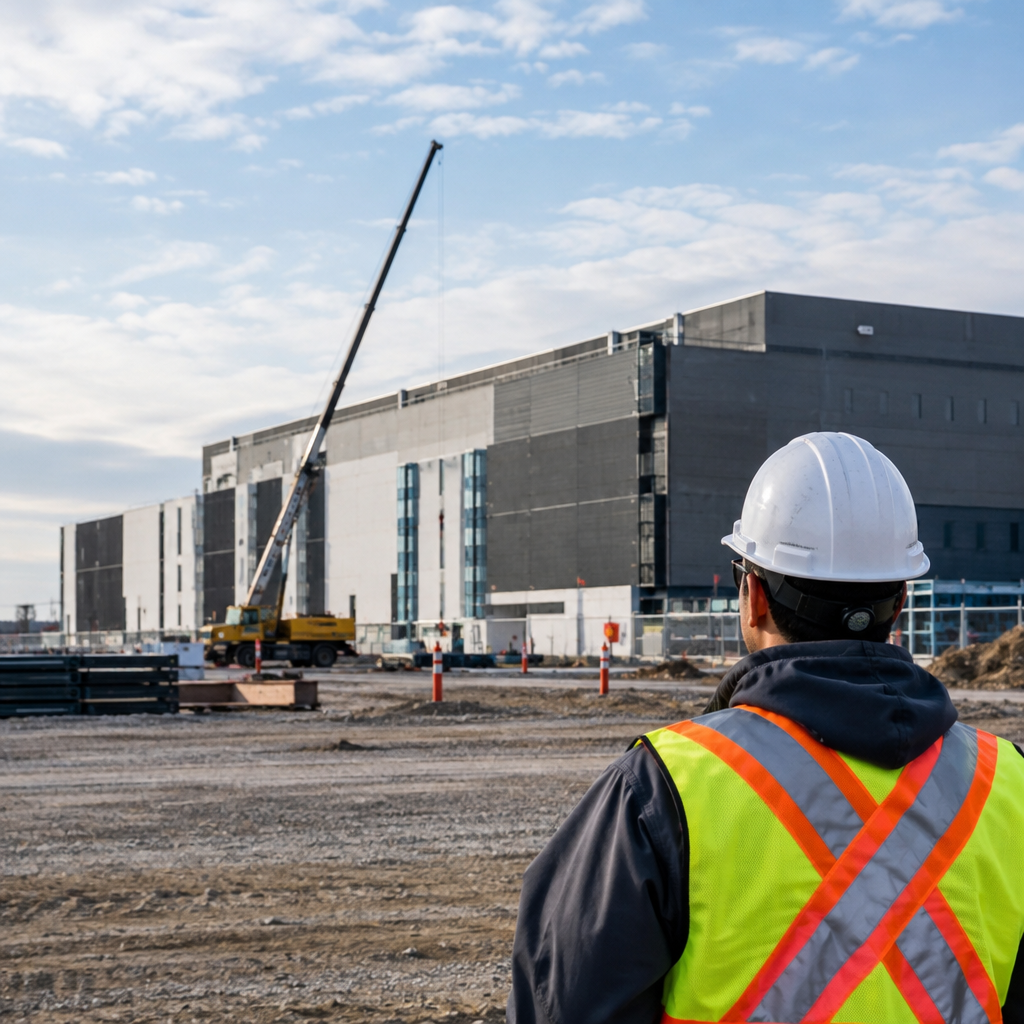
Bell Canada faces community opposition as it expands its data centre project in Saskatchewan, despite claiming significant economic benefits and job creation for the region.
REGINA — Bell Canada’s parent company is actively addressing local tensions surrounding the expansion of its proposed data centre in Saskatchewan. During a recent earnings call, BCE Inc. CEO Mirko Bibic highlighted the economic advantages of the Bell AI Fabric Data Centre, which is currently under construction on Park St in Regina. Bibic emphasized that the $50-billion project, located just south of Regina, is expected to generate substantial economic activity, bringing over 1,100 workers to the site. However, he acknowledged that there is opposition from certain local communities, stating, "We can’t lose sight of the broader endorsement of this project and at the same time, we do have to address the concerns that are arising in some segments." He reassured stakeholders that the company is working diligently to address these concerns, noting that the broader community in Regina and the Regional Municipality of Sherwood is largely supportive of the initiative.In a significant development, Bell announced in September that it would increase the size of the project fourfold, potentially enhancing its capacity to 1.2 gigawatts. This announcement was made in the presence of Prime Minister Mark Carney and Saskatchewan Premier Scott Moe at Canada’s inaugural investment summit. The completion of this expanded project is projected to create up to 600 permanent operations and management positions, along with an additional 3,000 jobs in the surrounding community. The initial construction phase, which encompasses 300 megawatts of capacity, is currently underway, with the first data hall anticipated to be operational by the first half of 2027.
Environmental concerns have been raised by the Standing Buffalo Dakota Nation, situated approximately 75 kilometers northeast of Regina. Chief Rodger Redman recently expressed concerns regarding the construction of the data centre on their unceded traditional territory. In a letter to Bell, Redman requested technical reports and approval records to conduct an independent review of the project's potential environmental impacts. In response, Bell provided information regarding the data centre's environmental considerations, including aspects related to water use, cooling systems, and power generation. They also encouraged a meeting with Redman to further discuss these issues, although Redman has indicated that the information provided remains insufficient.
Despite the opposition, Bibic highlighted the support from the George Gordon First Nation, located north of Regina. He noted that Bell is collaborating with this First Nation to ensure that the community benefits from employment opportunities and other co-development initiatives. Bibic also underscored Bell’s commitment to adhering to the principles for responsible AI data centre development established by both federal and provincial governments. "We signed on to them and we plan to continue to respect them in how we operate and how we build and how we manage environmental issues," he stated.
The project is central to Bell’s strategic shift towards technology services, with a strong focus on AI-driven solutions. BCE reported that its business markets revenue, which includes income from both telecom and AI services, reached $1.12 billion in the third quarter, marking a 9.2 percent increase from the previous year. This growth was significantly driven by a 41 percent surge in revenue from AI-powered solutions, attributed to heightened demand for its Ateko and Bell Cyber brands.
In the same earnings report, BCE disclosed a third-quarter profit of $630 million, or 67 cents per share, down from a profit of $4.50 billion, or $4.84 per share, reported in the same quarter the previous year. The decline was largely due to the sale of its minority stake in Maple Leaf Sports & Entertainment to Rogers Communications, which significantly inflated last year’s figures. On an adjusted basis, BCE reported earnings of 74 cents per share, a slight decrease from 79 cents in the previous year, with operating revenue rising to $6.18 billion from $6.05 billion.
Last month, BCE announced a deal to sell a 49.9 percent stake in a new company that will manage its wireless towers to Quebec investment manager La Caisse for $2.45 billion. This transaction, expected to finalize in early 2027, aims to enhance BCE’s balance-sheet flexibility and support AI deployment in Saskatchewan. Scotiabank analyst Maher Yaghi remarked that the proceeds from wireless and tower asset divestitures will likely facilitate additional data centre expansion, potentially leading to the anticipated 1.2 gigawatts capacity.
Additionally, BCE is involved in two other pending transactions, including the sale of its land mobile radio networks services business to Motorola Solutions for $675 million, expected to close in the first half of next year. The other potential transaction involves the sale of Northwestel Inc. to a consortium of northern Indigenous communities, valued at $1 billion, which was announced in 2024. However, BCE has indicated that this deal may undergo restructuring, potentially altering its terms and completion timeline.
On the telecom front, BCE reported a net gain of 24,110 postpaid mobile subscribers in the third quarter, a significant increase from 11,511 net activations in the same period last year. This growth is attributed to customers transitioning from prepaid services, new subscribers resulting from a long-term government contract, and a reduction in customer churn, which improved to 1.06 percent, the lowest third-quarter level in four years. Bell also noted a decline in average revenue per user to $57.07, down 1.7 percent from the previous year, influenced by the CRTC's prohibition on certain customer fees that took effect in June. The regulator's ban on activation and cancellation fees has faced pushback from Bell, Rogers, and Telus, which have introduced fees that the CRTC has suggested may violate the new regulations. Should violations be confirmed, companies could face penalties up to $10 million. Bibic criticized the regulatory framework, asserting that it hampers major carriers' ability to invest in network infrastructure, stating, "It’s unfortunate because you are seeing the tremendous impacts those decisions over the last several years have had on the direct investments that the larger players have been making. They’ve shrunk dramatically."
🏷️
environmental concerns
data centres
telecom
Saskatchewan
Construction
job creation
Indigenous relations
AI technology
economic impact
Bell Canada
Related Posts