Dancor Construction Secures Permit for Highbury Industrial Park in London, Ontario
📅 Today
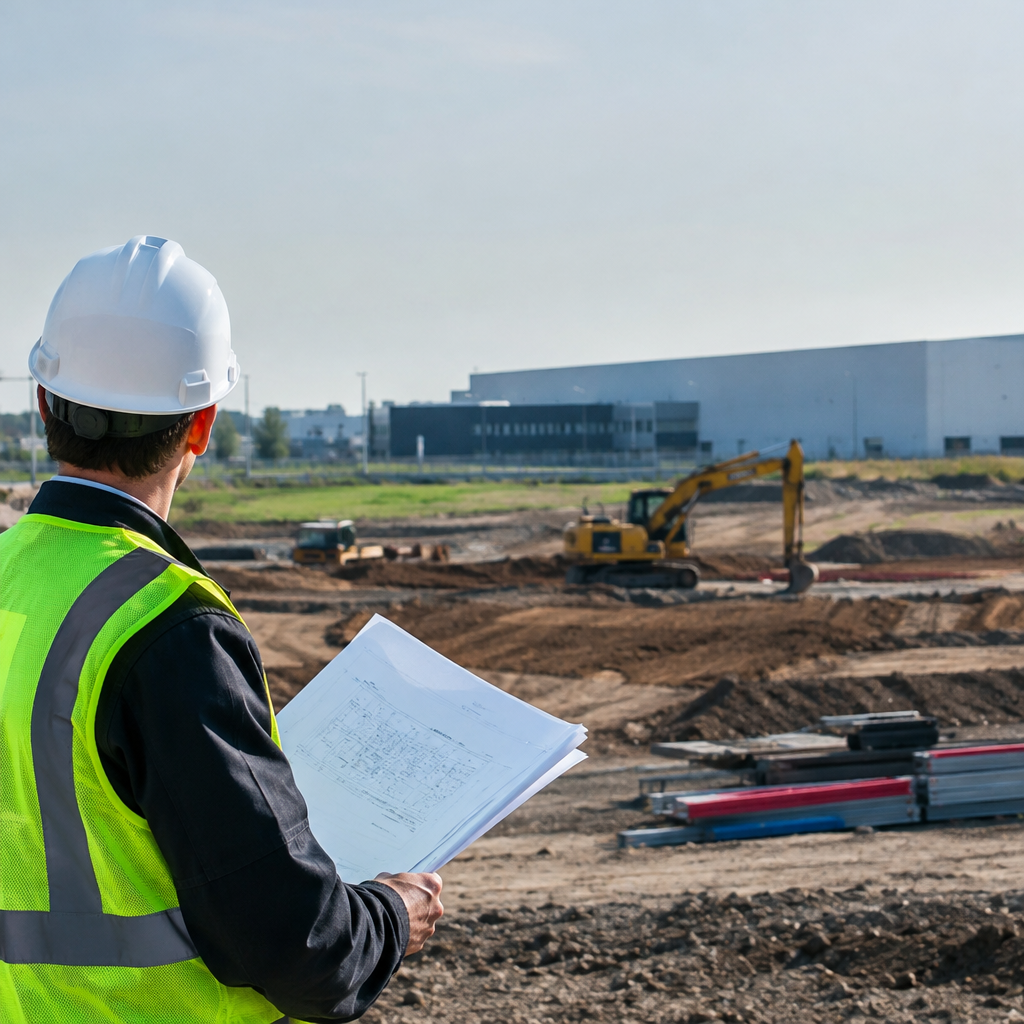
Dancor Construction Ltd. has received a provincial permit to expedite the development of an industrial park in London, Ontario, aimed at servicing the nearby Volkswagen PowerCo battery plant and supporting local industries.
Dancor Construction Ltd., the largest industrial landlord in London, Ontario, has successfully obtained a provincial ministerial permit to expedite the development of a 23-hectare (57-acre) industrial park. The company, headquartered in Brampton and with additional offices in London and Sudbury, anticipates that construction on eight buildings of varying sizes will commence in the spring of next year, with completion expected by 2030.The new site, located along Highbury Avenue, is strategically positioned one kilometer south of Highway 401 and 11 kilometers north of St. Thomas, where the $13.2 billion Volkswagen (VW) PowerCo Canada battery plant is currently under development, albeit facing a two-year delay due to market conditions and advancements in next-generation technology.
The decision to establish the industrial park has sparked controversy, as some city officials in London have expressed concerns that there are already enough industrial parks within the city's designated growth boundary. The Highbury Industrial Park, officially titled the Highbury Road Multi-Building Development, is being constructed on farmland—a point that has raised eyebrows among local stakeholders.
The provincial ministerial order allows Dancor to bypass certain planning and public consultation processes, thereby condensing the timeline for the project. Sean Ford, the owner of Dancor Construction Ltd., has expressed a favorable view of the location, citing its proximity to major highways as beneficial for logistics, allowing tandem trailers to transport more products with less trucking.
While the primary focus of the industrial park is to support the VW PowerCo battery plant, Ford emphasizes that it will also cater to emerging industries in London. He acknowledges that there are zoned industrial lands available within the city’s traditional boundaries, but he argues that many of these sites are not ready for immediate development and that large-scale sites are particularly scarce.
The buildings planned for the park will vary in size from 25,000 to 300,000 square feet and are intended for a wide range of uses, including manufacturing, research and development, and logistics—essentially encompassing the spectrum of industrial support needed for both London and St. Thomas.
Ford highlighted that London is experiencing an industrial “renaissance,” further fueled by announcements from companies like Canada Rocket Company, which aims to establish rocket technologies in the area. The burgeoning military and critical minerals sectors are also contributing to the demand for industrial space, with several companies in London supplying defense contractors across Canada.
Currently, the only physical work completed on the site has been the removal of topsoil, with site plan approval and servicing anticipated over the winter months. Although two companies have shown interest in leasing space within the park, Ford is unable to disclose their identities due to non-disclosure agreements.
Dancor Construction Ltd. boasts a robust track record as the largest industrial landlord in London, with properties extending throughout Ontario and across Canada. Ford has praised the city for its efficient permitting process, stating, "Permitting is super easy. You don’t have to wait for months or years to get site plan approval as we’ve had to do in the GTA." He also appreciates the region's skilled workforce, noting, "A good group of trades."
City councillors have had mixed reactions to the development. Ward 14 councillor Steven Hillier has reportedly voiced support for the project, stating that the Highbury corridor requires development and this marks the initial phase. In contrast, Councillor Sam Trosow has raised concerns about the respect for farmland being compromised. Neither councillor responded to requests for follow-up comments.
Martin Straathof, the executive director of the Ontario Farmland Trust, clarified that while he was not opposed to the ministerial permit, his organization holds concerns regarding the ongoing loss of farmland in Ontario and the cumulative effects of converting agricultural land to non-agricultural uses.
🏷️
manufacturing
warehouse
industrial park
Construction
London Ontario
agricultural land
real estate development
Dancor Construction
logistics
Volkswagen PowerCo