
British Columbia's Construction Forecast Predicts Declines in Residential Sector, Growth in Non-Residential by 2035
📅 3 months ago
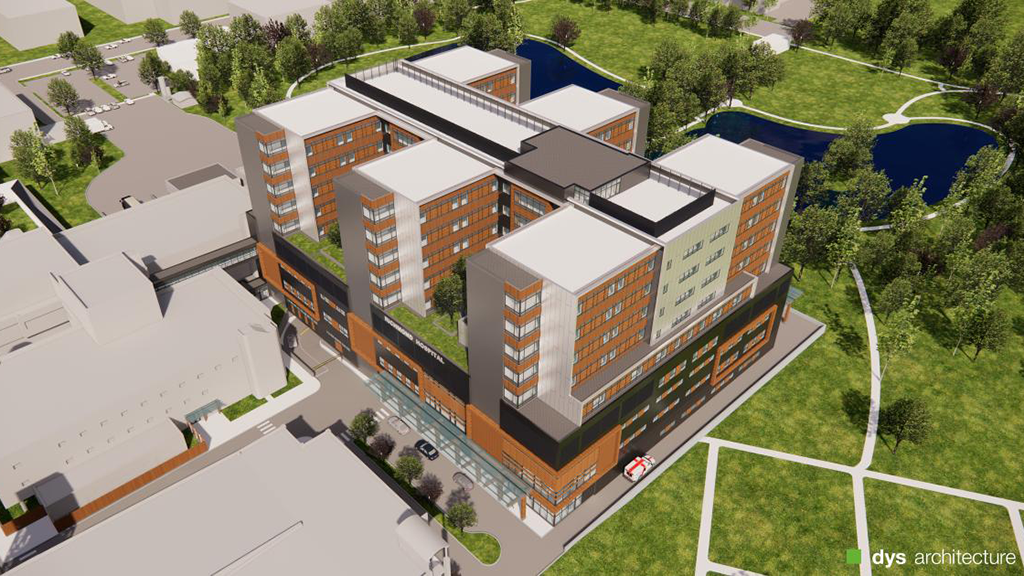
BuildForce Canada has released its annual report on the construction outlook for British Columbia, forecasting a decline in residential construction and a near-term peak in non-residential activity until 2030.
BuildForce Canada has unveiled its annual Construction and Maintenance Looking Forward reports, focusing on the residential and non-residential construction sectors in British Columbia for the period spanning 2026 to 2035. This report indicates a concerning trend for both sectors, particularly emphasizing a downturn in residential construction activity throughout most of the decade. Meanwhile, non-residential construction is projected to reach a near-term peak before experiencing a decline post-2030.The report highlights that the residential sector is primarily impacted by a diminishing demand for new-home construction. "Housing starts, which peaked in 2023 due to high levels of international migration, are expected to experience a significant drop in the early years of the forecast period. By 2029 to 2033, these starts will likely fall to below historical averages, with single-detached units being the most affected," the report states.
By the year 2035, employment within the residential construction sector is expected to contract by 13 percent compared to 2025 levels, with the losses concentrated in new-home construction activities. Conversely, the non-residential sector is entering the forecast period with robust activity levels, bolstered by a host of major engineering and industrial, commercial, and institutional (ICI) projects. Investment in this sector is anticipated to climb to its peak in 2027, driven by mining, energy, and infrastructure projects, including four significant federal nation-building initiatives.
Key ICI projects contributing to the growth include the expansion of Richmond Hospital and the new acute care tower at the University Hospital of Northern British Columbia. By 2035, the non-residential construction workforce is projected to grow by five percent from 2025 levels, with notable increases in ICI building construction and maintenance activities. "While we expect a tapering of demand in the non-residential sector following its peak, it’s crucial not to overlook the potential demand from a plethora of proposed resource-development projects that have yet to be included in our forecasting models," said Irwin Bess, the executive director of BuildForce Canada.
He further elaborated, "Any of these projects could significantly increase demand in the non-residential sector. Additionally, the anticipated slowdown in residential construction demand is a natural adjustment back to near-normal levels following several years of heightened activity."
BuildForce estimates that B.C.'s construction industry will need to recruit an additional 48,200 workers over the forecast period. Of this total, 46,700 workers—representing 22 percent of the current construction labor force—are expected to retire during this time. Without an increase in recruitment efforts, the industry may face a shortfall of 7,400 workers by 2035. "As non-residential demands are set to rise sharply in the near term, it is imperative for the industry to prioritize recruitment in skilled trades and create opportunities for displaced residential workers to fill any gaps," stated Chris Atchison, president of the British Columbia Construction Association.
To provide a detailed analysis of the sector in B.C., BuildForce examined three key regions: the Lower Mainland, the Thompson-Okanagan, and Vancouver Island.
In the Lower Mainland, which includes Greater Vancouver, Fraser Valley, the Sunshine Coast, Squamish, and Lillooet, construction activity is expected to see an overall increase in 2025 due to a notable rise in non-residential activities, despite a modest uptick in the residential sector. However, as the forecast progresses to 2035, both sectors are anticipated to slow down, leading to a projected 15 percent decline in residential employment compared to 2025 levels, while non-residential employment is expected to decrease by three percent.
The Thompson-Okanagan region, now included in this year’s forecast, encompasses Kelowna, Kamloops, Penticton, Salmon Arm, Vernon, Golden, and Revelstoke. Construction investment in this area is expected to decline in 2025 across both sectors, with non-residential employment projected to rise by six percent as ICI buildings and maintenance offset a contraction in residential investment, resulting in an 11 percent overall decline in residential employment by 2035.
Finally, Vancouver Island, which includes the Capital Region, Cowichan Valley, Nanaimo, and surrounding areas, is also expected to experience lower investment levels in both sectors up to 2035. The residential sector will see a significant contraction in demand for new housing, leading to a projected 15 percent decrease in residential employment compared to 2025 levels, while non-residential employment is expected to remain stable, benefiting from gains in ICI projects and maintenance activities, despite anticipated declines in engineering construction employment.
🏷️
economic trends
construction employment
ICI projects
non-residential construction
construction forecast
BuildForce Canada
housing starts
British Columbia
workforce recruitment
residential construction
← Previous Post
AtkinsRéalis and Scout Engineering Forge Partnership to Enhance Indigenous Participation in Infrastructure Projects3 months ago