Budget 2026 Revamps Financing for Small Rental Developments
📅 1 day ago
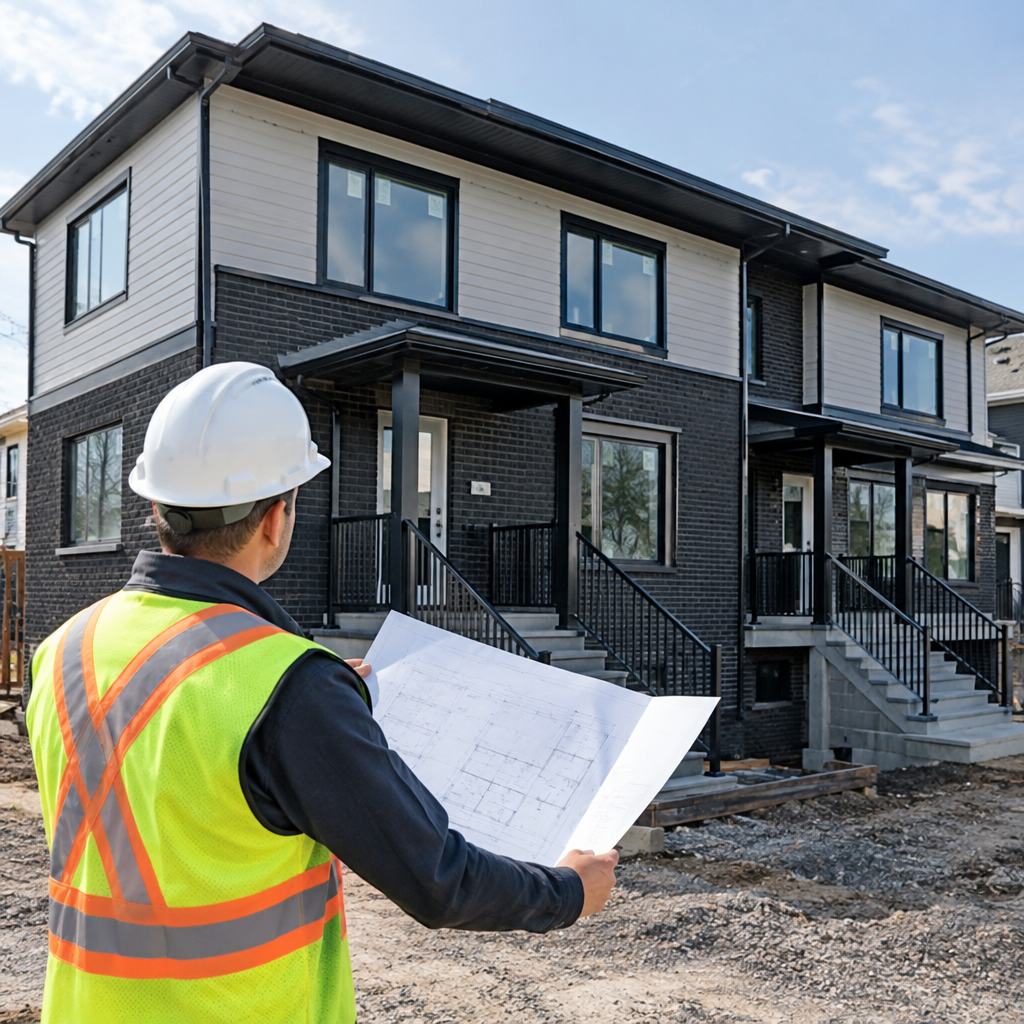
Budget 2026 introduces significant changes to financing options for small rental projects, allowing for insured loans up to 90% of completed value for triplexes and fourplexes, while also enhancing funding for Build Canada Homes.
A developer previously forced to halt a modest rental project due to financing issues now has renewed hope thanks to the provisions outlined in Budget 2026. This budget, introduced on November 5, 2026, facilitates access to insured loans for newly constructed triplexes and fourplexes, covering up to 90% of their completed value. Additionally, it permits private insurers to provide coverage for buildings containing five to 50 units. These modifications are coupled with increased funding for Build Canada Homes, enhancing financial support for housing initiatives.For smaller builders, the new mortgage regulations are pivotal. They must first assess the upfront cash required for a project and whether the finished property can sustain the loan. It’s crucial to maintain consistent rent assumptions for accurate comparisons; otherwise, it becomes challenging to ascertain if financing improvements are genuinely beneficial or if merely an optimistic spreadsheet has influenced decisions.
The Department of Finance's technical rules will be implemented for insurance applications submitted by lenders starting February 1, 2027. The regulations differ based on the number of units in a building. For properties with five to 50 units, term financing mandates a minimum debt coverage ratio of 1.15 for a five-year term and 1.10 for a ten-year term. Borrowers must possess a net worth equivalent to at least 25% of the loan amount, with a minimum requirement of $100,000 in Canadian assets. It is also important to note that properties with separate titles cannot be combined to meet the unit count requirement, and construction loans are evaluated independently.
For borrowers opting for the new three- and four-unit financing option, personal qualification tests for long-term mortgages are obligatory. The borrowing limits can vary significantly between a fourplex and a six-unit building at the same site, as the six-unit design may qualify for extended amortization periods but could also incur higher construction costs. Therefore, careful consideration must be taken to weigh the additional debt against the increased costs and potential rental income before deciding on a larger project.
In comparison, CMHC Standard Rental Housing already provides coverage for eligible properties with a minimum of five units, allowing for borrowing up to 85% of the building's value, with amortizations extending to 50 years for new constructions and 40 years for existing ones. The MLI Select program offers varied terms contingent upon commitments to affordability, energy efficiency, or accessibility, with new constructions potentially qualifying for up to 95% loan-to-cost based on earned points and other criteria.
The new regulations regarding private insurers introduce further options for developers. However, it is essential to carefully analyze the percentages involved, as 90% of appraised value and 95% of project cost can lead to significantly different loan amounts. Developers should seek offers that align with the same project and construction timelines and compare interest rates, insurance premiums, and the stipulations surrounding guarantees and reserve requirements for each draw. A larger loan approval may not be advantageous if it entails higher costs or if funds are delayed, hindering timely payments to contractors.
To illustrate the financial implications, consider a hypothetical new rental building valued at $5 million, which generates an annual net operating income of $225,000. With a 5% mortgage rate, a 50-year amortization period, and a 1.15 debt coverage ratio, the income supports approximately $3.62 million in debt. A loan amounting to 90% of the building's value would be $4.5 million, resulting in a shortfall of about $881,000 between the maximum advertised loan and the income-supported capacity. This illustrates how the financial landscape can shape a builder’s feasibility assessments.
Moreover, the Budget proposes an additional $13 billion in cash capital for Build Canada Homes over the next decade, beginning in the 2028-29 fiscal year, raising its total funding to $45 billion. Ottawa aims to construct 200,000 homes within the next ten years, though actual delivery hinges on the progression of project approvals and construction timelines. Furthermore, an allocation of $1.5 billion over four years starting from 2027-28 is earmarked for infrastructure development on federal land, along with an additional $387.4 million in subsequent years.
For builders contemplating partnerships, it’s vital to understand when specific sites will be serviced and when funds will be accessible. The terms of procurement will dictate eligibility for participation. It is also crucial to note that while public land and long-term capital can facilitate the construction of housing for individuals whose rents do not cover new construction costs, the operating budget also requires funding for ongoing expenses like taxes, maintenance, and repairs that persist long after the building has been completed.
In the context of market rental projects, the outcome will partially depend on the availability of buildable sites. Enhanced financing options may empower developers to initiate viable projects. However, in scenarios where land and approvals are limited, developers might instead utilize the additional borrowing capacity to offer higher bids for the same parcels of land. Therefore, it is essential to reassess project costs before making land acquisitions, ensuring that financing options align with the operational budget. As February 1 approaches, which marks the start date for lender submissions, developers should account for time needed for approvals and funding, ultimately leading to loan commitments that render projects feasible. If financial calculations necessitate increasing projected rents or reducing repair allowances, the underlying financing challenges remain unresolved.
🏷️
private insurers
Build Canada Homes
CMHC Standard Rental Housing
triplexes
small rental projects
Budget 2026
insured loans
debt coverage ratio
fourplexes
financing
Related Posts