
Cameco CEO Discusses AI's Impact on Nuclear Industry Amid Third-Quarter Results
📅 1 day ago
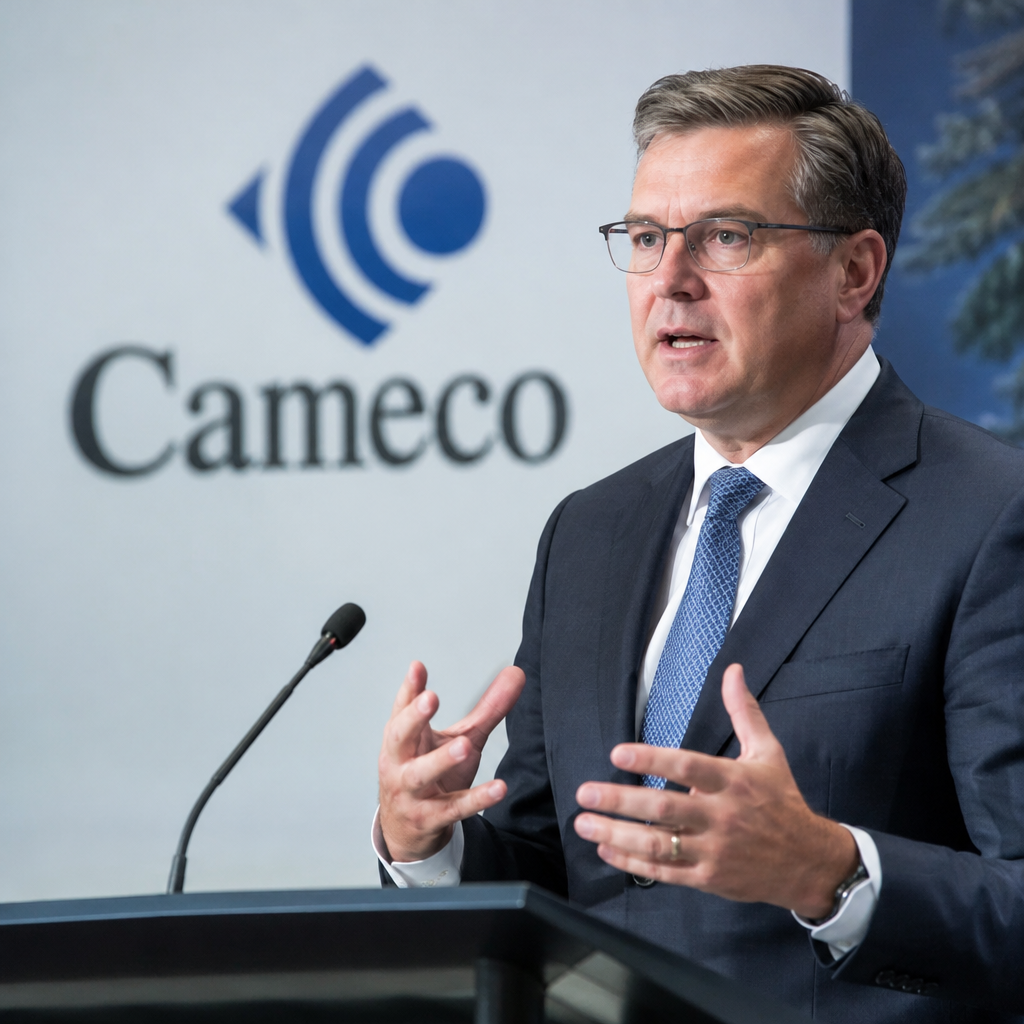
Cameco Corp.'s CEO Tim Gitzel addresses the potential of artificial intelligence to influence the nuclear sector while discussing the company's financial performance for the third quarter.
OTTAWA — Tim Gitzel, the chief executive of Cameco Corp., has recently shared insights on the intersection of artificial intelligence (AI) and the nuclear industry during a conference call with analysts discussing the company's third-quarter performance. Gitzel indicated that while AI and data centers could drive significant demand for nuclear energy, he cautioned against viewing them as the primary growth catalyst for the company. "Artificial intelligence and data centers can provide meaningful upside, but they are not the foundation of the nuclear investment thesis, nor are they a load-bearing assumption in our strategy," he stated.He elaborated that the technology sector is expected to require substantial and reliable electricity, ideally suited to the capabilities of nuclear power. However, forecasts surrounding the electricity demand linked to AI are varied, and the actual outcomes will largely depend on the pace of technological development.
In the interim, Gitzel pointed out that data centers currently undergoing construction will necessitate power before new nuclear reactors can be operational. Thus, these facilities will rely on natural gas, renewable energy sources, battery storage, and upgrades to the power grid in the meantime.
Gitzel also emphasized that the long-term narrative for nuclear energy is firmly supported by the necessity to supply existing reactors, enhance energy security, and replace dwindling uranium supplies amid ongoing geopolitical tensions. "We nevertheless remain confident that demand from the technology sector is coming, and we’re excited about it," he remarked.
In terms of financial performance, Cameco reported a third-quarter profit attributable to equity holders amounting to $43 million, which translates to 10 cents per diluted share for the quarter ending on September 30. This marks a notable improvement compared to a break-even result for the same period last year. Revenue for the quarter totaled $619 million, a slight increase from $615 million in the previous year.
However, on an adjusted basis, Cameco recorded a loss of $2 million, equating to zero cents per diluted share, in contrast to an adjusted profit of $32 million or seven cents per diluted share a year earlier. The company acknowledged that its results for the quarter and the first nine months of the year were generally lower than in 2025, attributing this decline primarily to diminished equity earnings from its investment in Westinghouse, the nuclear services company it co-owns with Brookfield Renewable Partners, alongside lower sales volumes and increased average unit costs of sales.
Despite these challenges, Cameco noted that these adverse factors were somewhat counterbalanced by higher realized prices for uranium. Additionally, an annual maintenance shutdown at Cameco’s Key Lake mill in northern Saskatchewan commenced during the third quarter, which led to reduced output and increased costs for that period. The downtime extended beyond the usual duration as the company undertook several significant projects aimed at ensuring the long-term viability of operations at the mill. The commissioning process for the new equipment is currently underway, as stated by Cameco.
🏷️
artificial intelligence
energy security
renewable energy
Key Lake mill
electricity demand
Cameco
Saskatchewan
data centers
Nuclear Energy
uranium
← Previous Post
Construction Employers Coalition Opposes WSIB's Discontinuation of Second Injury Enhancement Fund1 day ago
Next Article →
Celebrating Excellence in Wood Architecture: The 2026 Wood Design & Building Awards1 day ago
Related Posts