
Canadian Housing Markets Experience Setback Amid Rising Mortgage Rates
📅 5 days ago
🏷️ Canadian Real Estate Association
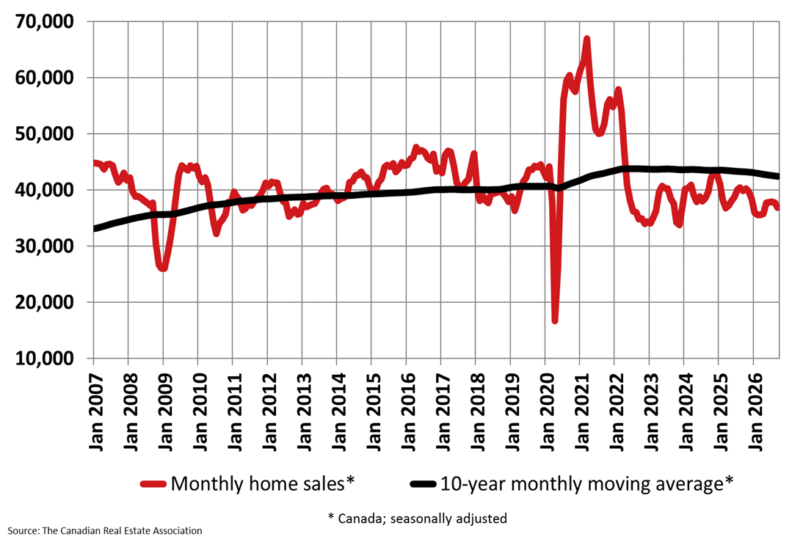
Canada's housing market shows signs of decline in September 2026, as rising mortgage rates contribute to decreased sales and listings, raising concerns about affordability and market stability.
In September 2026, many housing markets across Canada experienced a setback following a four-month period of modestly positive trends in demand, supply, and pricing. Shaun Cathcart, Senior Economist with the Canadian Real Estate Association (CREA), noted that this decline was expected due to the recent increase in fixed mortgage rates, with the Bank of Canada anticipated to implement a rate hike before the year's end. The key question remains how much further the Bank will go to manage inflation in the coming year, as the current situation of stretched housing affordability raises concerns. This uncertainty is likely to push some potential buyers back to the sidelines.The CREA reported several significant statistics for September. National home sales saw a decline of 2.3% compared to the previous month. Additionally, the monthly activity was down 7.7% from September 2025, indicating a notable decrease in market activity. The number of new properties listed also fell by 1.8% month-over-month, continuing a downward trend that has been evident since early 2025.
The MLS® Home Price Index (HPI) exhibited a slight decrease of 0.4% month-over-month, with a more considerable year-over-year drop of 3.4%. The actual national average sale price noted a reduction of 1.6% when compared to the same month last year, standing at $666,538 in September 2026. The decline in new listings in September followed a rebound observed in August, indicating a complex market dynamic.
Garry Bhaura, Chair of CREA, commented on the situation, drawing parallels between the current market conditions and earlier in the year when rising mortgage rates coincided with the spring market. He emphasized that while higher rates create challenges for buyers, they may also lead to increased inventory and enhanced negotiating power for prospective homeowners. Sellers are advised to adopt strategic pricing in this evolving landscape.
As sales declined, the national sales-to-new listings ratio slightly eased to 48.8% from 49.1% in August, still below the long-term average of 54.7%. This suggests that the market remains somewhat balanced, although the ratio indicates a slight shift towards buyer advantage. By the end of September, there were just over 200,000 properties listed for sale across all Canadian MLS® Systems, reflecting a 1.8% increase from the previous year and aligning closely with historical averages.
The overall supply of homes has maintained a steady state since spring 2025, with a national inventory of 4.9 months recorded at the end of September, which is consistent with long-term averages. According to CREA, a seller's market is characterized by inventory levels below 3.6 months, while a buyer's market is indicated by levels above 6.4 months.
The HPI's decrease in September highlighted a downturn in Ontario, where demand weakened, alongside a moderation of price gains in the Prairies, Quebec, and the East Coast. The non-seasonally adjusted HPI year-over-year decline of 3.4% marked the most substantial drop since January 2026, reflecting a troubling trend for homeowners and potential buyers alike.
The next statistics package from CREA is set to be released on November 17, 2026, promising further insights into the evolving housing market landscape. It is important to note that the data compiled in this report includes comprehensive market activity from various housing types across Canada’s real estate boards, which facilitate the maximum exposure of listed properties through MLS® Systems.
🏷️
HPI
inventory levels
housing market
real estate
property listings
home sales
Affordability
market trends
Canadian Real Estate Association
mortgage rates