
Environmental Group Warns Pension Funds Against LNG Investments Amid Legal Risks
📅 Today
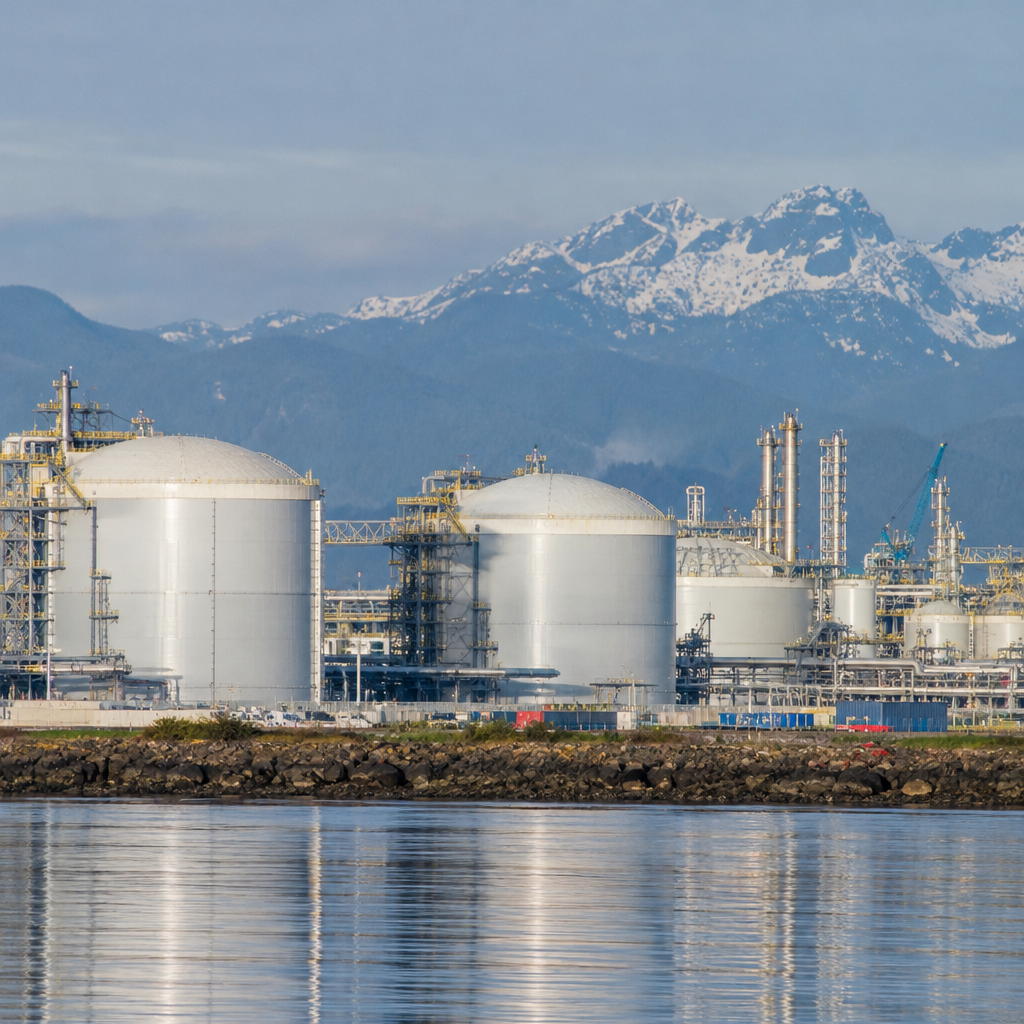
Stand.earth has issued a legal warning to major Canadian pension funds regarding investments in liquefied natural gas projects, citing potential climate-related risks and legal implications. The warning comes as some funds consider investing in LNG Canada.
CALGARY, ALTA. – The environmental advocacy organization Stand.earth has taken a significant step by engaging a prominent law firm to caution six major pension funds about the potential risks associated with investing in liquefied natural gas (LNG) megaprojects. This warning emphasizes that climate-related issues and other associated risks could expose pension fund administrators to legal repercussions. The letter, authored by Anne-Julie Asselin, a partner at the Montreal-based law firm Trudel Johnston & Lespérance, was dispatched last week to the trustees of several prominent pension funds, including the Canada Pension Plan Investment Board (CPPIB), Public Sector Pension Investment Board (PSP Investments), Ontario Municipal Employees’ Retirement System (OMERS), Ontario Teachers’ Pension Plan, University Pension Plan, and Healthcare of Ontario Pension Plan.Trudel Johnston & Lespérance is known for its focus on class action and public interest cases, including a long-standing legal battle against major tobacco companies that resulted in a landmark $32.5 billion settlement approved last year. The firm is also involved in ongoing litigation concerning the defunct Energy East pipeline and its potential impacts on whale habitats in the Gulf of St. Lawrence.
In her letter, Asselin stated, "As the financial risks associated with fossil fuel investments become more significant, more foreseeable, and better understood, prudence demands an increasingly rigorous assessment of those investments." She cautioned the pension funds to “refrain from investing, either directly or via a private fund, in LNG Canada, Ksi Lisims LNG, or comparable Canadian LNG projects unless and until it can demonstrate, on the basis of a rigorous and transparent assessment, that such investments are consistent with its statutory and fiduciary obligations.”
The urgency of this warning was heightened by the recent news that four pension funds are planning to invest in LNG Canada. A consortium led by U.S. asset manager Blackstone is preparing to acquire a non-controlling stake in the Mitsubishi Corporation subsidiary that holds an interest in LNG Canada. Asselin remarked that the finalization of the Mitsubishi deal remains uncertain, thereby making the warning timely and necessary. "We will definitely be looking at what are the next steps, that’s for sure,” she indicated in an interview, expressing surprise at the rapid pace of the pension funds' decisions to invest in LNG.
LNG Canada represents the first natural gas export facility to commence operations on Canada’s West Coast. The project partners, which include Shell as well as companies from Korea, China, and Malaysia, recently decided to proceed with an expansion aimed at doubling the output of the plant located in Kitimat, B.C. This expansion, known as LNG Canada Phase 2, has been designated as a national-interest project under federal legislation that was enacted last year to expedite new infrastructure developments.
Richard Brooks, the climate finance director at Stand.earth, noted that prior attempts to communicate concerns directly with pension plans regarding their potential investments in LNG yielded minimal results. He stated that the letters serve as a reminder to the pension funds, articulated in legal terms, about their accountability and responsibilities. The pension funds collectively oversee $1.6 trillion in investments on behalf of millions of workers, which Brooks emphasized as a significant class of stakeholders in Canada.
In a statement released on November 2, Geoff Souter, managing director at CPP Investments, described the LNG Canada project as a “high-quality, globally strategic asset with strong long-term fundamentals and attractive return potential for the CPP Fund.” However, a spokesperson for CPPIB did not provide additional comments by late Tuesday, nor did representatives from Ontario Teachers and the University Pension Plan. OMERS and Healthcare of Ontario Pension Plan (HOOPP) declined to comment, while PSP confirmed receipt of the letter and expressed disagreement with Stand.earth's views on the risks associated with LNG investments.
PSP Investments stated that its investment decisions are made in accordance with applicable statutory and legal obligations and aim to manage funds transferred by the Government of Canada for the benefit of contributors and beneficiaries. The investments are intended to achieve maximum returns without undue risk of loss, considering the plans' funding and requirements.
Separately, a group of four young Canadians initiated a lawsuit last year against CPPIB, alleging that the fund is neglecting its responsibility to protect the long-term interests of contributors set to retire in the decades ahead due to its fossil fuel-related investments. Shift: Action for Pension Wealth and Planet Health announced plans for a gathering outside Ontario Superior Court on Thursday, coinciding with CPPIB's request to a judge to dismiss the lawsuit. Brooks noted that legal action has often been a “tool of last resort” for groups concerned about pension fund investments in fossil fuels, indicating a readiness to pursue further legal avenues if pension funds proceed with LNG investments after being duly warned.
🏷️
climate risk
Trudel Johnston & Lespérance
LNG Canada
investments
infrastructure projects
legal implications
energy sector
environmental advocacy
liquefied natural gas
pension funds
← Previous Post
Federal Government Adjusts Home Construction Targets Amid Housing Affordability ConcernsToday
Related Posts