Prime Minister Carney Addresses Gordie Howe Bridge Revenue Sharing Deal with U.S.
📅 3 months ago
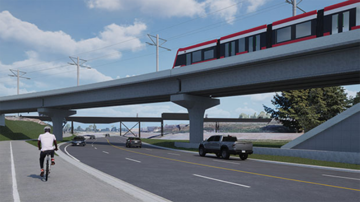
Prime Minister Mark Carney provided insights into the revenue-sharing agreement for the Gordie Howe International Bridge, highlighting uncertainties and operational implications.
WINDSOR, ONT. — On Thursday, Prime Minister Mark Carney made an effort to elucidate the terms of a new agreement that has led U.S. President Donald Trump to agree to the opening of the Gordie Howe International Bridge, which will connect Ontario and Michigan. However, Carney’s remarks left several aspects of the agreement ambiguous. Speaking during a defense-related announcement in London, Ont., Carney stated that Canada and the United States would share the 'modest' net revenues generated by the bridge. When pressed on whether this sharing would be an even 50-50 split, Carney refrained from providing a definitive answer.The anticipated ribbon-cutting ceremony for the bridge, which was scheduled for last month, was postponed as the Trump administration sought to renegotiate a long-standing agreement that existed between the two countries. This renegotiation was prompted by opposition from the Moroun family, owners of the competing Ambassador Bridge. Trump confirmed last week that the Gordie Howe Bridge is set to open on July 27 under the newly established agreement, although the details of this deal have not been made public by either Canada or the U.S.
During his address, Carney was asked if Canada would be responsible for covering all construction costs from toll revenues before any profits would be shared with the U.S. He did not provide a clear yes or no response. Instead, he clarified that the agreement does not involve splitting the tolls directly. Rather, it is structured as a 15-year agreement to share net revenues, which will only occur after all operational costs have been deducted. Carney further explained that these operational costs include expenses related to staffing toll booths, maintenance, snow removal, and other related costs.
He expressed that the government anticipates that initial net revenues will be minimal, and potentially negative, as traffic increases in the first few years following the bridge’s opening. 'We expect them to be negative as traffic ramps up. So negative to modest in the first few years,' Carney stated. He also mentioned that the underlying agreement with Michigan remains unchanged, indicating that toll revenue sharing will not commence until all construction-related debt has been repaid.
Carney’s comments have led to differing interpretations regarding the revenue-sharing model. Some stakeholders believe that Canada will only start sharing net revenues with the U.S. after tolls have been utilized to repay Canada’s construction debt, while others perceive the deal as allowing for immediate revenue sharing for 15 years, after which Canada would retain revenues under an existing arrangement to pay off its debt.
Additionally, Carney noted that Canada stands to gain from the Trump administration's intent to invest the U.S. share of the bridge revenue into a regional economic development fund, which is expected to enhance traffic and profitability for the bridge. When Carney’s office was contacted for clarification on his statements, a spokesperson asserted that the prime minister had been clear.
A White House official provided further context, stating that Trump had signed an agreement that allows for bridge revenue to flow to the U.S. prior to Canada fully recouping its construction costs. This contrasts with the original deal signed under the Obama administration, which stipulated that Michigan would only receive toll revenue after Canada had fully recovered its costs, including depreciation and interest.
Furthermore, Trump’s representatives have indicated that the new agreement grants the U.S. toll-setting authority, essentially allowing them to restrict Canada’s ability to modify toll rates by more than 10 percent. This provision effectively gives the U.S. government a veto over any attempts to reduce tolls below the rates of the existing Ambassador Bridge.
🏷️
Cross-Border Trade
Canada
Transportation
Michigan
construction costs
toll revenue
Infrastructure
economic development
Gordie Howe Bridge
Trump administration
← Previous Post
BC One Call and BCLNA Forge Partnership to Enhance Excavation Safety and Education3 months ago