Prime Minister Carney Unveils $1.2 Billion Funding for Ocean Protection Amid Pipeline Decisions
📅 Today

Prime Minister Mark Carney announced a significant federal investment aimed at enhancing ocean protection as Canada gears up for critical decisions regarding a new pipeline and port expansion in British Columbia.
VANCOUVER — On Tuesday, Prime Minister Mark Carney revealed a substantial federal allocation of $1.2 billion dedicated to ocean protection initiatives. This announcement arrives as the nation approaches pivotal choices regarding a new pipeline intended for the West Coast and the expansion of a key port in Metro Vancouver. Carney emphasized the implications of these major projects, stating, "more ships on the water mean more pressure on the habitats that we are all working to protect." He stressed the necessity of enhancing protective measures for marine life in light of potential risks.The allocated funds will support a variety of initiatives aimed at bolstering marine safety. These include augmenting the Canadian Coast Guard's capabilities to monitor maritime traffic, establishing a national near-shore weather forecasting system, and developing a response plan for oil spills affecting marine mammals. Additionally, the funding will facilitate upgrades to search and rescue stations and enhance efforts in seabed mapping and fisheries conservation.
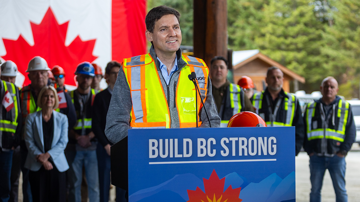
This announcement was made in North Vancouver, B.C., just ahead of a critical deadline for the Canadian government to determine whether to classify a proposed pipeline from Alberta to British Columbia’s southern coastline as a project of national significance. Carney argued that the pipeline would not only diversify the economy but also create nearly 150,000 jobs across Canada, reducing the country's reliance on the United States.
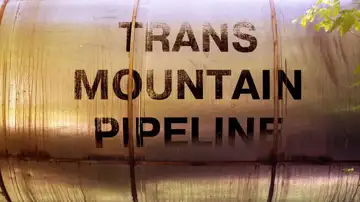
He also noted the importance of responsible construction practices, stating, "it’s not just what we build, it’s how we build," as the government maintains a protective stance while pursuing new investments. The proposed pipeline's routing is designed to steer clear of particularly sensitive areas, mirroring the existing Trans Mountain pipeline's path, while upholding the tanker ban in northern British Columbia.
In a related update, LNG Canada announced its decision to advance with Phase 2 of its facility expansion in Kitimat, B.C., which will effectively double its operational capacity. Carney has previously expressed support for the expansion of the Roberts Bank terminal at the Port of Vancouver, indicating that his administration is considering a $10 billion investment for this project. During a visit to the terminal in July, he remarked on the port's existing capacity constraints and highlighted the need for infrastructure that would enhance Canada's trade relationships beyond the United States.
As vessel traffic at the Port of Vancouver is expected to rise, Carney reiterated the government’s commitment to marine life protection, particularly for the endangered southern resident killer whales that inhabit the waters off B.C.'s southern coast. He outlined plans to tackle underwater noise pollution affecting these whales, announcing $100 million to develop long-term capabilities for monitoring, assessing, and mitigating noise levels across Canada’s three coasts: Pacific, Atlantic, and Arctic.
Carney set an ambitious goal to maintain underwater noise levels to those of 2023, even as ship traffic grows. He further specified that construction activities would be subject to stringent conditions, stating, "if a killer whale gets too close to the site, work must stop" during the proposed Roberts Bank expansion. This terminal is strategically situated near the Fraser River's mouth in Delta, B.C., and will also see funding directed toward Indigenous-led stewardship and restoration projects in the Lower Fraser River Estuary.
Moreover, the funding package includes $90 million aimed at enhancing frontline fisheries enforcement, equipping fisheries officers with modern tools, including drones. The initiative also encompasses $186 million allocated for the Northern Shelf Bioregion Reconciliation Framework Agreement, which aims to promote collaborative governance, conservation efforts, waterway management, emergency preparedness, and cumulative effects assessments in the Great Bear Sea region.
The announcement has garnered a positive response from Coastal First Nations, with their president, Samuel Schooner, declaring it a significant step toward advancing collaborative endeavors to prepare for the anticipated increase in vessel traffic associated with major projects. He acknowledged the associated risks, stating, "This brings increased risks of accidents as well as impacts on sensitive coastal ecosystems," emphasizing the need for responsible shipping investments that keep pace with economic development. Conversely, the Wilderness Committee criticized the $1.2 billion for ocean protection as minimal compared to the proposed $10 billion for the Roberts Bank expansion, also expressing concern that the federal government’s new bill C-39, aimed at economic enhancement, could compromise protections for at-risk species.
🏷️
Port of Vancouver
marine life
pipeline
fisheries enforcement
construction practices
Roberts Bank Terminal
Indigenous stewardship
LNG Canada
ocean protection
environmental protection