Federal Government Invests $1 Billion in Controversial Ring of Fire Road Project
📅 Today
The Canadian government is investing heavily in infrastructure to support mineral development in Northern Ontario, amidst significant opposition from some Indigenous communities.
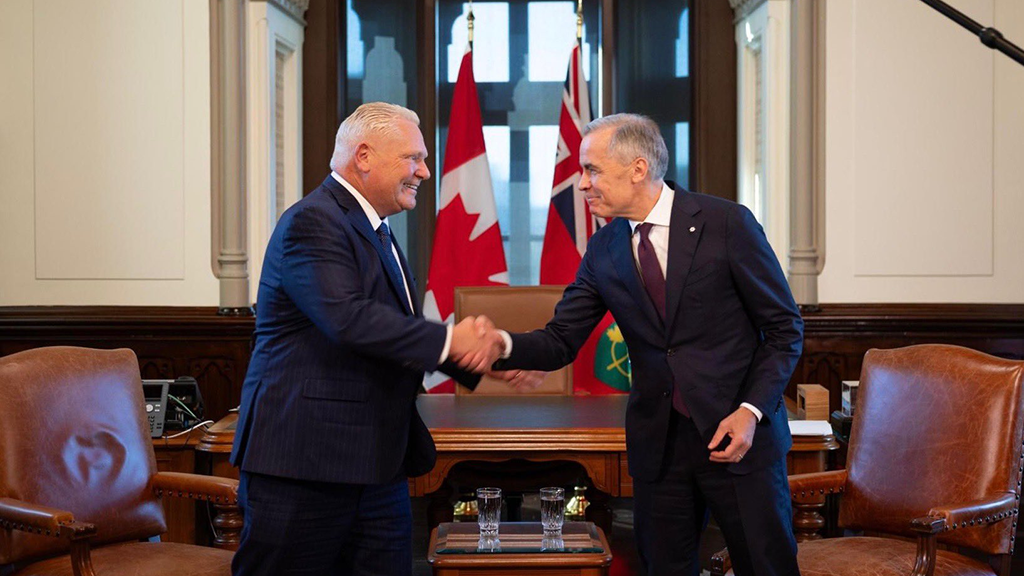
In a significant move to bolster Canada's critical mineral supply chain, Prime Minister Mark Carney announced on Wednesday that the federal government will contribute $1 billion towards the construction of a contentious road leading to the Ring of Fire region in northern Ontario. This area is believed to be abundant in valuable minerals such as nickel, chromite, copper, and gold. During a press conference in Ottawa alongside Premier Doug Ford, Carney remarked, "Canada is matching Ontario’s $1-billion investment to build road infrastructure to reach the Ring of Fire." The announcement was part of a larger $8.7 billion joint initiative aimed at supporting Ontario's industries affected by tariffs, particularly in the steel and automotive sectors.The Ring of Fire is situated in part of the James Bay lowlands, which represents North America's largest wetland and is home to several remote, fly-in First Nations communities. The mineral development in this region has been a key focus for Premier Ford since he assumed office in 2018. "We can secure a sovereign supply chain and bolster Canada’s position as a critical minerals leader," Carney stated, emphasizing the need for infrastructure to facilitate mining operations. Earlier this year, Ford revealed that construction had already commenced on two roads intended to connect the provincial highway system to the mining area, approximately 500 kilometers north of Thunder Bay, Ontario.
Ford has been an advocate for the federal government to align its investment with that of the province, a request that was initially made under the previous Liberal administration. "Last December, I joined the prime minister here in Ottawa to sign an agreement that would eliminate federal duplication for the roads to the Ring of Fire," Ford explained. The agreement has reportedly enabled construction to begin on the roads this summer, which Ford claims will unlock approximately 70,000 jobs and generate $22 billion in economic activity through the extraction of critical minerals from the Ring of Fire.
The provincial government has formed partnerships with three First Nations that support the road project, namely the Webequie First Nation and Marten Falls First Nation, both of which are remote fly-in communities seeking better access to economic opportunities through mining. They argue that the road will help lift their communities out of poverty. Additionally, the Aroland First Nation, located further south, plans to upgrade its road to accommodate increased traffic.
On the other hand, numerous Indigenous communities oppose the proposed road and associated mining developments. They contend that they have not been adequately consulted and that such projects could irrevocably alter their way of life. The Neskantaga First Nation and the Attawapiskat First Nation have established a settlement where the planned road would cross the Attawapiskat River, with community members expressing intentions to block construction efforts in the future.
Sol Mamakwa, a New Democrat representative for the Kiiwetinoong riding, expressed discontent with the recent developments, stating that many First Nations are outraged by legislative changes aimed at expediting approvals for large projects, including mining operations. "I’ve talked to enough people on the ground that live on these lands for a long time, they’ll be there to protect them and I stand with the rights holders," Mamakwa declared. He cautioned that the lack of proper, free, prior informed consent from Indigenous communities could lead to significant issues.
Carney acknowledged the necessity of accelerating mine approvals, framing it as a countermeasure to U.S. tariffs imposed on Canadian goods. However, he also highlighted the formation of a working group aimed at engaging local Indigenous communities to identify potential opportunities for economic development and conservation efforts. Mamakwa dismissed these efforts as superficial, asserting, "It’s just two white men in Ottawa deciding what’s going to happen with our lands. That project will not happen."
🏷️
Infrastructure
Ring of Fire
mining
critical minerals
resource extraction
Ontario
Indigenous rights
government investment
economic development
road construction