
New U.S. Tariffs Threaten Canadian Forestry Sector and Housing Affordability
📅 2 months ago
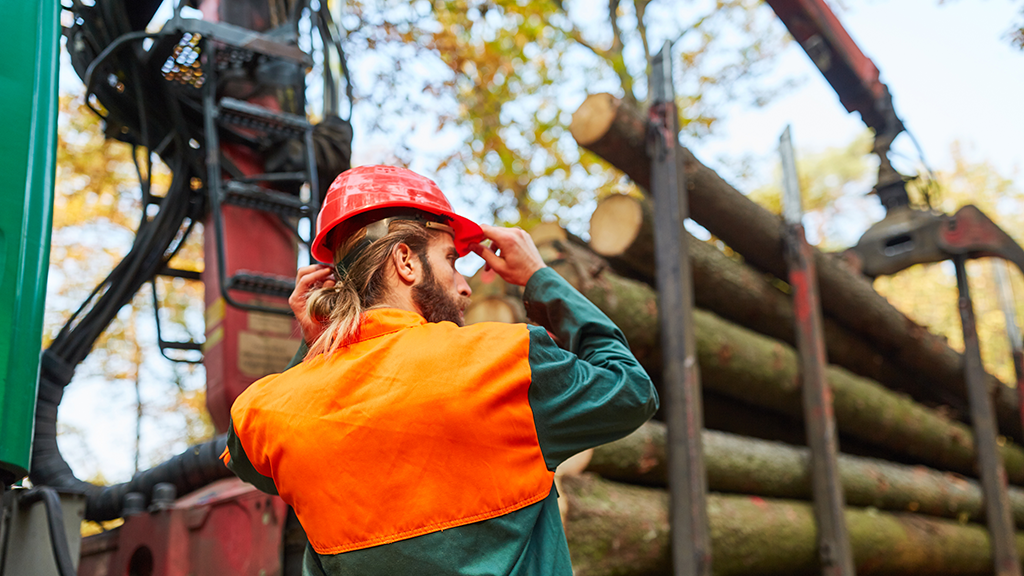
The Trump administration's latest tariffs on Canadian goods, particularly wood products, are poised to adversely affect Canadian forestry workers and increase housing costs in the U.S., according to industry leaders.
In a move that could significantly impact the Canadian forestry sector, the Trump administration has announced a new round of tariffs targeting a wide array of Canadian goods, including various wood products essential for construction. This decision, articulated by the Forest Products Association of Canada, is expected to exacerbate already challenging conditions for forestry workers in Canada while simultaneously inflating housing costs for American families. Derek Nighbor, the president and CEO of the association, emphasized that these tariffs on materials critical for home construction and renovations will impose additional financial burdens on American consumers.The U.S. government's decision, revealed on a Monday, involves a 50 percent tariff on hundreds of categories of Canadian products, notably several types of plywood and other wood-derived materials. This latest tariff is set to take effect on August 19, utilizing an obscure legal measure from the Great Depression era known as Section 338 of the Tariff Act of 1930. This move comes on the heels of a previous 10 percent tariff imposed last year on certain softwood lumber products, which was enacted under a different legal framework focusing on national security concerns as outlined in Section 232 of the Trade Expansion Act of 1962.
While CIBC analysts noted that softwood lumber itself will not be subject to these new tariffs, they expressed concern that a range of products, including plywood, fibreboard, particleboard, and veneered panels, would be adversely affected. The reasoning provided by U.S. officials for this tariff escalation includes grievances over provincial bans on U.S. alcohol, Canada's dairy supply management system, and quotas on American automobiles, which they claim are retaliatory measures against U.S. tariffs.
President Trump further clarified that these tariffs are distinct from his earlier remarks regarding Canadian wildfire smoke affecting the United States. Analysts from CIBC have indicated that there remains a risk of the administration leveraging Section 232 tariffs as a negotiation strategy in the future, particularly in light of ongoing tensions.
The timing of these tariffs is particularly troubling for the Canadian forestry industry, which is already facing its own set of challenges. Ian Dunn, president and CEO of the Ontario Forest Industries Association, voiced concerns that the imposition of such high tariffs would create a severe and unwarranted barrier to the integrated North American supply chain. He highlighted the current devastation caused by wildfires in Northern Ontario, where early estimates suggest that this year's fires have consumed over 7,250 square kilometers of forest, the most extensive damage on record.
Dunn argued that penalizing the forestry sector through trade barriers contradicts the goal of reducing wildfire occurrences, undermining efforts to manage Ontario’s forests sustainably. British Columbia is also grappling with significant industry challenges. Earlier this month, Canfor Corp. announced the permanent closure of its Northwood pulp mill in Prince George, leading to the loss of 300 jobs, citing an oversupply in the global market that has led to lower pulp prices amid difficulties in accessing raw materials.
In the past year, British Columbia has witnessed the closure of three substantial timber operations, including the Crofton pulp mill, a West Fraser sawmill in 100 Mile House, and a Drax pellet mill in Williams Lake. The BC Council of Forest Industries reported that 21 lumber mills have either shut down permanently or indefinitely in the province since the beginning of 2023. This trend underscores the precarious position of the Canadian forestry sector as it navigates both domestic challenges and international trade tensions.
🏷️
trade relations
construction supply chain
Lumber Industry
Canadian Forestry
housing affordability
Job Loss
U.S. tariffs
Plywood
wildfires
economic impact
← Previous Post
Vancouver City Council Revamps Development Financing Framework to Enhance Infrastructure Funding2 months ago