
Major Development Proposal for 75-Storey Tower at 55 Isabella Street in Toronto
📅 5 months ago
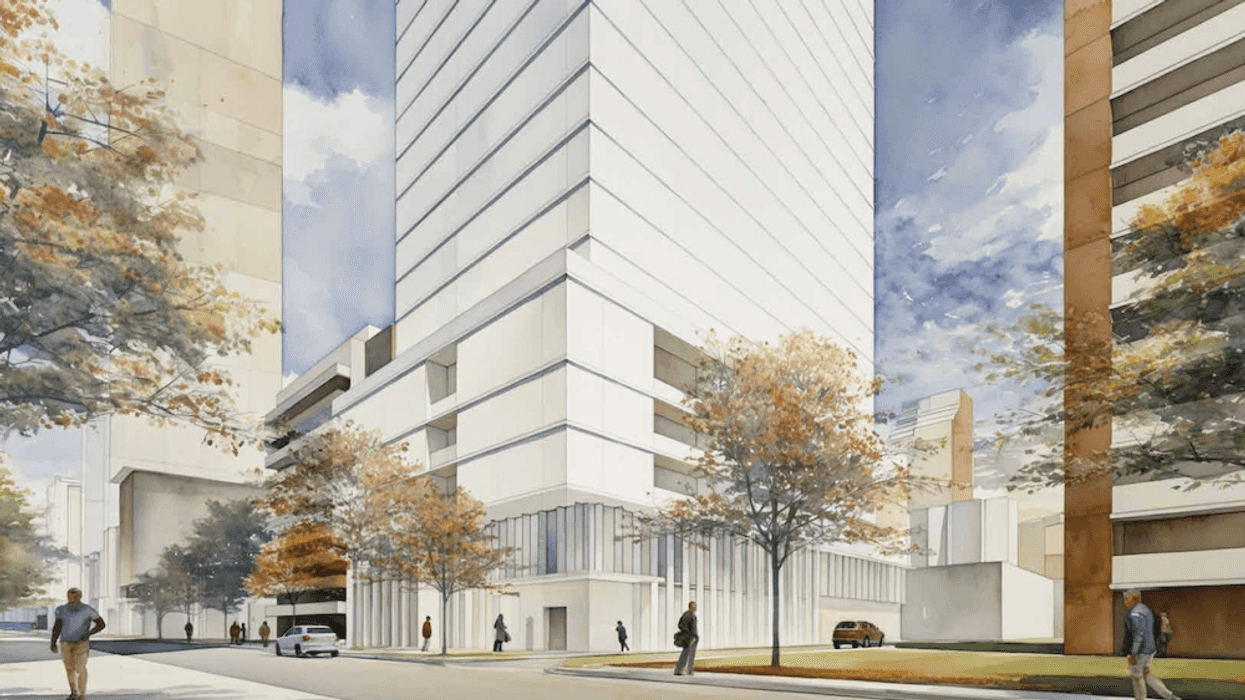
In the vibrant Church-Wellesley Village, certain areas of Toronto are increasingly capturing the interest of developers, notably the Yonge and Isabella intersection. Within the confines of Bloor, Bay, Sherbourne, and Wellesley streets, nearly two dozen development projects are currently in various stages of approval, with a significant number exceeding 60 storeys in height. Among these ambitious proposals, one stands out: a new initiative from Cromwell Management and Grace Management Inc. aimed at transforming a 12-storey, mid-century apartment building at 55 Isabella Street into a striking 75-storey mixed-use tower.
This proposed tower is set to encompass a total height of 75 storeys, reaching an impressive 822 feet. The project is designed to predominantly feature residential units, with a gross floor area (GFA) for residential space amounting to 581,300 square feet. Additionally, the development will include smaller retail and office spaces, with retail and office GFA set at 990 square feet and 11,464 square feet, respectively. The residential component will comprise a total of 843 units, which includes 83 replacement rental units and 760 new rental units. The breakdown of the units is as follows: 34 studios, 571 one-bedroom units, 60 one-bedroom plus den units, 136 two-bedroom units, and 42 three-bedroom units.
The planning report indicates a focus on adaptability in the unit mix, suggesting that some of the smaller one-bedroom units could potentially be combined to create additional three-bedroom units if market demand dictates. This flexibility could increase the number of three-bedroom units to approximately 10% of the total, or around 84 units, although family-sized units (two- and three-bedroom) would still only make up 26% of the overall residential offering.
Initial renderings by Wallman Architects depict a sleek design, characterized by a 69-storey tower and a six-storey podium, though details regarding materials are currently sparse. The planning report outlines several architectural features that will influence the design, including insets on the east-side massing to accommodate outdoor terraces connected to amenity rooms, along with a cantilevered section on the north side that will enhance the building's facade.
While a 75-storey structure is certainly a significant addition to the skyline, it will not hold the title of the tallest building in the vicinity. Nearby, a 76-storey condominium tower at 639-653 Yonge Street, which is planned to house nearly 800 units, received City Council approval in 2024 but has yet to commence construction. Other notable developments in the area include another 75-storey tower at 646-664 Yonge Street, and a 70-storey tower at 619-637 Yonge Street, both of which were approved in 2024, alongside a 62-storey building at 88 Isabella Street that is currently under construction.
The surge in development activity in this area can be attributed to its strategic location near both minor and major arterial roads, including Yonge, Church, Wellesley East, and Bloor East. Coupled with excellent transit accessibility—Wellesley Station on Line 1 and the Line 1/Line 2 interchange at Bloor-Yonge Station are both approximately a five-minute walk from 55 Isabella—these factors make the location particularly appealing to developers. Furthermore, the site is situated within overlapping Protected Major Transit Station Areas (PMTSAs) associated with Bay, Bloor-Yonge, and Wellesley stations, which are earmarked by the Province and City for some of Toronto’s highest density developments.
This proposed tower is set to encompass a total height of 75 storeys, reaching an impressive 822 feet. The project is designed to predominantly feature residential units, with a gross floor area (GFA) for residential space amounting to 581,300 square feet. Additionally, the development will include smaller retail and office spaces, with retail and office GFA set at 990 square feet and 11,464 square feet, respectively. The residential component will comprise a total of 843 units, which includes 83 replacement rental units and 760 new rental units. The breakdown of the units is as follows: 34 studios, 571 one-bedroom units, 60 one-bedroom plus den units, 136 two-bedroom units, and 42 three-bedroom units.
The planning report indicates a focus on adaptability in the unit mix, suggesting that some of the smaller one-bedroom units could potentially be combined to create additional three-bedroom units if market demand dictates. This flexibility could increase the number of three-bedroom units to approximately 10% of the total, or around 84 units, although family-sized units (two- and three-bedroom) would still only make up 26% of the overall residential offering.
Initial renderings by Wallman Architects depict a sleek design, characterized by a 69-storey tower and a six-storey podium, though details regarding materials are currently sparse. The planning report outlines several architectural features that will influence the design, including insets on the east-side massing to accommodate outdoor terraces connected to amenity rooms, along with a cantilevered section on the north side that will enhance the building's facade.
While a 75-storey structure is certainly a significant addition to the skyline, it will not hold the title of the tallest building in the vicinity. Nearby, a 76-storey condominium tower at 639-653 Yonge Street, which is planned to house nearly 800 units, received City Council approval in 2024 but has yet to commence construction. Other notable developments in the area include another 75-storey tower at 646-664 Yonge Street, and a 70-storey tower at 619-637 Yonge Street, both of which were approved in 2024, alongside a 62-storey building at 88 Isabella Street that is currently under construction.
The surge in development activity in this area can be attributed to its strategic location near both minor and major arterial roads, including Yonge, Church, Wellesley East, and Bloor East. Coupled with excellent transit accessibility—Wellesley Station on Line 1 and the Line 1/Line 2 interchange at Bloor-Yonge Station are both approximately a five-minute walk from 55 Isabella—these factors make the location particularly appealing to developers. Furthermore, the site is situated within overlapping Protected Major Transit Station Areas (PMTSAs) associated with Bay, Bloor-Yonge, and Wellesley stations, which are earmarked by the Province and City for some of Toronto’s highest density developments.
🏷️
Wallman Architects
high-rise development
Grace Management Inc.
urban density
residential units
transit-oriented development
Cromwell Management
mixed-use tower
Toronto
Church-Wellesley Village
Next Article →
TD Bank Launches Agentic AI Model to Transform Mortgage Application Process5 months ago