Alberta Government Plans Amendments to Proposed Bike Lane Legislation Amid Municipal Concerns
📅 Today
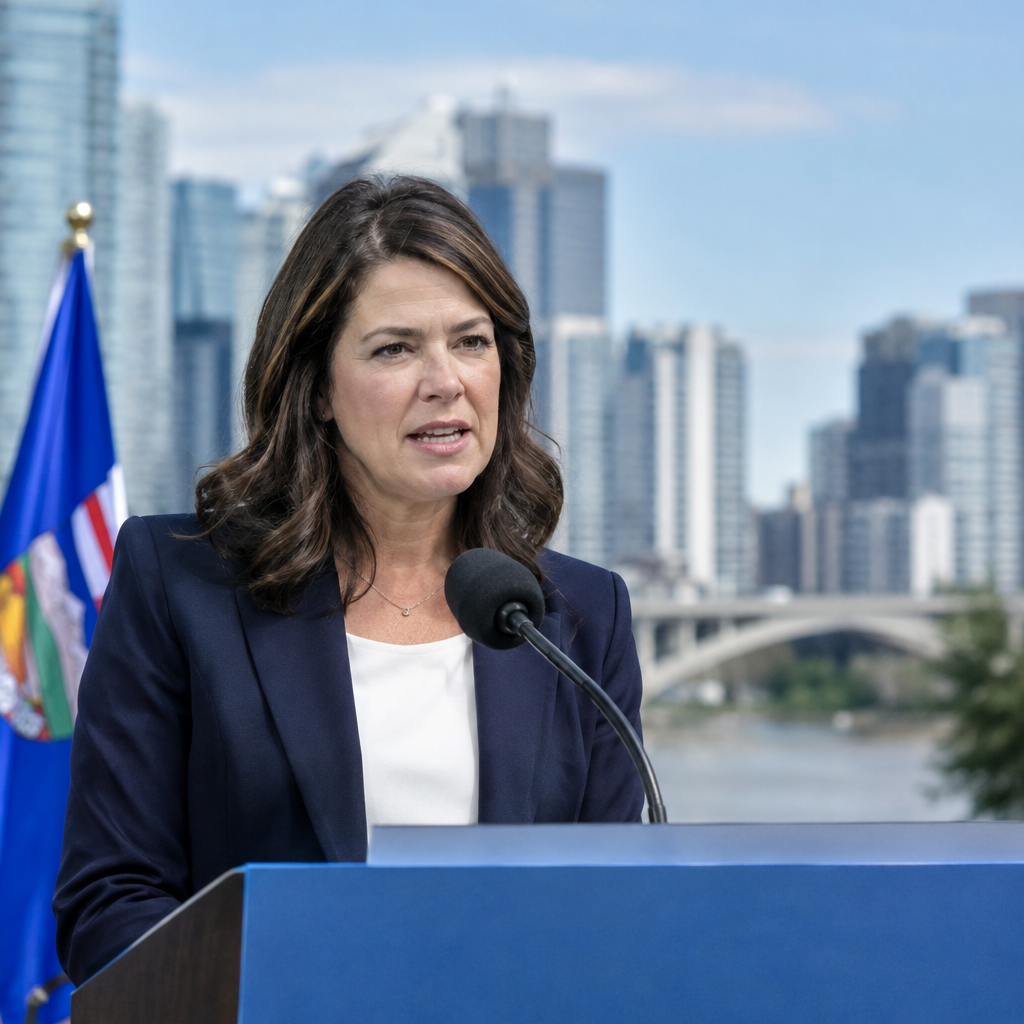
Alberta Premier Danielle Smith announces changes to the recently proposed bike lane legislation following municipal concerns, particularly from Calgary's mayor, regarding costs and local governance.
EDMONTON – In a significant development regarding transportation policy, Alberta Premier Danielle Smith announced on Saturday that her government intends to amend its proposed bike lane legislation just two days after its introduction in the legislature. The bill, introduced by Transportation Minister Devin Dreeshen, seeks to empower the provincial government to mandate the removal of certain municipal bicycle lanes. Additionally, it would require municipalities to obtain provincial approval before constructing any new bike lanes. Existing bike lanes that were established at the expense of vehicle traffic would also need provincial approval to remain in place, as the legislation stipulates that these lanes are to be dismantled when municipalities undertake road repair projects in proximity to them.Under the current wording of the bill, municipalities would bear the financial responsibility for any costs arising from these legislative changes. However, Calgary’s mayor, Jeromy Farkas, expressed his belief that this aspect of the bill is flawed. He claimed that the premier’s office had assured him that municipalities would not be held accountable for such expenses, suggesting that the legislation might have been released in a “premature draft version.”
During her call-in radio show, 'Your Province, Your Premier', broadcast on QR Calgary and 880 CHED, Premier Smith acknowledged the concerns raised by Mayor Farkas, indicating that her chief of staff had met with him earlier in the week. “We’ve got some amendments to propose to that (legislation),” she stated, emphasizing the desire for a collaborative approach. However, she did not elaborate on the specific changes that would be made. Dreeshen’s office also refrained from providing additional details when approached for comment, opting instead to reiterate a previously issued statement attributed to the minister.
“This is about better collaboration with cities to ensure we’re making responsible, evidence-based transportation decisions that protect road capacity and make sure transportation networks work for everyone,” Dreeshen’s statement read.
The proposed legislation has encountered pushback from various stakeholders, including cycling advocates and Edmonton's mayor, Andrew Knack. During the radio show, callers voiced their concerns regarding the implications of the bill. One caller described the language in the bill as “draconian,” questioning the need for provincial oversight over local decision-making. Another caller raised concerns about potential hazards posed by e-scooters if bicycle lanes were eliminated, insisting that if bike paths are removed, there must be a strategy to manage e-scooter traffic effectively.
In response to these concerns, Smith assured the public that the government’s focus is on evaluating bike lanes that either diminish space for vehicles or are underutilized. “I think that we just wanna make sure that we’re putting them in the right place, that it’s not interfering unduly with regular commuter traffic,” she explained. The premier expressed hope for cooperative efforts in future bike lane designs.
Moreover, Smith addressed provisions in the bill that would enhance provincial oversight of municipal light-rail transit (LRT) projects. The proposed legislation requires municipalities to submit plans for any new or expanded LRT projects to the province for approval, detailing routes, stop locations, and other specifications that will be defined by future regulations. The transportation minister would also have the authority to mandate alterations to any aspect of a municipality’s proposed plan.
Smith justified the need for increased provincial oversight, citing the province's role as a major funding partner and its plans for developing a future rail network that will connect Edmonton and Calgary. She also highlighted public safety as a critical concern, suggesting that greater control over who is permitted to use LRT services may be necessary. “Maybe we’re having people who are creating disorder on the trains, preventing other people from wanting to be on them,” she noted, reflecting on the current lack of turnstiles and reliance on an “honour system” for fare payment.
This ongoing legislative discussion underscores the complexities of transportation planning in Alberta, particularly as it relates to local governance and public safety measures.
🏷️
Urban planning
transportation policy
infrastructure development
municipal governance
Alberta legislation
public safety
collaboration
LRT projects
provincial oversight
bike lanes
Related Posts