B.C. Premier Lorne Doerkson Endorses Federal Budget, Aiming for Forestry Sector Support
📅 1 day ago
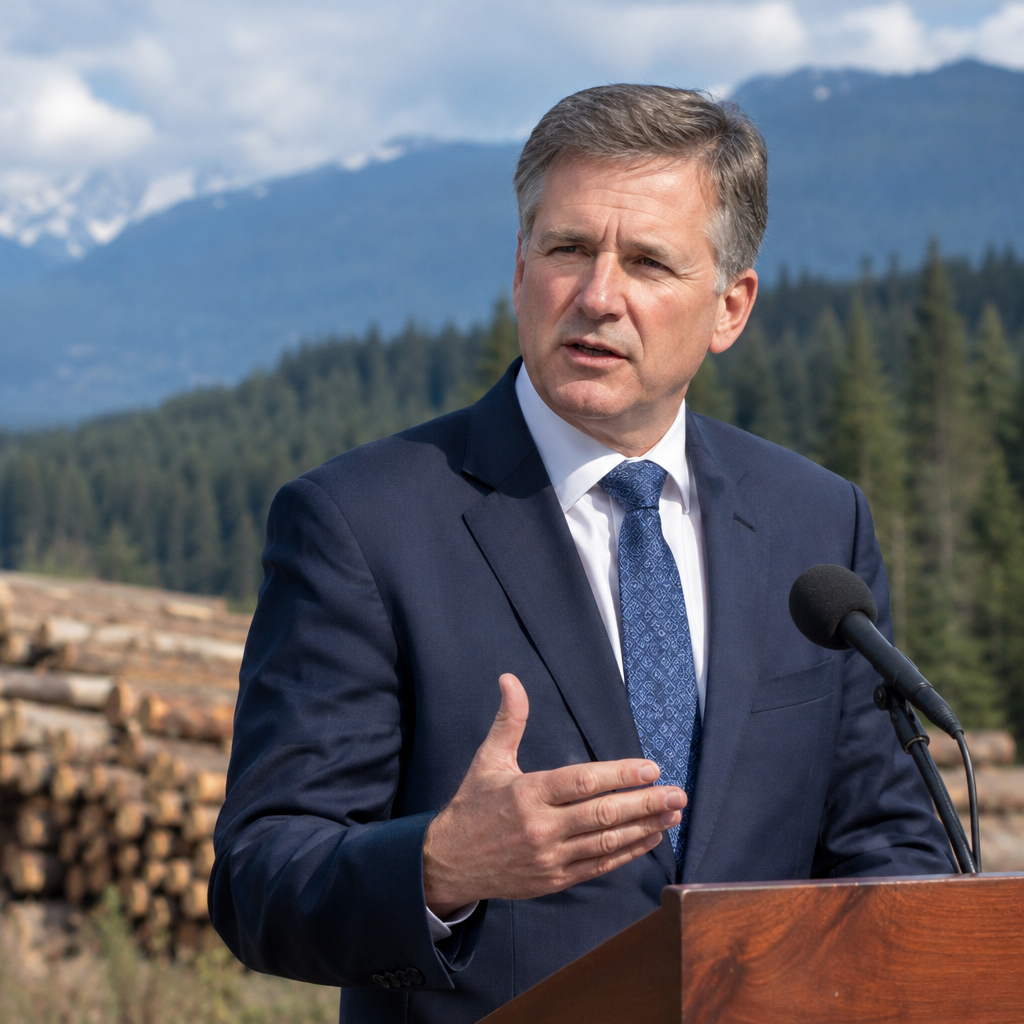
British Columbia's new Conservative Premier Lorne Doerkson expresses strong support for the federal budget, highlighting its potential benefits for the province's forestry industry amid ongoing challenges.
In Victoria, British Columbia, the newly elected Conservative premier, Lorne Doerkson, has thrown his support behind the federal budget proposed by Prime Minister Mark Carney's Liberal government. Doerkson described the budget as an "encouraging and ambitious statement" that highlights the economic potential of Canada and recognizes the vast opportunities available in B.C. particularly in the transportation and resources sectors. The federal budget outlines various initiatives intended to bolster Canada's forestry industry, which is currently grappling with significant U.S. tariffs. However, the specifics of how much of the $6.5 billion allocated will reach British Columbia remain uncertain.Doerkson expressed hope that a substantial portion of these funds will benefit B.C., where the forestry sector is a crucial driver of the provincial economy. The federal government has indicated that the forestry sector, facing combined tariffs and duties of approximately 35 percent from the U.S., will receive additional financial support over a six-year period beginning in 2027-28. This funding aims to enhance productivity and competitiveness within the sector.
Among the budget provisions, $4 billion is earmarked for the establishment of a "forestry sector accelerator," which is intended to invest in large facilities and convert existing ones into biorefineries and biofuel production sites. Another $2 billion is designated for modernizing facilities and upgrading equipment, while $500 million will focus on improving the fibre supply through better forest management practices and technological advancements.
Kim Haakstad, the president and CEO of the BC Council of Forest Industries, expressed concerns about the lack of clarity regarding how much financial support will be directed to British Columbia's forestry sector, which has faced significant challenges in recent years. According to Haakstad, the collaborative efforts between the provincial and federal governments have been primarily focused on stabilizing the sector. She emphasized that while funding is vital, it alone cannot resolve the competitive pressures that the industry faces. A strategic plan with specific actions and timelines is necessary to facilitate the movement of wood, attract investments, and safeguard forestry jobs and communities.
Despite these challenges, Haakstad acknowledged that the $6.5 billion support package acknowledges the forestry sector's significance to Canada's economy and arrives at a critical juncture for workers, businesses, and communities affected by the ongoing crisis in the industry. Forestry associations in B.C. have raised alarms about the industry's precarious situation, marked by numerous mill closures in recent years.
Haakstad highlighted the urgency of implementing the new funding quickly, noting that with the funds set to begin flowing in 2027-28, immediate action is crucial to alleviate the pressures currently faced by the sector. She stated, "Companies need improved conditions to keep operating today so they can invest in the opportunities of tomorrow."
Ravi Parmar, the outgoing forests minister for British Columbia, remarked that the federal funding represents a "good start" and reflects the advocacy efforts of the NDP government for the forestry sector over the past two years. Parmar stressed the need for B.C. and the Canadian forest sector to receive their fair share of the funding, especially in light of the substantial financial support that has been allocated to the auto and steel industries. He commended the federal government for recognizing the importance of the forestry sector in this context.
🏷️
British Columbia
economic support
biorefineries
biofuels
tariffs
forestry
Construction
modernization
federal budget
forest management
← Previous Post
Federal Government Commits Over $1 Billion for Winnipeg's Centre for Mental Health and Addictions1 day ago
Related Posts