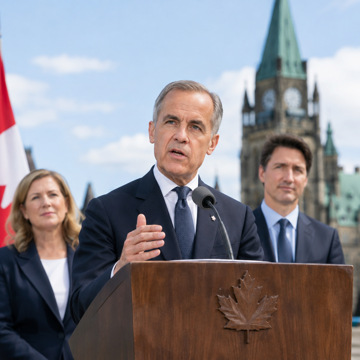
Canada and China Extend Trade Agreement to Boost Agricultural Exports
📅 1 day ago
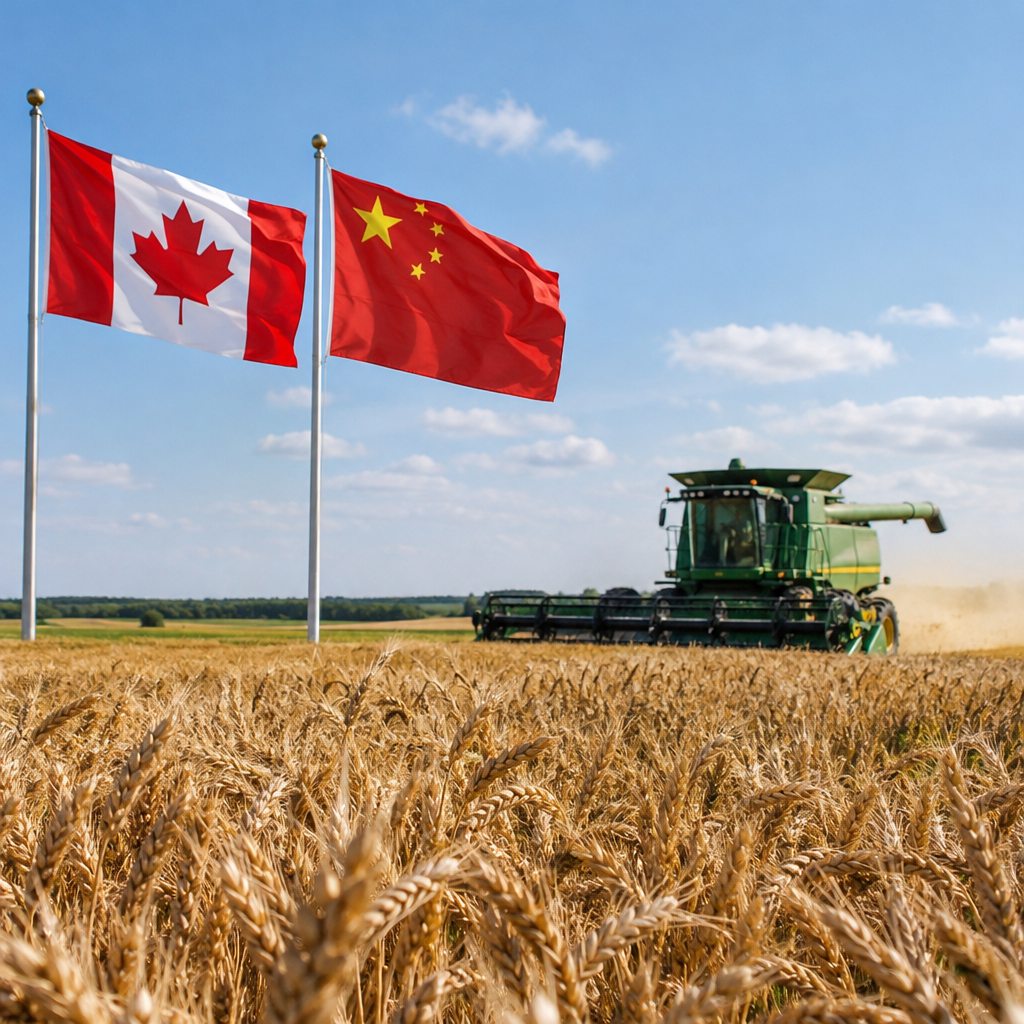
The trade agreement between Canada and China, allowing for increased access to each other's markets, has been extended until 2028, providing Canadian farmers and producers with stable opportunities in the Chinese market.
OTTAWA — The trade relationship between Canada and China is set for a significant extension as the two nations have agreed to prolong an agreement first established in January. This agreement facilitates Chinese market access for Canadian imports in return for Canadian access to Chinese steel and aluminum products. Originally set to expire at the close of this year, the deal will now remain in effect until the end of 2028, as announced by Trade Minister Maninder Sidhu.Minister Sidhu emphasized the importance of this extension, stating it provides Canadian farmers, producers, and harvesters with stable access to the Chinese market, thereby supporting billions in export opportunities. This move follows Prime Minister Mark Carney's visit to Beijing in January, which helped rekindle a trade body aimed at boosting Canadian exports to China by 50% by 2030.
Currently in Beijing for discussions with officials, Sidhu is set to meet with Chinese leaders ahead of Carney's upcoming visit to Shenzhen for the Asia-Pacific Economic Cooperation summit. This marks Sidhu's third trip to China within the year, and he has been active in addressing trade issues, having previously agreed with Wang Wentao, China’s minister of commerce, to restart a joint economic and trade commission in June 2025.
Since the agreement took effect in March, Canadian exports to China have seen remarkable growth. For instance, canola seed exports surged by 84%, skyrocketing from $1.04 billion to $1.91 billion compared to the same timeframe last year. Furthermore, canola meal exports more than doubled from $146 million to $390 million, while pea exports escalated from $107 million to $345 million. Additionally, lobster exports experienced a significant rise of 57%, increasing from $128 million to $200 million.
Sidhu noted that Canadian beef has also made a return to the Chinese market for the first time since 2021, with exports from January to August totaling $363.2 million—nearly double the amount sold in all of 2021. He has engaged with various industry representatives, including the Canola Council of Canada, Pulse Canada, the Fisheries Council of Canada, the Canadian Cattle Association, and the Canadian Meat Council, all of whom indicated that an extension would provide the predictable and long-term access required for success in the Chinese market.
Fisheries Minister Joanne Thompson expressed on social media that the extension brings “immediate certainty” for lobster and crab harvesters and exporters, with ongoing discussions about expanding access for other seafood products. She highlighted her recent meetings with Chinese government officials and industry leaders, reinforcing Canada’s reputation as a reliable supplier of high-quality seafood.
Earlier this year, during his visit to Beijing, Carney outlined initiatives to foster a new strategic partnership with China, which includes enhancing cultural exchanges and strengthening 'people-to-people' ties. He expressed hope that this renewal would serve as a model of cooperation amid global divisions.
In a separate but related effort, Culture Minister Marc Miller recently completed a five-day trip to China, where he led a delegation from Canadian creative industries that resulted in the signing of seven new commercial agreements worth over $4.2 million. This reflects the Carney government's broader strategy to double non-U.S. exports over the next decade as a response to the evolving geopolitical landscape, particularly following the re-election of U.S. President Donald Trump.
As of 2025, China stands as Canada’s second-largest single-country trading partner, with two-way merchandise trade reaching $125.7 billion. This extended agreement is a crucial step for Canada in cementing its trade relations with China and ensuring economic growth for its agricultural sector.
🏷️
aluminum
steel
canola
export growth
agricultural exports
international trade
lobster
economic partnership
Canada-China trade
trade agreement
Next Article →
Community Invited to Name Tunnel Boring Machines for Yonge North Subway Extension1 day ago
Related Posts