Canada's Optimism Grows for Interim Trade Deal with U.S. Amid Ongoing Negotiations
📅 1 day ago
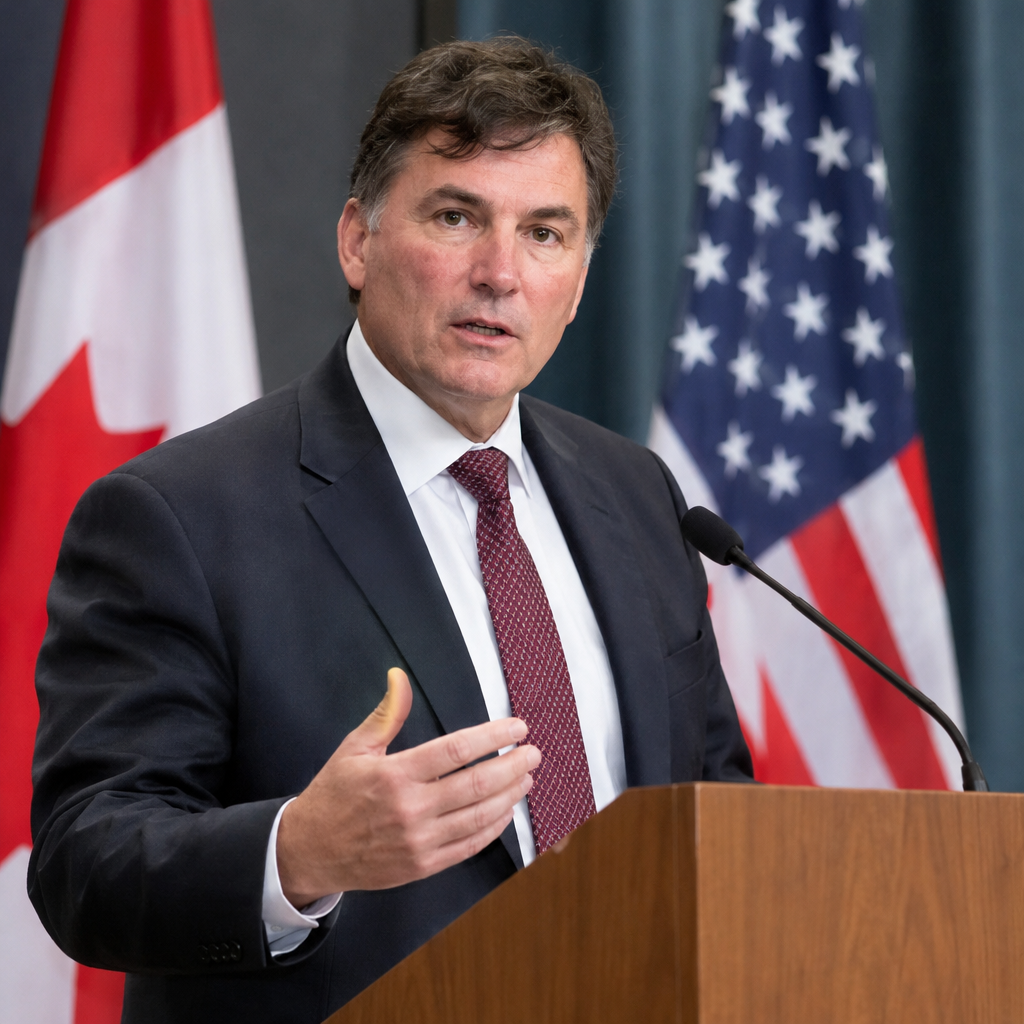
Trade Minister Dominic LeBlanc updates an advisory committee on the evolving Canada-U.S. trade relationship, signaling optimism for an interim deal despite ongoing challenges.
OTTAWA — During a meeting on Thursday, members of the Advisory Committee on Canada-U.S. Economic Relations received an update from Canada-U.S. Trade Minister Dominic LeBlanc, who expressed a growing sense of optimism regarding the possibility of an interim trade deal with the Trump administration. However, he cautioned that challenging negotiations are still anticipated. This meeting marked the first gathering of the advisory committee since the recent midterm elections in the United States, which delivered a significant rebuke to President Trump’s administration. Flavio Volpe, the president of the Automotive Parts Manufacturers’ Association and a member of the committee, shared in a text message that the political landscape remains complex, stating, “It’s clear that the counterparty is still the administration and until the Congress takes hold, the political dynamic hasn’t changed.”The virtual meeting also included remarks from Ambassador to the United States Mark Wiseman and chief trade negotiator Janice Charette. According to a readout from Global Affairs Canada, the committee discussed the evolving nature of the Canada-U.S. trade relationship and Canada’s strategy for advancing its economic interests.
The trade tensions between Canada and the U.S. escalated sharply after negotiations broke down in August, with both nations accusing one another of introducing last-minute demands. Prime Minister Mark Carney noted that Trump’s team sought to limit Canada’s capacity to engage in trade agreements with other countries, jeopardize Canada’s cultural and language protections, and maintain high tariffs on certain automotive products. In retaliation, Trump imposed significant tariffs on various Canadian goods, reaching as high as 50 percent, and threatened to increase these duties in January if no agreement is reached.
Following the midterm elections, there was a noticeable softening of the Trump administration’s stance towards Canada, as polling indicated that the trade war and aggressive tariff policies were unpopular among American voters. Volpe expressed cautious optimism, stating, “I remain optimistic that the conditions are present to do better than we did when we broke from the table in August.” He acknowledged that the negotiating team is committed to thoroughly understanding the implications of the ongoing discussions.
A source within the committee, who requested anonymity, indicated that while there is potential for an interim deal to be reached during the “lame duck” period before the new Democrat-controlled Congress convenes in January, the midterm election results will not resolve all outstanding issues in the bilateral relationship. Democrats have signaled that ending the trade war with Canada will be a top priority in January, yet they may face challenges in achieving the necessary supermajority to override any presidential vetoes. It is anticipated that Democrats will focus on addressing only one aspect of Trump’s tariff strategy — specifically Section 338 of the Tariff Act of 1930 — while leaving other tariffs that are adversely affecting parts of the Canadian economy in place.
Volpe raised concerns regarding Canada’s attempts to normalize trade relations with China, particularly in sectors targeted by Trump’s national security tariffs, suggesting that such moves might hinder progress toward a deal. White House trade adviser Peter Navarro has publicly criticized Carney’s trade approach, likening Canada’s strategy to that of a high school team competing against a professional team, stating, “They are living in the past if they think Donald John Trump is going to let them continue to push us around.”
Carney and Trump met on the sidelines of the Asia-Pacific Economic Summit in Shenzhen, China, on Wednesday, where both leaders also held separate discussions with Chinese President Xi Jinping. Following his meeting with Trump, Carney remarked that a “very good trade arrangement” with the United States is feasible, but emphasized that Canada will not remain passive in its efforts.
At a recent gathering of the House of Commons International Trade Committee in Ottawa, both LeBlanc and Charette warned members of Parliament that the restoration of terms under the Canada-U.S.-Mexico Agreement (CUSMA) is not guaranteed. Charette highlighted the need for Canada to prepare for a scenario where a tariff-free arrangement may no longer be feasible, aiming instead for the lowest possible tariff rate on a limited range of goods, ensuring the most favorable access for Canadian businesses and workers.
The Trump administration opted not to renew CUSMA in July, which initiated a rolling annual review process that could last up to a decade, after which the agreement will expire if the three nations cannot reach a consensus on an extension. The committee readout noted that members shared insights from their respective sectors, discussing the ongoing challenges businesses and workers face due to U.S. trade measures, and highlighted the federal government's efforts to support Canadian businesses impacted by U.S. tariffs, including evaluating the effectiveness of existing support mechanisms and exploring new opportunities to address the needs of affected stakeholders.
🏷️
Canada-U.S. trade
trade war
economic relations
international trade
CUSMA
automotive industry
trade negotiations
Canada
tariffs
construction materials
← Previous Post
Parliament Approves 2026 Federal Budget Focused on Infrastructure and Economic Growth1 day ago