Navigating the Concrete Challenges of Data Center Construction
📅 2 months ago
🏷️ Giatec Scientific Inc.
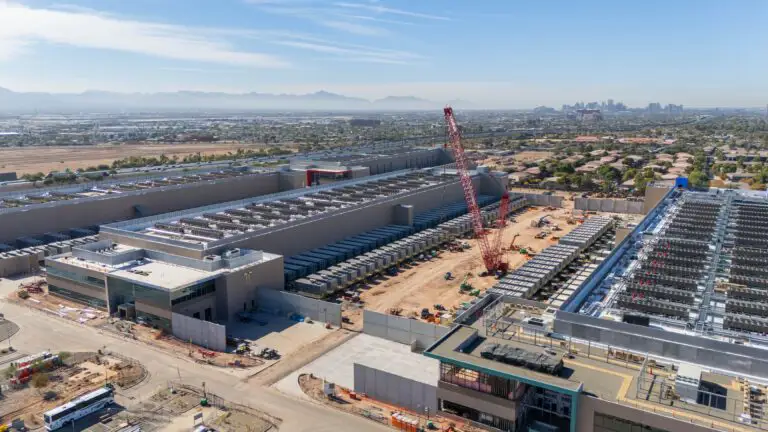
This article explores the unique concrete challenges faced in data center construction, highlighting innovative solutions that construction teams are deploying to ensure timely and efficient project delivery.
The construction of data centers has emerged as one of the most intricate segments within the global construction landscape. Facilities designed for cloud service providers and artificial intelligence infrastructures demand concrete foundations, floor slabs, and structural components that are meticulously engineered to sustain floor loads ranging from 150 to 350 pounds per square foot or even more. This requirement significantly surpasses the typical load specifications of 50 to 80 pounds per square foot found in standard commercial office buildings.In 2025, the average global cost of constructing a data center reached approximately $10.7 million per megawatt, with projections from JLL suggesting a 6% increase to about $11.3 million per megawatt in 2026. The scale of these projects is massive, with single campuses necessitating an estimated peak workforce of up to 4,000 individuals. Furthermore, the delivery timelines for these constructions, which previously extended between 30 to 36 months, have now been condensed to an expected range of 12 to 18 months. This tightening of schedules makes concrete work the first and most critical aspect of every data center build.
Industry studies reveal that delays in commissioning a standard 60 MW data center can result in financial losses for developers, amounting to around $14.2 million per month due to revenue losses and associated impacts. Consequently, every decision made during the concrete curing process can have immediate and direct financial repercussions that are not typically encountered in other construction projects.
The complexities surrounding data center concrete are not entirely new; however, the specific demands of mass concrete, post-tensioned slabs, and large-scale deployments, compounded by tight schedules and the need for precise mix designs, present unique challenges. This article will delve into the six most critical concrete challenges associated with data center projects and examine how construction teams are addressing each issue.
1. **Mass Concrete Foundations and Cracking Risks**: One major challenge is the tendency for mass concrete foundations to crack prior to loading. This occurs when the temperature difference between the concrete core and its surface exceeds 35°F (19°C) during the hydration process, a common scenario in the thick raft foundations that support data center server loads. Such foundations generate substantial internal heat as the cement hydrates, leading to potential thermal cracking. For instance, during the construction of the 28-story Wynn Hotel and Casino in Boston, S&F Concrete Contractors utilized SmartRock® sensors to monitor temperature gradients during mass pours, allowing them to proactively manage thermal risks.
2. **Stressing Post-Tensioned Slabs**: Post-tensioned slabs must be stressed after reaching a specified in-place strength, typically 75% of the design strength. Traditional cylinder break testing can delay this process as results take time, leading to schedule slippage. However, at ONE Park Tower in North Miami, Skyrise Engineering and Testing adopted 250 SmartRock Long Range sensors, which helped save over 140 hours on the construction schedule by providing real-time strength confirmation.
3. **Managing Concurrent Pours**: The scale of hyperscale campuses necessitates the management of numerous concurrent concrete pours. This requires advanced wireless sensors that relay strength and temperature data to a centralized cloud dashboard, ensuring that teams have live visibility into ongoing operations. SmartRock Long Range sensors allow for this level of oversight, crucial for maintaining project timelines.
4. **Curing Uncertainty and Financial Implications**: The financial stakes are particularly high in data center construction where compressed schedules mean that any uncertainty during the curing phase translates into significant financial liabilities. For example, PCL Construction’s use of SmartRock on the Stantec Tower in Edmonton allowed them to make decisions on formwork and stressing without waiting for lab results, ultimately leading to a four-month schedule acceleration.
5. **Optimizing Mix Designs**: Data center mix designs must effectively balance strength and thermal performance, while also addressing carbon reduction targets. Overdesigning mixes to ensure strength can lead to increased thermal cracking risks and counteract the carbon reduction goals set by major hyperscale owners. Giatec's SmartMix™ technology has been instrumental in optimizing mix designs by analyzing extensive performance data to reduce cement usage without sacrificing quality.
6. **Ensuring Transit Quality**: The quality of concrete during transit is critical to the final product. Variations in temperature and slump can occur, risking the integrity of the mix. Solutions like MixPilot™ provide real-time monitoring of concrete properties during delivery, allowing teams to preemptively address quality issues before the concrete reaches the site.
In summary, data center construction demands a level of precision and efficiency that traditional concrete testing methods cannot accommodate. To meet the rigorous demands of hyperscale projects, construction teams are increasingly adopting real-time monitoring, AI-driven mix optimization, and stringent quality controls throughout the concrete lifecycle, from batching to placement. The technologies being employed, such as SmartRock and MixPilot, are essential tools in ensuring that concrete remains a reliable component of the construction process, preventing it from becoming a bottleneck in project timelines.
🏷️
concrete challenges
structural engineering
construction technology
AI in Construction
mix design optimization
post-tensioned slabs
hyperscale facilities
mass concrete
data center construction
Real-Time Monitoring
Next Article →
Etobicoke Greenway Transmission Line Energized, Supporting Local Communities2 months ago
Related Posts