Federal Government Commits $100 Million to Offshore Wind Energy Development in Nova Scotia
📅 Today
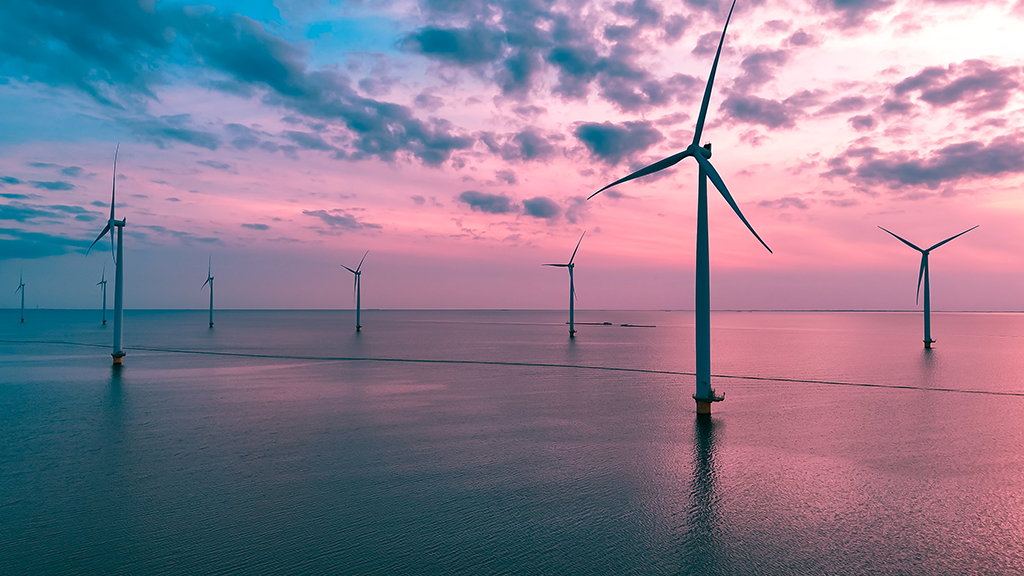
The federal government is set to announce significant funding to boost offshore wind energy projects in Nova Scotia, aiming to attract private investment and expand the province's renewable energy capabilities.
OTTAWA — An announcement from the federal government is expected to reveal a substantial commitment of $100 million aimed at advancing offshore wind energy initiatives in Nova Scotia. This funding is intended to stimulate private investment in projects such as the Wind West plan, which has been a focal point for provincial leaders. Federal Energy Minister Tim Hodgson is slated to make the announcement in Halifax on Thursday morning, accompanied by Justice Minister Sean Fraser, who recently represented Canada at the world’s largest wind industry trade show held in Germany. Nova Scotia Premier Tim Houston, a vocal advocate for federal support for the Wind West project, will also be present at the event.A senior government official, who spoke on condition of anonymity, disclosed that part of this funding—$5 million—will be allocated for deploying a fleet of buoys designed to measure wind speeds and ocean conditions. This data is projected to be instrumental for potential investors as they prepare for a bidding process scheduled for winter 2027.
The provincial government estimates that the initial phase of the Wind West project will require an investment of approximately $60 billion and is expected to generate around five gigawatts of power by 2033. This financial breakdown indicates that $40 billion will be directed toward the necessary turbine infrastructure, while $20 billion will be allocated for new transmission lines.
In a bold move earlier this year, Premier Houston declared that the objective to license offshore wind farms capable of producing five gigawatts of electricity would be significantly expanded to an ambitious 40 gigawatts—far exceeding Nova Scotia's current demand of 2.4 gigawatts. Houston has articulated that this surplus power could potentially supply 27 percent of Canada’s total electricity needs. Notably, both Quebec and Massachusetts have expressed interest in purchasing electricity generated from this proposed project.
The upcoming announcement is also anticipated to include a $3 million investment aimed at enhancing modeling efforts to facilitate the transmission of offshore wind energy from Nova Scotia to Quebec and Ontario, as well as conducting underwater surveys to determine the optimal routing for transmission cables.
Earlier this year, Nova Scotia’s offshore energy regulator indicated its intention to start examining ocean areas that could host the inaugural turbines of the Wind West initiative. While the federal government asserts that over 80 percent of Canada’s electricity is derived from renewable sources—including solar, hydro, nuclear, and wind—the government has encountered criticism from environmental advocates for allegedly prioritizing conventional oil and gas projects over renewable energy investments. This criticism has intensified following the rollout of Ottawa's electricity strategy in May, which aims to double the national grid's capacity, with a significant focus on expanding natural gas infrastructure.
Clean Energy Canada, a think tank associated with Simon Fraser University, has previously remarked that the strategy appears to overemphasize the role of natural gas while downplaying the long-term advantages of clean energy in terms of energy security and affordability. Marine Renewables Canada, the national association representing the offshore wind sector, highlights that the global offshore wind market is on track to evolve into a trillion-dollar industry by 2040. Despite Canada’s favorable geographic positioning, boasting some of the longest and windiest coastlines globally, the nation has yet to install any offshore wind turbines, lagging behind nearly 30 other countries. In the North Sea region alone, thousands of turbines are currently operational, generating over 30 gigawatts of power.
🏷️
energy policy
offshore wind energy
Wind West
government investment
Nova Scotia
renewable energy
energy infrastructure
wind power
sustainable energy
transmission lines