Montreal's Place des Arts Undergoes Major Rehabilitation with $134 Million Investment
📅 2 months ago
Montreal's iconic Place des Arts is set to receive a $134 million rehabilitation, focusing on restoring public access and enhancing architectural integration with the urban landscape, aimed for completion by summer 2028.
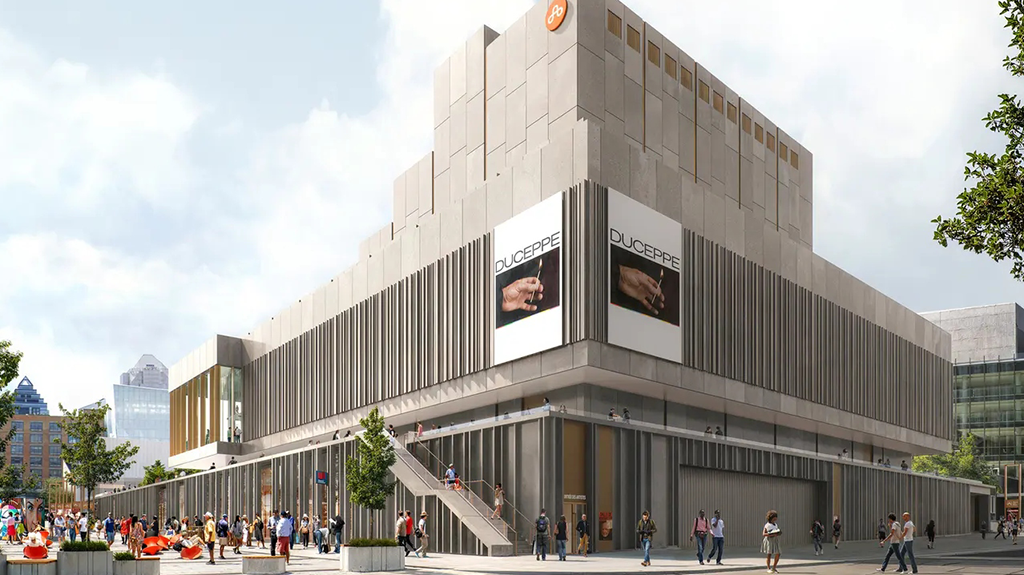
The renowned Place des Arts in downtown Montreal, a significant multi-building complex emblematic of the city’s extensive urban redevelopment during the 1960s, is currently undergoing a substantial renovation. This complex includes two historic buildings: the Salle Wilfred-Pelletier, a convex colonnaded structure that opened in 1963, and the Theatre Building, which features three theatres and was inaugurated in time for the Expo 67 world fair. These buildings encircle a large outdoor esplanade, a favored gathering spot for public events and leisure activities. Designed by the architectural firm David, Barott and Boulva, Place des Arts is celebrated for its bold use of concrete, now regarded as one of the prime examples of Brutalist architecture in Montreal. It is recognized for being among the first structures in Quebec to utilize an exterior concrete cladding, which is characterized by its refined ribbed panels.The rehabilitation project, primarily focused on the Theatre Building, has a budget of $134 million and commenced in April 2023, with an anticipated completion date set for summer 2028. This undertaking is being executed in collaboration with the Quebec Crown corporation, Société québécoise des infrastructures. While the Salle Wilfred-Pelletier retains its distinctive stacked roofline panels, the Theatre Building is rectangular and is notably identified by its roof of stacked concrete slabs that resemble a mountain.
As part of the renovation, more than 650 exterior panels will be removed and replaced due to findings from inspections initiated in 2018 that revealed significant deterioration of the cladding panels and corrosion of their anchoring system. The objectives of the rehabilitation include ensuring public safety, preserving the building in the long term, and upgrading the façade with durable, energy-efficient materials. Additionally, the project aims to improve public accessibility to the esplanade through the introduction of multi-door glazed entranceways, as well as to the adjacent Sainte-Catherine Street to the south. This effort seeks to strengthen the connection to the street and enhance integration with the Esplanade, ultimately creating a brighter and more versatile public space.
The new entrance on Sainte-Catherine Street, constructed just 15 years ago, is set to be transformed by the removal of a triangular entrance building, paving the way for a linear glazed structure. Marie-Josée Desrochers, president and CEO of Place des Arts, stated the organization’s commitment to completing the renovation by summer 2028, aiming to restore full public access to the esplanade and present a renewed Theatre Building with an updated façade.
However, the project has drawn critical commentary from McGill University architecture professor Avi Friedman. He noted that part of the renovation is necessitated by past design oversights, particularly regarding the integration of the buildings into the surrounding urban context. He emphasized that the new Sainte-Catherine entrance will align with the street’s recent enhancements, promoting a more pedestrian-friendly environment. He remarked that it is crucial for buildings in this area, which includes the larger open-air entertainment space known as Quartier des Spectacles, to be designed with better integration to host visitors appropriately.
Heritage Montreal, a civic organization devoted to preserving the city’s architectural and cultural heritage, expressed concerns regarding the architectural and urban context of the project. They indicated that while they have no strong feelings about the street entrance itself, the decision to demolish it after only 15 years raises questions about the tendency to prioritize novelty over enduring relevance in design. They expressed hope that Montreal would avoid becoming a city characterized by ephemeral design trends.
🏷️
Brutalist architecture
construction investment
Montreal
Sainte-Catherine Street
urban rehabilitation
Place des Arts
Cultural Heritage
energy efficiency
Theatre Building
public accessibility
Next Article →
Buildots Launches AI-Driven Research Hub to Revolutionize Construction Decision-Making2 months ago
Related Posts