New Westminster Revitalizes Aging Sewer and Water Infrastructure with Green Innovations
📅 2 months ago
New Westminster embarks on a significant infrastructure project aimed at enhancing its aging water and sewer systems through innovative green solutions, with construction projected to complete by the end of 2026.
New Westminster is addressing the challenges posed by some of the oldest sewer and water infrastructure in Western Canada. The city boasts approximately 206 kilometers of watermains and 294 kilometers of sewer mains, which encompass combined, sanitary, and drainage systems. According to Brittany Tom, an integrated stormwater engineer for the city, the oldest known water infrastructure dates back to 1937, while the oldest sewer infrastructure can be traced to 1911. Unlike humans, however, aging infrastructure has the potential to be revitalized.As a member-municipality of Metro Vancouver, New Westminster, often referred to as New West, is mandated to develop and execute an Integrated Storm Management Plan (ISMP) aimed at effectively managing stormwater and safeguarding its watersheds. Additionally, the city has created a Water Asset Management Plan to guide the stewardship of its water assets. Currently, New Westminster is concentrating its sewer and water initiatives in the west end of the city, where it is actively installing storm sewers, watermains, rain gardens, and flow monitoring stations in the 16th, 18th, and 20th Street catchments.
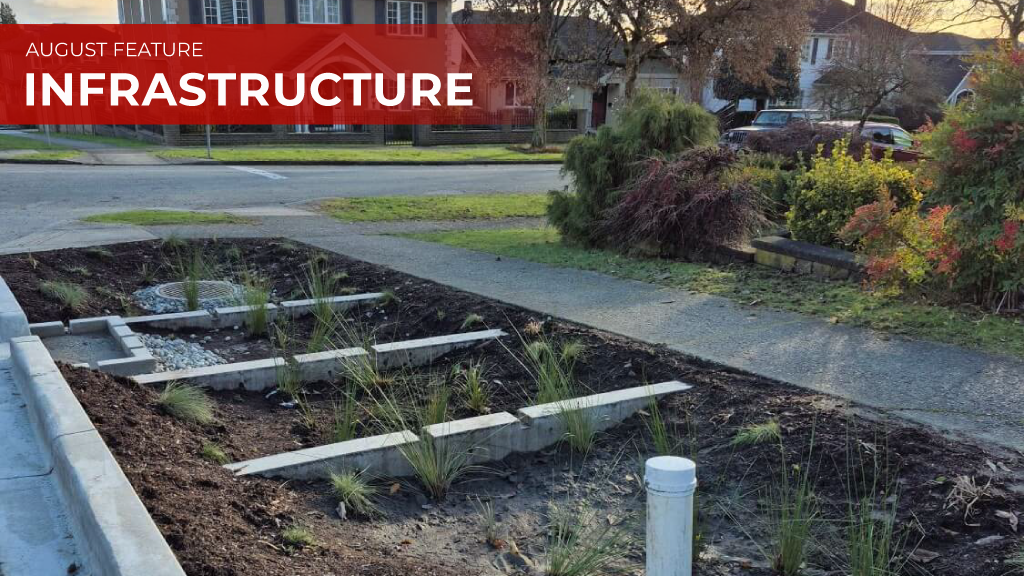
A standout feature of this project is the incorporation of green infrastructure, specifically 24 rain gardens designed to naturally capture and filter stormwater before it enters the drainage system. RAM Engineering Ltd. from Vancouver is providing consulting services to the engineering department of New Westminster. The majority of the project work involves separating outdated combined sewers and replacing aging watermains. According to Sara Mokhtari, a project manager at RAM, combined sewers are older underground systems that transport both sanitary wastewater and stormwater through a single pipe.
"During heavy rainfall, these systems can reach their capacity, leading to combined sewer overflows that discharge untreated wastewater into local waterways to prevent backups," Mokhtari explained. Such overflows can adversely affect water quality and aquatic ecosystems. The strategy of sewer separation is part of New Westminster's long-term plan to eliminate combined sewer overflows and enhance environmental protection. This process involves replacing a combined sewer with two distinct systems: one for sanitary wastewater and another for stormwater. This separation reduces combined sewer overflows, enhances water quality, and boosts infrastructure capacity and resilience during heavy rainfall events.
In addition to sewer separation, the project entails replacing aging watermains and introducing new rain gardens throughout the west end project area. Mokhtari noted that many of the watermain replacements will occur along the same road corridors as the sewer separation work, which helps to minimize road disruptions, cut costs, and lessen the impact on residents.
"The integration of green infrastructure, particularly the rain gardens, represents a forward-looking approach that combines underground infrastructure renewal with nature-based stormwater management, providing long-term environmental benefits," Mokhtari stated. She further emphasized that this project exemplifies how municipalities can merge essential infrastructure renewal with climate resilience and environmental stewardship.
Construction commenced in April 2024, with progress being made across various catchments. "The project is being delivered in phases," Mokhtari explained, noting that this approach helps to minimize disruption while enabling the city to implement several significant infrastructure improvements simultaneously. The project is anticipated to be substantially completed ahead of schedule by the end of 2026.
However, the undertaking has faced its share of challenges. Mokhtari highlighted the necessity for meticulous planning to maintain access for residents, schools, businesses, and emergency services during construction in an established residential neighborhood like the west end. Regular communication through construction notices, open houses, project updates, and proactive stakeholder engagement has been crucial in addressing concerns and fostering public trust. Collaboration among the city, consultants, and contractors has been essential in effectively managing these challenges.
Tom noted that the west end project represents the city’s largest sewer and water infrastructure initiative to date. Additional sewer and water projects are either currently underway or slated to begin soon, including a closed-circuit television sewer inspection and rehabilitation program, along with the replacement of a watermain located under Carnarvon Street. Upgrades to three sanitary pump stations are also scheduled for completion in 2026 and 2027.
Moreover, the city is in the planning stages for the next phase of its multi-year construction program, although specific future project locations have yet to be finalized. The West End Sewer Separation, Watermain Rehabilitation, and Green Infrastructure Project has been nominated for a 2026 Association of Consulting Engineering Companies British Columbia award, recognizing its engineering excellence in the municipal and civil engineering category.
🏷️
green infrastructure
environmental protection
stormwater management
sewer separation
watermain replacement
New Westminster
Metro Vancouver
sustainable construction
engineering excellence
Infrastructure
← Previous Post
Revitalization of Edgewater: Emmanuel Congregation's Redevelopment Project2 months ago
Next Article →
Uniper Secures Long-Term LNG Supply from Ksi Lisims Project in British Columbia2 months ago