Ontario Moves to Expand Toronto's Island Airport, Designates Special Economic Zone
📅 5 months ago
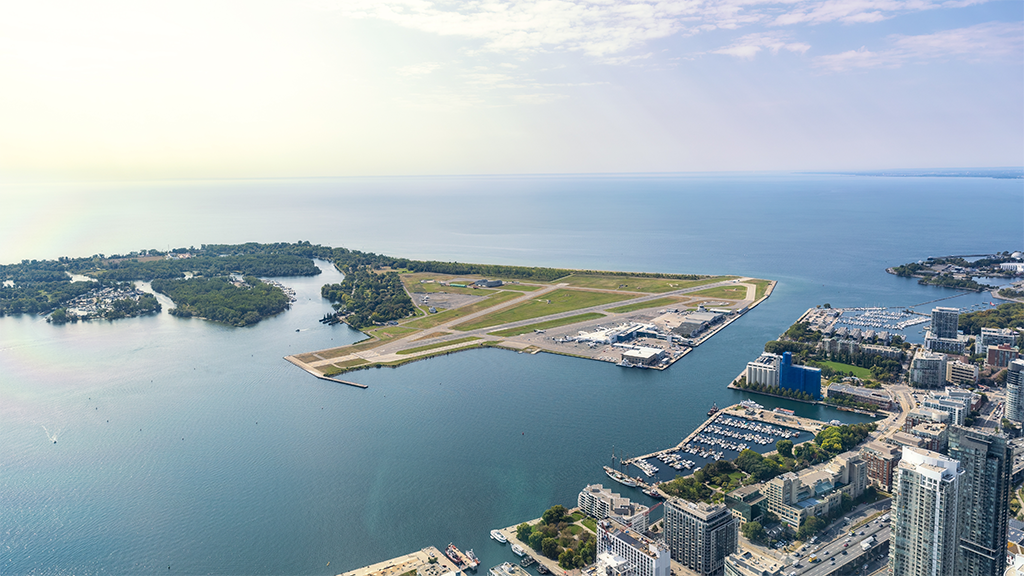
In a significant development for Toronto's transportation infrastructure, Ontario has announced plans to designate the city’s island airport as a special economic zone. This initiative, aimed at expediting the expansion of Billy Bishop Toronto City Airport, follows the province's recent legal acquisition of the land on the Toronto Islands, as Transport Minister Prabmeet Sarkaria confirmed on Thursday. The legislation, passed by the provincial government, permits the takeover of land necessary for the airport's enlargement while clarifying that the entire Toronto Islands will not be affected. The province has committed to collaborating with city officials to utilize only the land required for the project.
Premier Doug Ford has characterized the airport as a "crown jewel" of Ontario, expressing intentions to facilitate the operation of jets from the facility, which currently lacks the runway length necessary for such aircraft. The new legislation also enables the province to assume Toronto’s position in a tripartite agreement involving the city, the federal government, and the Toronto Port Authority, the latter being a federal entity overseeing the airport.
Minister Sarkaria emphasized the importance of this project for both Ontario and Canada, referring to it as a potential "nation-building project." He remarked, "It’s too important for Ontario, for Canada, not to get this project moving forward." The province plans to employ special economic zones and other mechanisms to advance the airport's expansion, which is projected to increase annual passenger traffic from two million to ten million.
However, the announcement has sparked controversy, particularly from Toronto Mayor Olivia Chow, who has criticized the move as a land grab conducted without adequate public consultation. Chow expressed concern that residents of Toronto are being sidelined in discussions about the future of their waterfront. "We have not seen a formal proposal for airport expansion. The province and the Toronto Port Authority must stop keeping Torontonians in the dark and release their plans now," she stated.
On the other hand, the Toronto Port Authority supports the expansion, with CEO RJ Steenstra indicating that the project’s funding will come from passengers and airlines, estimating the total cost to be between $4 billion and $5 billion over a 25-year period. The federal government has remained noncommittal regarding the expansion but has pledged to collaborate with the province and other stakeholders to ensure the airport's long-term viability. Transport Minister Steven MacKinnon’s office announced that consultations with the community will commence soon, providing residents an opportunity to voice their opinions, which will inform any future decisions and the shaping of the tripartite agreement.
Prime Minister Mark Carney has described Ford’s vision for the airport as "very interesting" and filled with potential. The recent legislation, which grants the cabinet the authority to create special economic zones—where provincial and municipal laws can be suspended—has raised eyebrows due to its implications for regulatory oversight. This law was initially intended to expedite the approval of large-scale projects, particularly in the mining sector, but has faced backlash, especially from First Nations who feel their rights are being overlooked.
Opposition parties have voiced their disapproval of the province’s actions regarding the airport expansion. NDP Leader Marit Stiles accused Ford of prioritizing personal ambitions over the residents’ voices, while Interim Liberal Leader John Fraser labeled the recent bill a continuation of Ford’s aggressive land acquisition strategy on the Toronto waterfront. Green Party Leader Mike Schreiner has expressed alarm over the potential for the province to bypass necessary regulations, highlighting concerns regarding Indigenous consultations, environmental protections, and public safety laws.
Ford's broader vision for Toronto’s waterfront also includes ambitious redevelopment plans for Ontario Place, featuring new attractions such as a science centre, a large spa, a water park, and a year-round concert venue. However, local authorities have cautioned that such developments could lead to severe traffic congestion in the area. The push for the airport expansion, intertwined with these larger projects, reflects the province's aggressive stance on infrastructure development amidst ongoing debates about governance and public consultation.
Premier Doug Ford has characterized the airport as a "crown jewel" of Ontario, expressing intentions to facilitate the operation of jets from the facility, which currently lacks the runway length necessary for such aircraft. The new legislation also enables the province to assume Toronto’s position in a tripartite agreement involving the city, the federal government, and the Toronto Port Authority, the latter being a federal entity overseeing the airport.
Minister Sarkaria emphasized the importance of this project for both Ontario and Canada, referring to it as a potential "nation-building project." He remarked, "It’s too important for Ontario, for Canada, not to get this project moving forward." The province plans to employ special economic zones and other mechanisms to advance the airport's expansion, which is projected to increase annual passenger traffic from two million to ten million.
However, the announcement has sparked controversy, particularly from Toronto Mayor Olivia Chow, who has criticized the move as a land grab conducted without adequate public consultation. Chow expressed concern that residents of Toronto are being sidelined in discussions about the future of their waterfront. "We have not seen a formal proposal for airport expansion. The province and the Toronto Port Authority must stop keeping Torontonians in the dark and release their plans now," she stated.
On the other hand, the Toronto Port Authority supports the expansion, with CEO RJ Steenstra indicating that the project’s funding will come from passengers and airlines, estimating the total cost to be between $4 billion and $5 billion over a 25-year period. The federal government has remained noncommittal regarding the expansion but has pledged to collaborate with the province and other stakeholders to ensure the airport's long-term viability. Transport Minister Steven MacKinnon’s office announced that consultations with the community will commence soon, providing residents an opportunity to voice their opinions, which will inform any future decisions and the shaping of the tripartite agreement.
Prime Minister Mark Carney has described Ford’s vision for the airport as "very interesting" and filled with potential. The recent legislation, which grants the cabinet the authority to create special economic zones—where provincial and municipal laws can be suspended—has raised eyebrows due to its implications for regulatory oversight. This law was initially intended to expedite the approval of large-scale projects, particularly in the mining sector, but has faced backlash, especially from First Nations who feel their rights are being overlooked.
Opposition parties have voiced their disapproval of the province’s actions regarding the airport expansion. NDP Leader Marit Stiles accused Ford of prioritizing personal ambitions over the residents’ voices, while Interim Liberal Leader John Fraser labeled the recent bill a continuation of Ford’s aggressive land acquisition strategy on the Toronto waterfront. Green Party Leader Mike Schreiner has expressed alarm over the potential for the province to bypass necessary regulations, highlighting concerns regarding Indigenous consultations, environmental protections, and public safety laws.
Ford's broader vision for Toronto’s waterfront also includes ambitious redevelopment plans for Ontario Place, featuring new attractions such as a science centre, a large spa, a water park, and a year-round concert venue. However, local authorities have cautioned that such developments could lead to severe traffic congestion in the area. The push for the airport expansion, intertwined with these larger projects, reflects the province's aggressive stance on infrastructure development amidst ongoing debates about governance and public consultation.
🏷️
special economic zone
expansion project
Ontario
Infrastructure
Transportation
government policy
Billy Bishop Airport
Toronto
airport development
Urban planning
← Previous Post
Green Building Training Program Expands Opportunities for Port Alberni Workers5 months ago