Diverging Housing Trends: Ontario and Quebec's Contrasting Real Estate Markets
📅 4 days ago
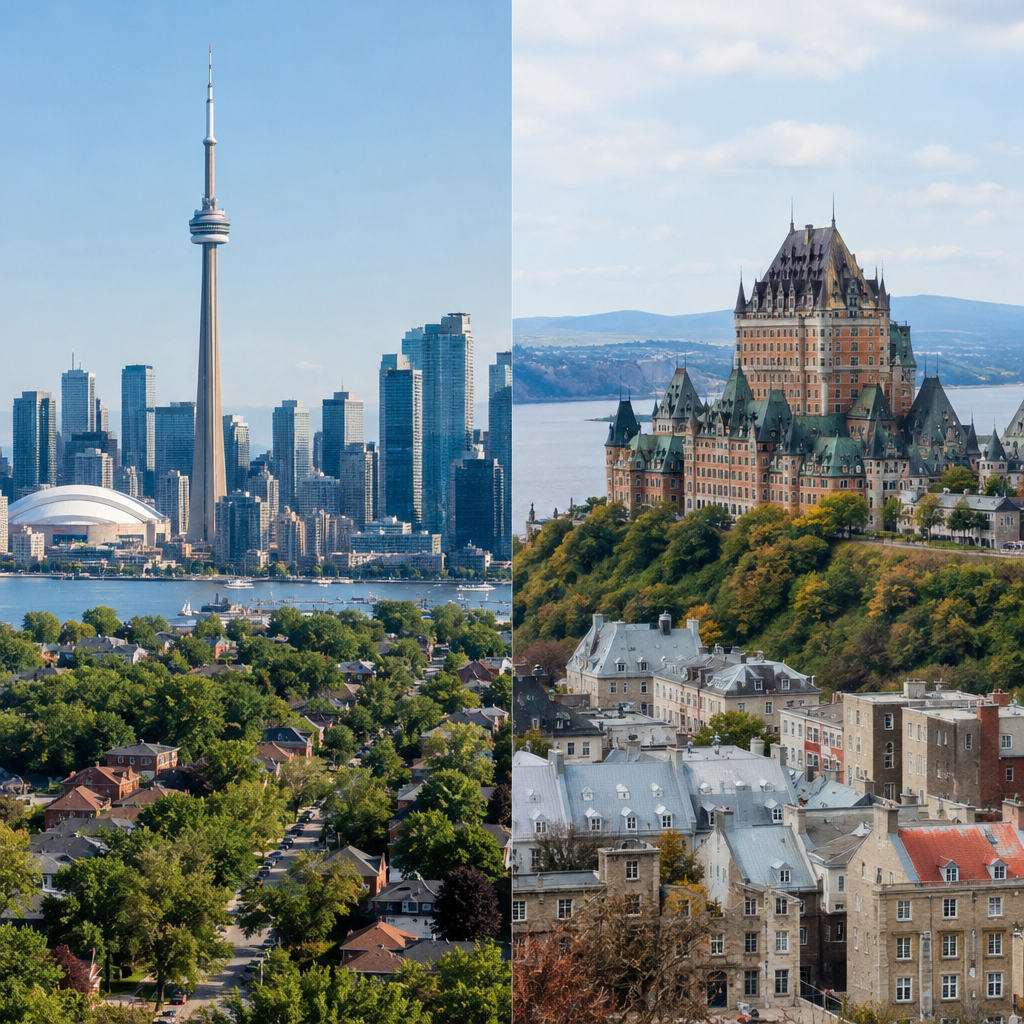
A detailed analysis of the contrasting housing markets in Ontario and Quebec reveals significant differences in listings and sales, with implications for builders and policymakers.
The narrative surrounding the real estate markets of Toronto and Vancouver has often been characterized as unique, plagued by high prices and substantial debt burdens. However, recent data from the Canadian Real Estate Association (CREA) suggests a broader trend that cannot be ignored. In October, sales in Greater Toronto fell by 7.9% compared to the previous year, while Greater Vancouver saw a more significant decline of 10.7%. Other major cities experienced similar downturns: Calgary dropped by 12.8%, Ottawa by 10.8%, and Montreal by a staggering 17.6%. Nationally, sales were down by 10.6%. If Toronto and Vancouver were indeed isolated cases, one might expect the other cities to perform better, yet this is clearly not the case.While some markets have not seen corresponding price drops, the data reveals a concerning trend in sales volume, which typically precedes price adjustments. For instance, Calgary's benchmark price remained stable at $569,300, and Montreal's benchmark increased by 1.4% to $591,400. In contrast, Toronto's prices have decreased by 4.4% over the last year and 13.7% over three years, while Vancouver's prices fell by 5.2%.
The supply dynamics present an intriguing picture. In Ontario, there were 33,510 new residential listings in October, which is an 8.8% decrease from last year, while sales dropped by 8.7% to 14,053. Conversely, Quebec reported 13,864 new listings, an increase of 6.2%, against a backdrop of 7,451 sales, down 12.6%. Throughout 2026, Ontario's new listings have consistently fallen below last year's levels, while Quebec has seen a rise.
The benchmark price in the Greater Toronto Area stands at $928,800, reflecting a year-over-year decrease of 4.4%. Mississauga is down 8.5%, while Quebec’s CMA has increased by 5.1% over the same period, and 33.6% over three years. This divergence suggests that Ontario is tightening its market while still experiencing price declines, whereas Quebec is increasing its listings and maintaining price growth.
In the first ten months of 2026, the Greater Toronto Area recorded 145,345 new listings, down 14.7% from the previous year, with sales of 52,694, which is only a slight decrease of 1.8%. The year-to-date sales-to-new-listings ratio improved from 31.5% to 36.3%, not due to increased buyer activity but rather because sellers are withdrawing from the market. Even with a year of reduced listings, Toronto's seasonally adjusted ratio was still below the 45% threshold deemed balanced by CREA.
Montreal's market is moving in the opposite direction, with new listings up 6.3% to 69,458, while sales fell by 8.7% to 37,091, resulting in a sales-to-new-listings ratio decrease from 62.2% to 53.4%. This shift indicates that Montreal is transitioning from a seller's market towards a more balanced one, whereas Toronto is attempting to recover from a buyer's market by limiting available options.
The impact of interest rates is also noteworthy. The Bank of Canada raised its overnight rate to 2.50% from 2.25% on October 28, marking the first increase since July 2023. This change, coupled with a rise in the five-year Canada bond rate, has tightened purchasing power, impacting buyer confidence as evidenced by the Bloomberg-Nanos Canadian Confidence Index, which was below its long-term average.
For builders, the situation in Quebec appears more favorable, with rising benchmarks and a balanced sales-to-listings ratio supporting potential presales. In contrast, Ontario's market dynamics suggest caution, especially in light of the recent rate hikes. The overall national inventory stands at approximately 197,000 listings, slightly above CREA's long-term average of 190,000, indicating a semblance of balance. However, the underlying issues in Ontario's market, characterized by reduced activity and declining sales, may foreshadow future shortages if builders continue to hold back listings and new developments.
The question remains: if the solution to a perceived oversupply is to start fewer homes, what will the housing landscape look like in 2029? This uncertainty underscores the complexities of the current housing market, as the effects of declining demand in major centers like Toronto and Vancouver ripple outwards across the country.
🏷️
Canada
Ontario
Vancouver
housing market
interest rates
Calgary
Toronto
Montreal
Quebec
real estate
← Previous Post
Manitoba Government to Ban AI Images in Real Estate Ahead of Upcoming Election4 days ago