Alberta Votes to Remain in Canada: A Historic Referendum Outcome
📅 2 days ago
In a decisive referendum, Alberta voters overwhelmingly chose to remain a part of Canada, with 76% supporting Confederation, while 24% favored a second referendum on separation. Premier Danielle Smith and Prime Minister Mark Carney praised the outcome, which reflects the province's complex political sentiments.
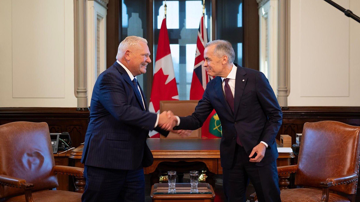
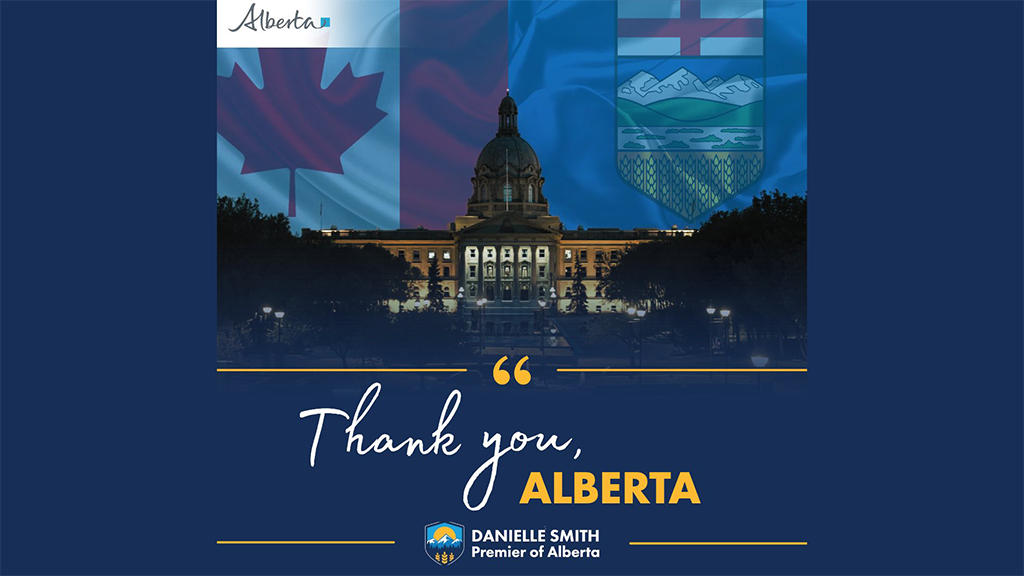
EDMONTON — Alberta has made its choice clear in a historic referendum held on Monday, with a significant majority of voters expressing their desire to remain part of Canada. Preliminary results indicate that approximately 76 percent of Albertans voted in favor of continuing their Confederation status, while 24 percent called for a second, binding referendum on the issue of separation. Both Alberta Premier Danielle Smith and Prime Minister Mark Carney praised the outcome, framing it as a vote for unity and collaboration within the nation. "Thank you, Alberta!" Smith expressed on social media, asserting that the province's choice signifies a commitment to a stronger Alberta within a united Canada. Smith is scheduled to deliver a televised address on Tuesday night to outline the next steps for the province following this pivotal decision. Carney echoed her sentiments, stating, "Albertans made a clear choice. They chose unity, to build together, and to take care of each other. Canada is so much greater than the sum of its parts." Amid celebrations at watch parties and rallies for pro-Canada supporters, some separatist advocates expressed disappointment but remained resolute. Prominent separatist leader Thomas Lukaszuk rallied the crowd at a downtown Edmonton event, saying, "Don’t mess with Canada!" In contrast, Jeff Rath from the Alberta Prosperity Project, an organization advocating for independence, declared, "We’re not going anywhere," emphasizing their ongoing commitment to educate Albertans on the perceived benefits of separation. This referendum aligns Alberta with Quebec, which has previously held two sovereignty votes, the most recent in 1995 where it narrowly opted to remain part of Canada. The Alberta referendum posed ten questions to voters, with the separation query being among the most contentious. Voter turnout exceeded expectations, with over 1.3 million ballots cast, including mail-in and advance votes. Premier Smith, who voted to remain in Canada, had previously assured that a simple majority would suffice for the referendum's outcome and pledged against any subsequent separation votes during her government's term. Supporters of remaining in Canada expressed relief, with Christina Fielder from the Forever Canadian party noting that Alberta remains in the same position as before the referendum and hoping for an end to the separatist debate. However, some voters, like Shawn Campbell at a polling station in Edmonton, opted for a separation referendum not out of a desire to leave, but as a message to Ottawa regarding their dissatisfaction. The referendum process began in May, instigated by Smith, and has since escalated tensions within communities, leading to divisions among neighbors. This debate has also transformed the Alberta flag into a symbol for both separatist and unionist sentiments, further complicating the political landscape. Smith has navigated a delicate balance, professing support for a "sovereign Alberta within a united Canada," while her government has enacted reforms to facilitate the petition for a separation vote. Critics, including the Opposition NDP, argue the referendum serves to amplify separatist sentiments rather than reflect genuine public opinion, accusing Smith of pandering to the more extreme factions of her United Conservative Party (UCP). As the UCP faces internal challenges, including calls for leadership reviews, the future remains uncertain for Smith, whose government has seen declining popularity in recent polls. With the next provincial election scheduled for October 2027, it remains to be seen whether the separatist sentiment will linger and impact the UCP's standing in Alberta politics. Rath emphasized that Smith would face her own reckoning, suggesting that the current political climate could lead to significant shifts within the party.
🏷️
Danielle Smith
government
separatism
Alberta
public opinion
referendum
Construction
unity
politics
Canada
← Previous Post
Celebrating Excellence: The 37th Annual VRCA Awards of Excellence Gala Highlights Top Construction Projects2 days ago
Next Article →
Federal Ministers Defend Bill C-39 Amidst Controversy Over Major Project Approvals2 days ago