Federal Ministers Defend Bill C-39 Amidst Controversy Over Major Project Approvals
📅 2 days ago
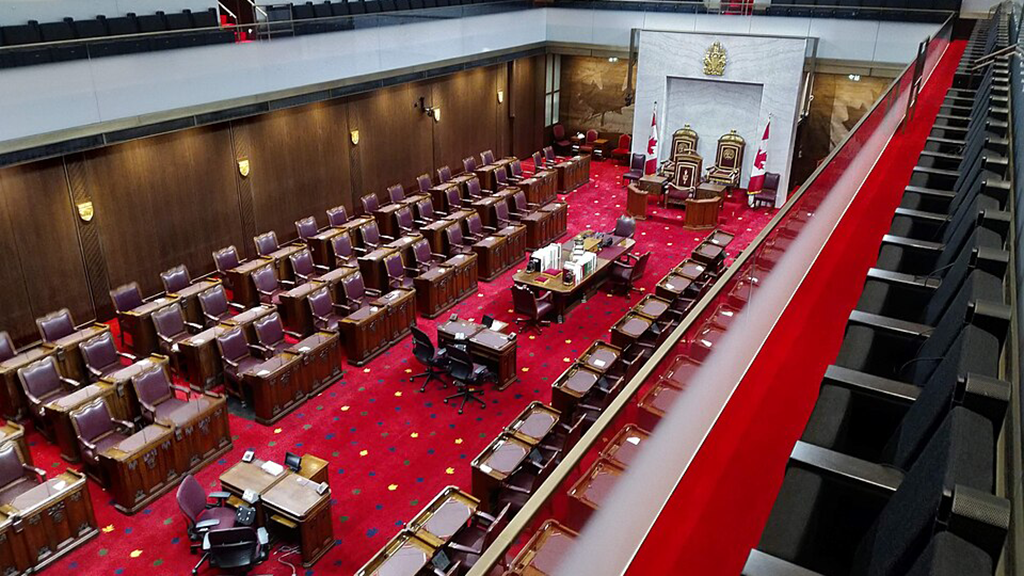
Four federal ministers defended Bill C-39, aimed at expediting major project approvals, during a session in the House of Commons. The bill faces opposition from Indigenous, environmental, and labor groups, raising concerns about its implications on workers' rights and environmental oversight.
In Ottawa, four federal ministers took to the House of Commons on Monday to advocate for the government's controversial legislation designed to expedite the approval process for major projects. This 243-page bill, known as Bill C-39, seeks to shorten review times and establish zones of 'national interest' that would allow certain projects to receive pre-approval. Furthermore, the bill aims to expand the current one-project, one-review, within one-year framework for major infrastructure initiatives to a broader range of projects across Canada.Last week, labor leaders and union representatives organized protests nationwide against Bill C-39, voicing concerns that the legislation would infringe upon workers' rights to strike. Among the proposed modifications is a significant alteration to the Canada Labour Code, particularly Section 107. This section would now explicitly empower a minister to mandate that a federally regulated business resume operations or to impose binding arbitration upon the involved parties.
The Liberal government has previously utilized this contentious legal provision to intervene in strikes affecting federally regulated sectors, including railways, ports, and air travel. The legislation will also introduce new prerequisites the federal government must fulfill before invoking Section 107, necessitating consideration of a special mediator's report and an evaluation of whether a work stoppage negatively impacts the 'national interest.'
Labour experts have indicated that the revised wording likely grants the minister enhanced authority, which may face constitutional challenges under the Charter. Jobs Minister Patty Hajdu emphasized that the bill aims to bolster the right to strike by removing the minister's ability to invoke Section 107 prior to a labor disruption. She asserted that the government must intervene when a significant dispute remains unresolved with no clear path to resolution.
In addition to labor concerns, a coalition of First Nations groups has condemned the proposed legislation, arguing that it would diminish environmental oversight and curtail their ability to influence decisions affecting their ancestral territories. The Chiefs of Ontario, Assembly of First Nations Quebec-Labrador, Nishnawbe Aski Nation, and the British Columbia Assembly of First Nations collectively stated that their 'free, prior, and informed consent cannot be squeezed into a predetermined federal project timeline.'
Responding to these criticisms, Canada-U.S. Trade Minister Dominic LeBlanc clarified that Bill C-39 does not lessen Ottawa's obligations to consult Indigenous rights holders, asserting that a more efficient process would not compromise the rigor of consultations. Transport Minister Steven MacKinnon added that the legislation aims to reduce administrative burdens while upholding stringent safety and environmental standards.
Members of Parliament have already passed a motion to commence a clause-by-clause examination of Bill C-39 in mid-November. This legislation is integral to the Liberal government's strategy to reduce economic dependence on the United States and position Canada as a dependable trading partner in international markets.
Conservative Leader Pierre Poilievre expressed earlier this month that his party would support forwarding the legislation to committee study, with intentions to propose amendments to what he described as a 'weak, watered-down, long-delayed' bill. Poilievre has called for the government to accelerate project decision timelines to between six months and one year while also advocating for measures to safeguard workers' rights. Additionally, he has suggested the elimination of the industrial carbon price and the establishment of shovel-ready zones with pre-permitting for development projects.
🏷️
federal legislation
Canada Labour Code
Indigenous rights
major projects
Infrastructure
workers' rights
construction industry
Bill C-39
economic strategy
environmental oversight