B.C. Premier Defends Condo Purchase Plan Amid Criticism
📅 4 months ago
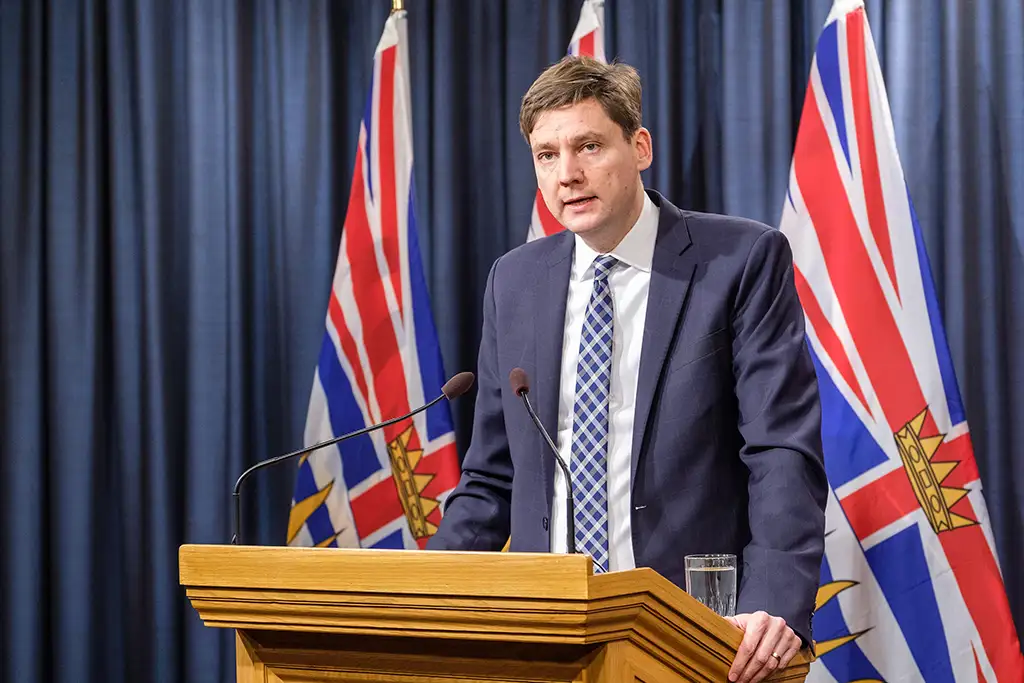
Premier David Eby defends a joint federal-B.C. initiative aimed at purchasing unsold condominiums, asserting it is not a bailout for developers but rather a means to provide housing opportunities.
In a recent statement, British Columbia Premier David Eby addressed the controversy surrounding a newly announced joint initiative between the federal and provincial governments aimed at purchasing unsold condominiums. Eby emphasized that this plan is not intended to serve as a bailout for developers in Vancouver, but rather as a viable opportunity to acquire empty homes in various regions at a cost lower than new construction.The plan, which was unveiled by Eby and Prime Minister Mark Carney, aims to potentially finance the purchase of 2,200 vacant condos across British Columbia. The initiative proposes making these properties accessible to the public through a rent-to-buy scheme. However, the announcement has faced significant backlash from critics, including opposition parties at both the federal and provincial levels, who have labeled it as a financial rescue for developers.
Eby responded to these criticisms by asserting that the current oversupply in the Vancouver condo market will eventually stabilize on its own, and that the proposed program is unlikely to benefit developers in Vancouver due to unfavorable financial dynamics. “The numbers don’t work there,” he stated. He further noted that the federal government’s eagerness to announce the plan prior to finalizing all details has resulted in some confusion surrounding its objectives. “I think in hindsight, we should have waited and made sure that all the details were available,” he admitted.
Despite the pushback, Eby maintained that the initiative presents a significant opportunity for individuals who may struggle to enter the housing market otherwise. He highlighted that potential purchasing opportunities exist in areas south of the Fraser River, as well as on Vancouver Island and in the Okanagan region.
When questioned about how the government could justify purchasing properties at below-market prices when they remain unsold, Eby explained that the strategy of bulk purchasing and acquiring entire buildings through bankruptcy proceedings creates opportunities that individual buyers would not have access to.
Eby also indicated that the plan might be halted if it does not gain public support, stating, “If people hate it, that’s OK. We don’t have to do it.” Nevertheless, he expressed confidence that the program could lead to acquisitions below construction costs. He emphasized that developers would not profit from the initiative, as the mortgages would be considered public assets, and that the plan would ultimately help individuals enter the housing market at no expense to taxpayers.
“Developers are expected to incur losses on many of these initiatives,” Eby asserted, framing the proposal as an alternative method to provide housing opportunities to those who might not otherwise have access. He noted that this approach is not necessarily developers' preferred solution, referencing an open letter from the Urban Development Institute, which advocates for the removal of the GST on new homes. Eby characterized such a tax cut as a true bailout, suggesting it would allow developers to maintain their profit margins without having to adjust to market realities.
During a press conference in Ottawa, Prime Minister Carney elaborated on the specifics of the plan, revealing that the federal government would contribute 10 percent of an estimated total cost of $1.45 billion, amounting to $145 million. Eby confirmed these figures, noting that British Columbia would match this contribution, bringing the total funding to just under $300 million, with the remainder expected to come from financing.
The Housing Ministry of British Columbia has stated that discussions regarding the plan are ongoing among the provincial government, federal government, and relevant stakeholders. They have committed to providing further details once the specifics are finalized.
🏷️
British Columbia
federal funding
government initiative
Affordable housing
Construction Sector
condominiums
real estate
rent-to-buy
housing market
urban development