BuildForce Canada Reveals Construction Forecast for P.E.I. and Newfoundland and Labrador
📅 2 months ago
BuildForce Canada's latest report forecasts significant changes in construction employment and investment in Prince Edward Island and Newfoundland and Labrador from 2026 to 2035.
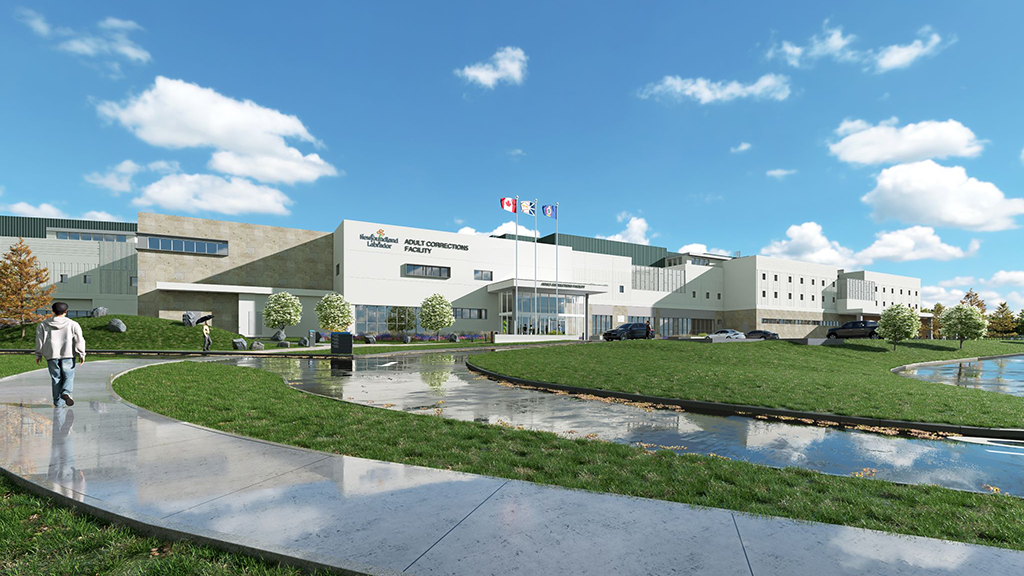
BuildForce Canada has unveiled its annual reports detailing the outlook for the construction and maintenance sectors across residential and non-residential markets. This year's provincial analysis focuses on Prince Edward Island (P.E.I.) and Newfoundland and Labrador, covering a forecast period extending from 2026 through 2035. In particular, the Daily Commercial News has published national coverage of these findings on its website today. In Charlottetown, BuildForce highlights that P.E.I.'s construction industry experienced significant growth in 2025, driven largely by a surge in residential construction and robust activity within the non-residential sector, particularly in engineering projects and Institutional, Commercial, and Industrial (ICI) buildings. However, the forecast suggests a more tempered outlook as the decade progresses. Specifically, new housing construction is anticipated to decline until 2028, before seeing a resurgence in the early 2030s. By 2035, employment in the residential sector is projected to decrease by nine percent compared to 2025, with new housing jobs expected to contract by as much as 26 percent. Irwin Bess, executive director of BuildForce Canada, commented that while residential construction levels are predicted to decrease from their recent peaks, they will remain above historical averages through 2035. In the non-residential segment, engineering construction reached its peak in 2025, bolstered by major utility projects such as Enwave Energy's Energy from Waste Renewal and electricity capacity expansions. The demand for ICI buildings has also been driven by numerous healthcare, educational, government, and commercial initiatives. As these projects reach completion, non-residential investment is expected to taper off into the early 2030s, followed by a slight recovery as economic conditions improve and the need for commercial, industrial, and transportation-related infrastructure rises. Non-residential employment is forecasted to remain high in 2026 before gradually declining as ongoing utilities and institutional projects conclude. By the end of the forecast period, employment in this sector is expected to be roughly eight percent lower than in 2026, yet still above long-term historical averages. BuildForce has indicated that slowing demand will likely necessitate a contraction of approximately 480 workers throughout the forecast period. When considering the projected retirement of 1,650 workers, the province could face a total hiring requirement of around 1,170 workers. To meet this demand, an estimated 1,720 first-time entrants under the age of 30 from the local population are expected to join the workforce. This influx could potentially lead to a surplus of 550 workers who may seek employment opportunities outside the province. Sam Sanderson, executive director of the Construction Association of Prince Edward Island, emphasized the importance of context in the current industry dynamics, noting that while construction activity is expected to slow, it follows record-high levels and remains above historical averages for the decade. He stressed the necessity of ongoing efforts to recruit and retain new talent to fulfill anticipated demands. Meanwhile, in Newfoundland and Labrador, BuildForce anticipates a significant shift in construction activity over the forecast period. Following a modest contraction in 2025, where the residential sector's growth was outstripped by a downturn in non-residential construction, the outlook suggests a reversal by 2035. Although a slight decline in residential investment is expected, this will be more than compensated for by a nearly 25 percent increase in non-residential investment. Midway through the forecast, new housing construction is projected to rebound, with both single-detached and multi-unit residential projects seeing growth before slowing again towards 2035. Furthermore, renovation activities in the residential sector are expected to rise consistently throughout the decade. By 2035, these trends are anticipated to result in a 10 percent decrease in residential construction employment compared to 2025. Major projects such as the Bay du Nord offshore oil development and the expansion of the Churchill Falls Generating Station are anticipated to elevate non-residential investment, peaking in 2031. Investment in ICI buildings is expected to rise significantly, with ongoing or planned projects including the St. John’s Penitentiary and the Canada Revenue Agency National Verification and Collection Centre. By the end of the decade, non-residential construction employment is forecasted to increase by 15 percent relative to 2025, with the strongest growth occurring in ICI building employment, projected to rise by 27 percent over the forecast period. The outlook for Newfoundland and Labrador's construction labor force is heavily influenced by demographic changes, with an estimated 5,900 workers, or 30 percent of the 2025 labor force, expected to retire by 2035. Coupled with the anticipated demand for new positions, the province may need to hire around 5,700 workers. Approximately 4,100 first-time entrants under 30 years old are expected to join the workforce from the local population. However, even with these new additions, BuildForce warns that the industry may face a hiring gap of 1,600 workers. Bob Fiander, executive director of Trades NL: Building Trades of Newfoundland & Labrador, expressed cautious optimism regarding the province's construction outlook, noting that many projections rely on the approval of pending projects and further opportunities necessitating energy transmission. He highlighted the readiness of the skilled labor supply to meet significant demand in the near to mid-term, along with the advantage of time to collaborate with industry stakeholders to plan for future workforce supply, training, retention, and growth in the construction and maintenance sectors. Terry French, president of the Construction Labour Relations Association of Newfoundland and Labrador, reinforced this sentiment, stating that while current activity may be slower, the potential for major upcoming projects and a prepared labor force position the industry favorably for future growth.
🏷️
non-residential construction
residential construction
employment trends
construction forecast
Newfoundland and Labrador
ICI buildings
BuildForce Canada
engineering projects
Prince Edward Island
construction workforce
← Previous Post
New Study Highlights Disproportionate Impact of Opioid Deaths on Construction Workers in Ontario2 months ago
Next Article →
BuildForce Canada's 10-Year Construction Forecast Reveals $500 Billion in Major Projects2 months ago