
Canada's Defence Expansion: Workforce Challenges Amid Ambitious Goals
📅 Today
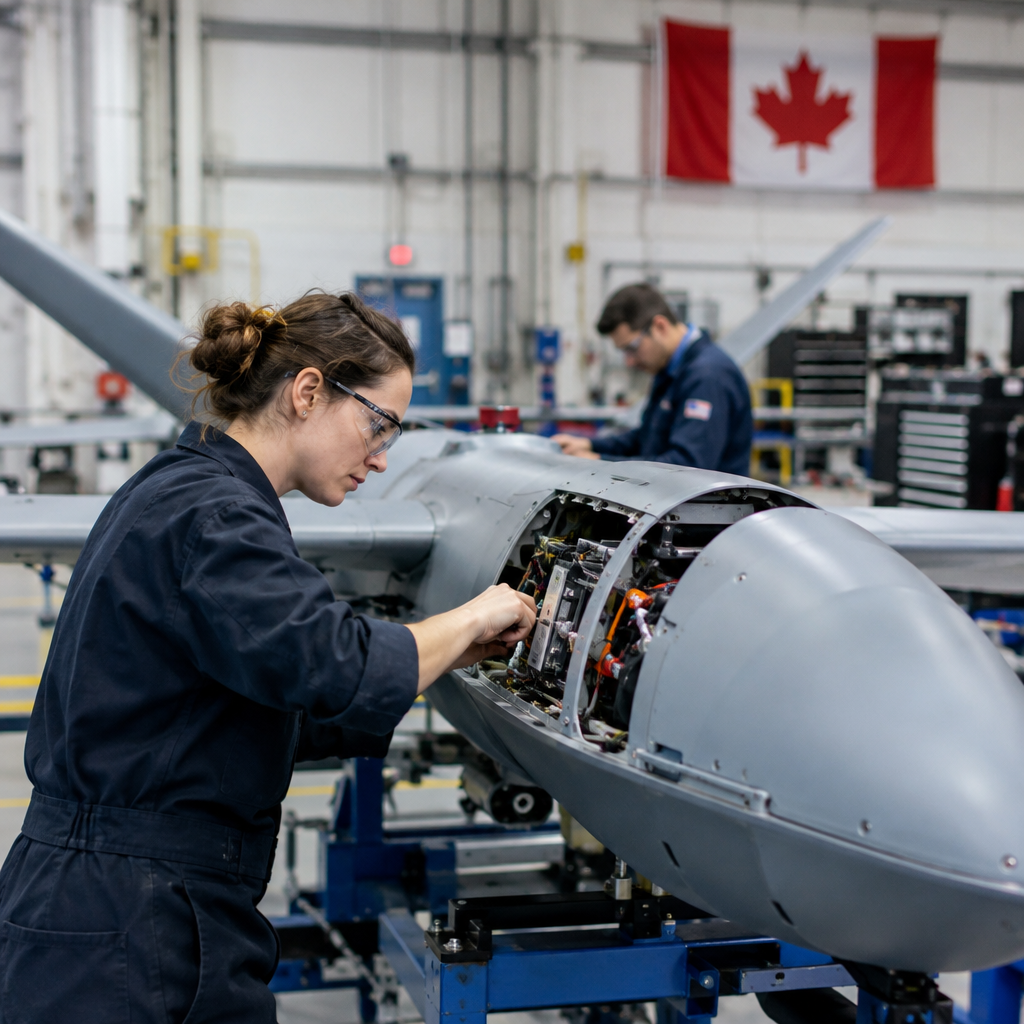
As Canada embarks on a significant defence expansion, the focus shifts to the workforce needed to support this growth. The country's first Defence Industrial Strategy aims to boost drone production and collaboration with Ukraine, but it raises critical questions about the availability of skilled labor in a rapidly evolving market.
Canada is preparing for a defence expansion on an unprecedented scale, marking a significant shift in its military infrastructure and capabilities. The federal government in Ottawa has initiated its inaugural Defence Industrial Strategy, which is bolstered by billions in fresh investments. This strategy also opens Canadian firms to the expanding defence procurement market in Europe. In a notable development this September, Canada and Ukraine announced plans to enhance Canadian drone production, facilitate co-production, and establish a long-term partnership centered on defence technology. Such announcements reflect a sense of urgency and ambition in Canada's defence strategy. However, they also prompt a crucial question that often receives less attention than the financial commitments or equipment contracts: who will execute this work? Each new drone production line necessitates a workforce comprising electronics technologists, software developers, and machinists. Similarly, the requirements for ships and aircraft include engineers, welders, and maintenance personnel. There is also a demand for cyber and AI specialists to secure networks, along with procurement officers, logistics personnel, and project managers to support larger supply chains. The pace of Canada’s defence ambitions is intrinsically linked to the capabilities of the workforce behind them. The job market is already showing signs of adaptation. An analysis of Canadian job postings from 2023 through the first half of 2026 indicates that defence-related hiring is on the rise, while much of the broader labour market remains stagnant. Public job postings in defence services are anticipated to finish this year approximately 16 percent higher than in 2023, while overall job postings are projected to decline by about 14 percent. The recruitment of armed forces personnel represents just a fraction of the overall picture. A more significant indicator of workforce demand comes from industries adjacent to defence – including aerospace, shipbuilding, cybersecurity, software, advanced manufacturing, logistics, engineering, communications, and public safety. Employers in these sectors posted nearly 79,000 job openings in 2025, with hiring demand expected to surge to about 101,000 postings in 2026. Canada’s defence buildup is already attracting talent from various sectors of the civilian economy. The skills highlighted in job advertisements underscore the modern requirements of defence. The largest share of demand encompasses procurement and industrial capacity, including project management and cost control. Additionally, there is a notable need for skills in AI, data and decision support, policy and governance, cybersecurity, platform maintenance, and advanced manufacturing. The contemporary landscape of defence necessitates individuals who can design, build, secure, operate, and manage increasingly intricate systems. The positive aspect is that many of these skills are not exclusive to military applications; numerous Canadians already possess competencies that bolster both the defence sector and the broader economy. A cybersecurity expert tasked with safeguarding military networks can similarly protect hospitals, while an AI specialist engaged in reconnaissance can also contribute to wildfire forecasting and response. This overlap provides Canada with a practical avenue to broaden its defence workforce without the need to establish an entirely separate talent ecosystem. Job postings indicate that defence and defence-adjacent hiring is increasingly focused on occupations generally requiring post-secondary education, including university, college, polytechnic, or apprenticeship training. The wage signals in applied education are particularly pronounced. In 2025, advertised salaries for defence and related positions exhibited their highest premiums for candidates with college, polytechnic, and apprenticeship backgrounds. Therefore, the most effective response may not be to create entirely new programs but rather to enhance those that are already in existence. Many educational institutions already offer training in electronics, machining, welding, robotics, cybersecurity, network technology, engineering technology, logistics, and procurement. Linking these existing programs to defence and public safety applications presents a more credible solution than hastily developing a new array of defence-specific credentials. Often, the final challenge lies in bridging the gap between a general program and a context specific to defence. Students require exposure to defence and public safety applications, security awareness, real-world projects, work-integrated learning, and direct interactions with potential employers. Furthermore, they must grasp the intricacies of recruitment timelines, security requirements, professional conduct, and the realities of working in sensitive environments. Technical training constitutes only a part of the necessary preparation. Defence employers frequently emphasize the need for competencies in communication, teamwork, judgment, ethics, risk management, and the ability to collaborate across disciplines under pressure. For instance, a technologist might need to articulate a systems failure to both managers and operators, while a cyber specialist may be required to convey a threat to a military commander. Engaging in simulations, field projects, and placements allows students to practice these responsibilities before the stakes become critical. This approach aligns with the current challenges faced by post-secondary education institutions, which are under fiscal pressure and increasing demands to demonstrate their economic relevance. Integrating established programs with the demands of defence and public safety offers a practical response, grounded in the capabilities that these institutions already possess. As Canada’s defence buildup accelerates, its success will hinge on the ability of the workforce to keep pace. Much of the required talent is already available, along with the programs that prepare it. The current challenge is to link this talent to defence employers, practical applications, and a broader public purpose. A workforce developed in this manner would not only enhance Canada’s security but also retain value across various sectors where resilience is essential.
🏷️
aerospace
advanced manufacturing
workforce development
cybersecurity
Canada
defence expansion
job market
engineering
public safety
drone production
← Previous Post
Giatec Scientific Launches Giatec 360: A Revolutionary Connected Concrete Data PlatformToday