Canada Aims to Accelerate Housing Construction with Modern Methods, Faces Key Challenges
📅 Today
The Canadian government is committed to increasing housing construction using modern methods but faces significant hurdles including building code harmonization and workforce shortages.
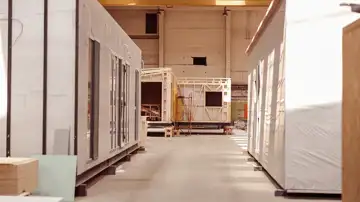
In a recent webinar hosted by the Forest Products Association of Canada (FPAC), Gregor Robertson, the minister of housing and infrastructure, emphasized the urgent need for Canada to double its housing construction rate over the next decade. He stated that the federal government is dedicated to ensuring that new homes are built with Canadian materials and products, leveraging modern methods of construction (MMC) such as modular, panelization, and prefabrication. However, Robertson pointed out that to achieve this ambitious target, the country must navigate several obstacles, notably the harmonization of building codes which would facilitate easier use of Canadian wood.Robertson highlighted the necessity of enhancing supply chains and transportation networks for effective distribution of building materials across the country, acknowledging that improvements are needed in these areas. The webinar, titled "Building Homes with Canadian Wood," explored various policy measures that could unlock the potential of MMC, ranging from factory-focused financing and standardized procurement to workforce capacity and intergovernmental coordination.
The minister underscored that pushing for more MMC, including factory-built homes and innovative techniques using Canadian wood products, is a cornerstone of the government's strategy through its Build Canada Homes initiative. He noted that employing mass timber and value-added products would be crucial in addressing the housing crisis. “We need to drive the pace of innovation. If we can crack the code on building more affordably, we’re going to be able to build more and faster,” he stated.
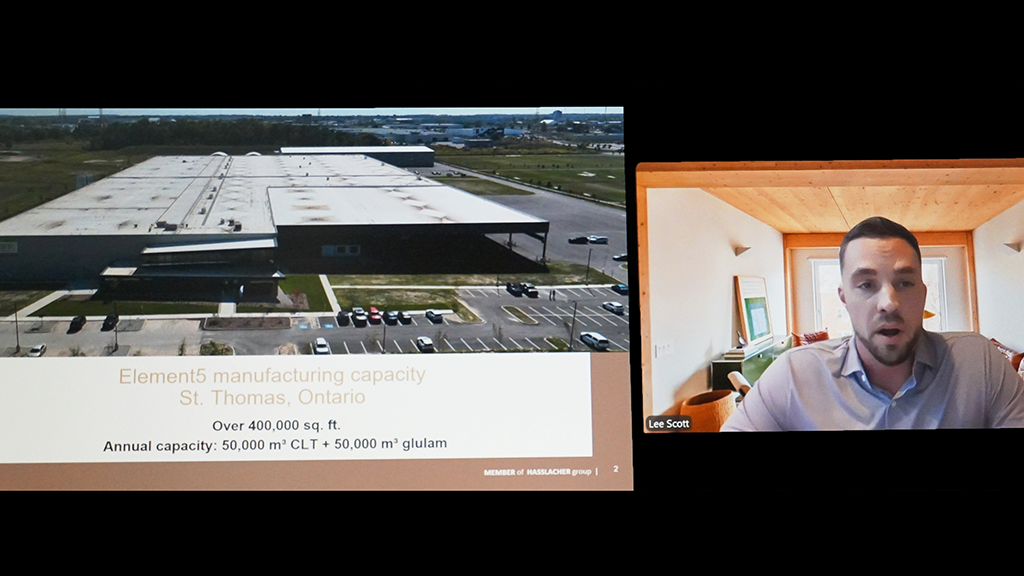
Derek Nighbor, president and CEO of FPAC, echoed the need for a shift in government procurement methods to better support the delivery of MMC utilizing wood. He mentioned that Element5, a mass timber manufacturer based in St. Thomas, Ontario, has recently expanded its manufacturing facility to over 400,000 square feet, with an annual production capacity of 50,000 cubic meters of cross-laminated timber (CLT), enough to cover three to five million square feet of floor space.
Lee Scott, Element5’s director of sales, pointed out that adopting repeatable designs with standardized components and connections could significantly reduce both design and construction times. He noted that while progress is being made, there remains a considerable amount of work ahead in this area.
Hailey Quiquero, senior manager at WoodWorks Ontario, discussed the challenges posed by ambiguity in building code interpretations and housing plan submissions, which can lead to inconsistent approval timelines and hinder the construction pipeline. She suggested that establishing centralized interpretation bodies at both provincial and federal levels could enhance clarity and consistency in the approval process.
Leah Nord from LeNoCo Inc. highlighted the need for an additional 500,000 workers in the construction sector over the next decade, citing challenges in retaining skilled workers despite Canada’s strong apprenticeship training programs. She proposed the creation of a federal express entry program targeting foreign workers with construction skills as a potential solution.
Nicole Tamara Odo from the University of New Brunswick’s Off-site Construction Research Centre shared insights from research indicating that barriers to adopting MMC are not primarily related to production capacity but rather stem from policy and regulatory frameworks, procurement processes, workforce and skills shortages, transportation logistics, and financing challenges. Odo emphasized that implementing best practices across these domains is essential for transitioning pilot MMC projects into scalable operations, advocating for active involvement from key stakeholders in the MMC space to establish a repeatable delivery model.
🏷️
housing construction
workforce development
building codes
modular construction
Canadian wood
prefabrication
Supply Chain
Mass Timber
construction policy
modern methods of construction