Canada Experiences Record Surge in U.S. Exports Amid Looming Tariffs
📅 Today
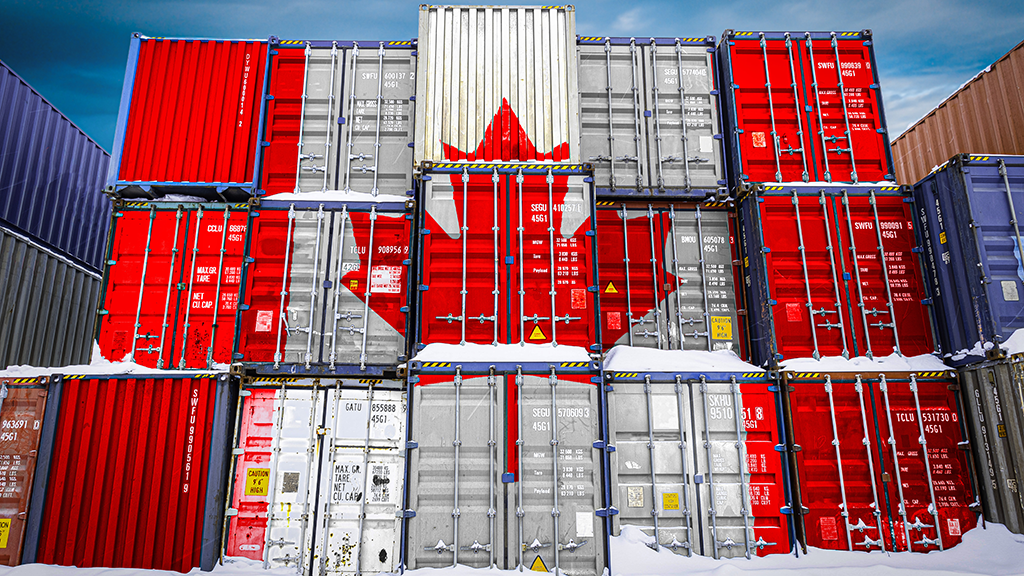
In August, Canada recorded a significant increase in exports to the U.S., driven by businesses anticipating new tariffs, resulting in a trade surplus that marked the largest monthly change on record.
OTTAWA — In a notable shift in trade dynamics, Canadian exports to the United States soared in August, as businesses rushed to position themselves ahead of impending tariffs from the U.S. government. According to Statistics Canada, the merchandise trade surplus for the country rose to $4.2 billion in August, a substantial increase from a surplus of $787 million in July. This surge marks the sixth consecutive month of trade surpluses for Canada.Total exports for the month reached $77.9 billion, representing a 2.5 per cent increase, bolstered by a 4.7 per cent uptick in energy product exports, which had not seen an increase since April. Excluding energy products, exports still grew by 1.8 per cent. Conversely, total imports fell by two per cent in August, dipping to $73.7 billion, marking the first decline since January, largely due to an 8.8 per cent decrease in imports of motor vehicles and parts.
The most significant contributor to the trade surplus was the rise in exports to the United States, which climbed by 8.1 per cent, while imports from the U.S. dropped by 2.5 per cent. This shift resulted in Canada’s trade surplus with the U.S. expanding to $11.2 billion in August, up from $6.1 billion in July. Statistics Canada indicated that this represents the largest positive monthly change ever recorded in Canada’s trade balance with the United States.
Analysts suggest that the escalation in exports can be attributed to U.S. businesses preemptively placing orders in light of the anticipated Section 338 tariffs. Despite ongoing negotiations aimed at averting these tariffs, discussions between Canada and the U.S. collapsed at a critical juncture, leading to the implementation of tariffs that began on August 22, affecting a range of exports.
Katherine Judge, a senior economist at CIBC, noted that the spike in exports to the U.S. was largely due to firms acting ahead of the tariffs. She cautioned that this increase is likely temporary and may decrease in September. Moreover, Canada’s counter-tariffs against the U.S. took effect on September 8, which could lead to a surge in imports in the early days of that month. Judge predicted that Canada’s trade position might worsen and that exports could remain under pressure in the fourth quarter unless a trade agreement with the U.S. is reached.
The new U.S. tariffs target approximately five per cent of Canada’s exports to the U.S., valued at around $28 billion, and notably do not include exemptions for compliance with the Canada-U.S.-Mexico Agreement (CUSMA), which characterized previous tariff waves. Nathan Janzen, assistant chief economist at RBC, commented that while the newly imposed tariffs will significantly impact directly affected sectors, the ongoing exemptions for a majority of Canadian exports under CUSMA should help mitigate broader economic repercussions.
In a concerning development for Canada's diversification efforts, exports to nations other than the United States fell by 8.5 per cent in August, effectively reversing an 8.2 per cent increase noted in July. In terms of volume, total exports rose by 2.5 per cent, while import volumes experienced a decline of 1.1 per cent.
🏷️
energy products
tariffs
trade surplus
CUSMA
Canada
construction materials
international trade
United States
economic impact
exports
Next Article →
Polytechnique Montréal's Slowpoke Reactor Turns 50: A New Era for Nuclear ResearchToday