Innovative Alliance Contracting Model at Toronto's Union Station Enhancement Project
📅 Today
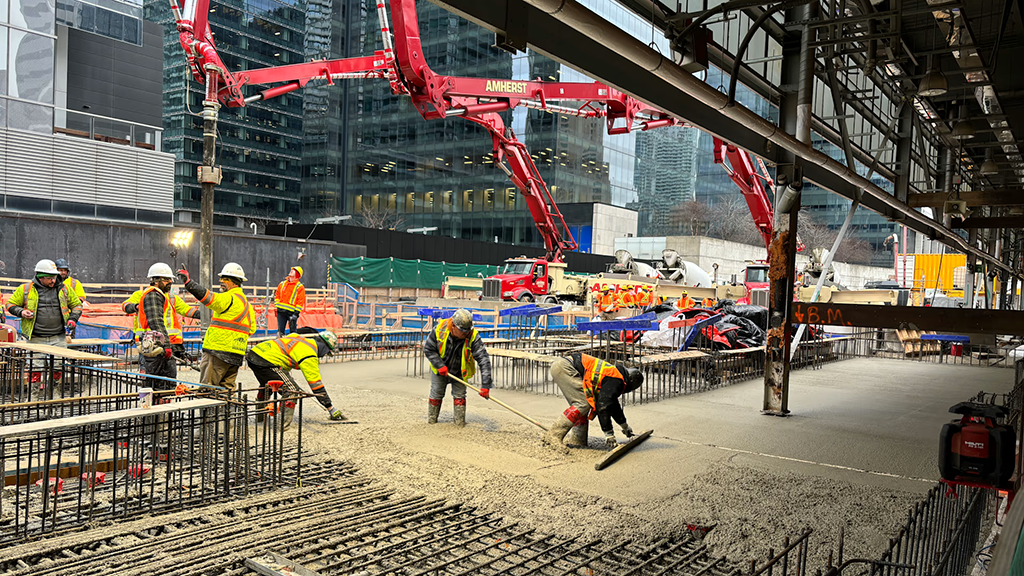
Top executives from Kiewit, WSP, and Metrolinx discussed the unique alliance contracting model used in the Union Station Enhancement Project during a recent Toronto construction symposium, highlighting its collaborative approach and ongoing improvements to the transit hub.
During a recent construction symposium in Toronto, key executives from Kiewit, WSP, and Metrolinx delved into the intricate details of Canada’s pioneering alliance contracting model as applied to the Union Station Enhancement Project (USEP). This dialogue took place on October 6 at the Best Practices in Construction Symposium, organized by the Canadian Construction Association. The panelists highlighted the unique challenges and solutions encountered throughout the project, emphasizing the importance of collaboration. They disclosed that behavioral coaches from overseas had been engaged to facilitate consensus among partners, a practice that has persisted for five years. Metrolinx's executive vice-president of GO expansion, Marcia Medrano, emphasized that this approach has not only streamlined decision-making but also fostered a spirit of cooperation among the various stakeholders. Medrano noted that the alliance contract is remarkably straightforward, focusing on collective problem-solving rather than on risk allocation. "Everyone’s calories are burned at solving the problem, not at calculating each other’s risk," she stated, underscoring the project’s emphasis on teamwork. The ongoing USEP aims to expand Toronto's Union Station into a more comprehensive transit hub, introducing new platforms and rail lines, while also facilitating enhancements to multiple GO corridors, ultimately leading toward an electrified regional transportation system. The project commenced in 2020 under the leadership of the ONTrack Alliance. Medrano remarked, "Union Station is the heart of it, and USEP was at the beginning of it. We knew we needed to get ahead." Moderated by Rodrigue Gilbert, president of the CCA, the panel discussion titled "The Union Station Enhancement Project: Delivering Complexity" provided insights into the alliance model’s operational framework. According to WSP documentation, the essence of the alliance model is rooted in fostering a no-blame culture, waiving litigation, and establishing a commercial structure that limits financial risk. This model has seen success in projects in Australia and other regions, prompting the shift in preference away from fixed-price contracts. Medrano explained that as the broader GO Expansion redevelopment program evolved, the requirements for USEP underwent significant changes. This adaptability allowed the project team to respond effectively to new demands while managing the associated risks. Tim Shepherd, a vice-president at Kiewit, highlighted the necessity of full risk-sharing within the alliance, stating, "All of us are at risk on the same bucket. So it was critical for us to pick partners that really understood that concept and actually wanted that." The collaborative nature of the project means that every issue faced is a collective concern. WSP’s senior vice-president of major projects, Eric Flaubert, added that the alliance model encourages creative problem-solving, enabling the team to navigate around constraints rather than be limited by them. Medrano illustrated this adaptability, sharing that the team identified a need for additional vertical circulation elements due to platform length adjustments, which required revisiting construction plans. This required a reassessment of the project’s critical path, demonstrating the fluidity of project management in an alliance framework. Shepherd noted the significant shift in project reporting that has occurred as a result of this model, stating that the team has opted to move away from traditional contract schedules in favor of focusing on the evolving project scope that is vital to its success. This new approach necessitates a high level of trust among team members, highlighting the alliance model’s emphasis on collaboration and shared responsibility.
🏷️
Infrastructure
construction management
GO Transit
behavioral coaching
Toronto construction
project management
collaboration
transit hub
alliance contracting
Union Station
Next Article →
Alberta Premier Critiques Federal Influence on Edmonton's Housing Zoning ChangesToday