Surge in Canadian Oil Producers' Profits Not Reflected in Capital Spending, Reports Deloitte
📅 Today
A Deloitte report indicates a significant rise in operating profits for Canadian oil producers amid fluctuating crude prices, yet capital spending remains relatively stagnant, highlighting a cautious approach to investment in the sector.
CALGARY, ALTA. — A recent report from Deloitte Canada reveals that Canadian oil producers experienced a remarkable 68 percent increase in operating profits between the first and second quarters of this year. Despite this surge, capital expenditures have not mirrored this growth, as noted by the consulting firm. The report highlights that crude oil prices have seen considerable volatility in recent months, largely influenced by the ongoing conflict in the Middle East. The international light oil benchmark, Brent, has fluctuated between US$68 and US$105 per barrel during July and August alone.This significant price increase has resulted in substantial profits for Canada’s oil producers, positioning the sector as the largest contributor to non-financial industry profits in the second quarter, according to Statistics Canada. However, data on capital expenditures from StatCan indicates only modest growth, with spending rising about seven percent to $11 billion in the second quarter compared to the first.
According to Baker Hughes rig count data cited in the report, drilling activity in Canada increased by 17 percent in the second quarter compared to the same period last year. Deloitte points out that producers are prioritizing drilling programs in areas that offer efficient, short-cycle economics, such as the Montney, Duvernay, and Clearwater plays. The report suggests that producers view the current price environment as temporary and uncertain, rather than indicative of a fundamental supply-demand shift.
Deloitte's forecast for West Texas Intermediate oil prices, a benchmark for light oil produced in the U.S., anticipates an average of US$76.50 per barrel in 2027, a decrease from a projected average of US$90 in 2026. Andrew Botterill, who leads Deloitte Canada's oil, gas, and chemicals practice, noted that over the past several years, companies have faced pressure from investors to maintain spending and manage debt responsibly. The financial recovery from the COVID-19 pandemic's impact and the price collapse that followed was still in progress when companies faced the 2014-2015 downturn.
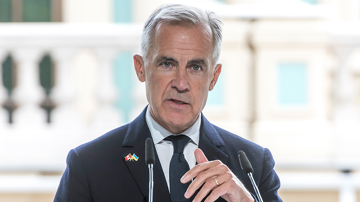
Botterill emphasized that there is a growing sentiment in the sector of potential for significant growth. A proposed million-barrel-per-day export pipeline to the British Columbia coast has been introduced, and the current government, led by Prime Minister Mark Carney, is taking steps to simplify regulatory processes, roll back previous environmental policies, and enhance investment tax incentives.
Recent developments include Cenovus Energy Inc. announcing an agreement to acquire Athabasca Oil Corp. for $5.7 billion, while Suncor Energy Inc. has reached a deal to divest some of its Atlantic Canada offshore holdings for $1.2 billion, as it refocuses on its core oilsands operations. Botterill described these transactions as “preparatory steps” for companies strategizing for long-term growth.
On the natural gas front, the Deloitte report indicated that Alberta's gas prices have averaged below a meager C$2 per thousand cubic feet year-to-date, despite increased exports from the LNG Canada terminal in Kitimat, British Columbia, which is set to begin operations in mid-2025. Production during the second quarter averaged 20 billion cubic feet per day, approximately five percent above the same period in 2025. Companies continued to boost production in pursuit of more valuable natural gas liquids, such as propane, which are produced alongside dry natural gas.
Botterill remarked that during August and September, typically a weak period for Alberta natural gas prices, the market did not experience the usual sharp declines but remained relatively stable. This stability indicates a building demand for natural gas in Canada, with the ability to export from the West Coast having a positive effect. Deloitte forecasts Alberta gas prices to average C$1.75 per thousand cubic feet this year, rising to $2.15 next year and exceeding $3 by post-2029.
The report also touched on the adoption of artificial intelligence in the oil sector, referencing another Deloitte study from February. It found that 72 percent of energy, resource, and industrial companies utilize “physical” AI through machines and control systems to some degree. However, many companies struggle to scale beyond pilot projects, with only 16 percent reporting extensive AI utilization. Deloitte noted that oil and gas firms are accustomed to capital-intensive investments, particularly in the oilsands, and emphasized that the value proposition for AI applications must be clearly defined to compete effectively with capital allocated for core operational projects.
🏷️
natural gas
drilling
investment strategies
LNG Canada
oil prices
Cenovus Energy
capital spending
Suncor Energy
Canadian oil industry
Deloitte report
← Previous Post
Alberta Premier Critiques Federal Influence on Edmonton's Housing Zoning ChangesToday
Next Article →
Stelco Reports Significant Drop in Steel Exports to the U.S. Amid Market PressuresToday