The Importance of Early Conduit Run Scheduling in Electrical BIM Projects
📅 4 days ago
🏷️ Augmenta
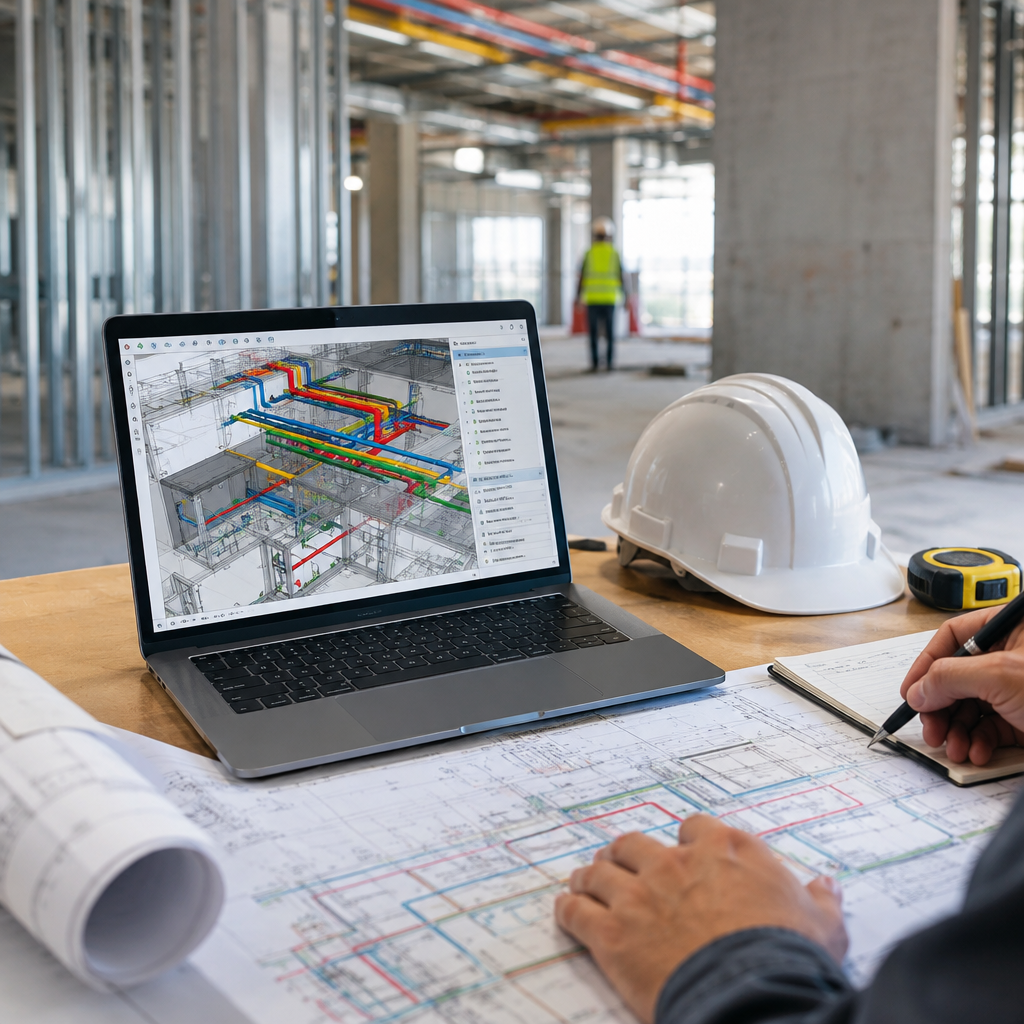
Robert Martinko, Application Engineer at Augmenta, emphasizes the critical benefits of creating conduit run schedules early in electrical BIM projects, arguing that it simplifies project management and enhances efficiency.
In the realm of electrical BIM (Building Information Modeling), the timing of when conduit run schedules are constructed can significantly impact project outcomes. Robert Martinko, an Application Engineer with Augmenta, who has over a decade of experience initiating BIM teams for electrical contractors, elaborates on this evolving trend. Traditionally, many teams compile these schedules late in the project timeline, treating them as handoff documents. While they still hold some value at that juncture, the potential benefits diminish considerably if created earlier. Martinko provides insight into the advantages of establishing a run schedule before any conduit is installed.Firstly, creating a run schedule allows for effective scoping of the work. It serves as a foundational document that informs BIM managers about the modeling requirements before they can accurately allocate resources or provide project managers with realistic estimates of modeling hours. The run schedule delineates each feeder, from its starting point to its endpoint, along with size specifications. This clarity is essential for teams to gauge the scope of work accurately prior to any physical installation. Martinko poses a critical question: "How can you have a ballpark for how long something is going to take until you get what it is you need to model?" The schedule also acts as a reference point, allowing teams to track changes and compare different versions without having to sift through the entire model.
Secondly, having a comprehensive view of the entire project is vital for effective conduit modeling. Without a well-structured schedule, a modeler may inadvertently plan a feeder route that conflicts with other runs, leading to inefficiencies. Martinko describes the planning process as akin to navigating a central corridor, strategically branching out to access various panels. By utilizing the run schedule, teams can visualize all necessary runs and organize their approach to each floor methodically, minimizing redundant runs and optimizing rack space.
Another significant advantage is the reduction of time lost during handoffs. In the construction industry, team members frequently transition between projects. When run IDs are integrated into both the schedule and the model, new team members can quickly ascertain project status without guessing, which can save hours of verification work. For instance, if five conduits are already modeled but the sixth is not, the absence of a run schedule would necessitate visual checks to confirm its status, resulting in inefficiencies and potential duplication of effort.
Moreover, tracking changes to single line drawings (SLDs) becomes more manageable with a run schedule. Revisions to these drawings often arise late in the project, complicating the tracking of what has been altered. With a pre-established schedule, teams can update it first, subsequently identifying which runs have been affected by changes in size or configuration. A common scenario involves a conduit that shifts from a singular 4-inch size to two 3-inch conduits, allowing for targeted adjustments without the need to overhaul the entire model.
Additionally, early creation of the run schedule facilitates timely feedback for estimating purposes. Estimates are typically generated at the project's outset; if the run schedule is finalized only at the end, the feedback loop becomes ineffective. By developing the schedule early, teams can review estimates after completing initial phases, facilitating ongoing adjustments that can inform future work and subsequent bids.
Ultimately, the organization is key. Constructing a run schedule does not require advanced software; it can be initiated using a simple spreadsheet, derived from existing drawings, before any routing occurs. The fundamental shift lies in the sequence of tasks. Martinko succinctly summarizes the approach: "The more we can be smart and organized in our processes, the more we can make smart decisions." For teams that typically generate run schedules during project closeout, shifting this work to the beginning could yield significant time savings and enhanced project efficiency. Watch Martinko's full discussion on the five compelling reasons every electrical BIM team should prioritize early conduit run scheduling.
🏷️
construction technology
project management
electrical contractors
green building
BIM
Conduit Run Schedule
Estimating
modeling
electrical engineering
efficiency