Federal Government Halts Expansion of Billy Bishop Airport, Advocates Celebrate
📅 2 months ago
The federal government's decision to stop the proposed expansion of Billy Bishop airport has drawn mixed reactions, with environmental advocates applauding the move while business groups express disappointment. The decision aims to protect Toronto's waterfront and address public concerns over pollution and traffic.
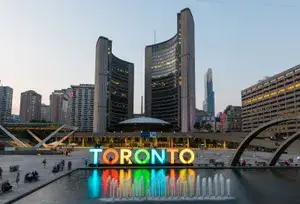
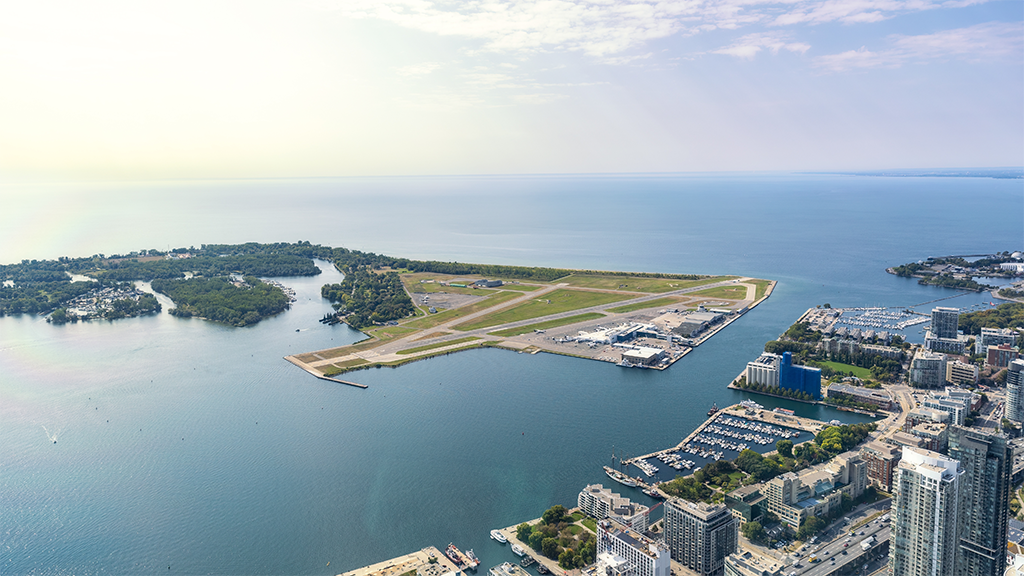
The federal government has decided to halt Ontario's ambitious plan to expand Billy Bishop airport, a move that advocates argue will safeguard Toronto's waterfront from serious setbacks in its revitalization efforts. Environmental advocates have expressed relief, stating that the proposed expansion would have led to increased pollution and significant destruction of the Toronto Islands, which have seen substantial investment in lakefront rehabilitation over the past two decades. Tim Gray, the executive director of Environmental Defence, highlighted the environmental ramifications of the project, including nearly a kilometer of lakefill needed for new runway and taxiway construction, as well as the anticipated traffic gridlock and aircraft emissions associated with increased air traffic.Gray remarked, "The federal government listened to the people of Toronto, who organized by the tens of thousands to push back against this proposal. It shows that people working together can make real change and protect their city." On Friday, federal Transport Minister Steven MacKinnon announced that the government is currently focused solely on the approved safety upgrades at Billy Bishop, rather than permitting its expansion to accommodate jets. He noted that this decision was informed by public consultations that received over 87,000 responses. However, MacKinnon indicated that the decision is not necessarily final, suggesting that future reconsideration is possible.
Giles Gherson, CEO of the Toronto Region Board of Trade, expressed disappointment with the federal decision. He pointed out that the 1983 operating agreement for the airport restricts it to a single type of aircraft—turboprops—which he described as outdated. He argued that this situation represents a choice between stagnation and the evolution of Billy Bishop into a valuable regional airport that could modernize gradually to meet the demands of a growing population. "The future of Billy Bishop is not a choice between the status quo and an intrusive mega-airport on the water," Gherson stated. "It is between stagnation and a valuable regional airport that modernizes with staged growth over time."
Premier Doug Ford's proposal to extend the airport's runway by 600 meters to the west, in addition to the planned 150-meter runway end safety zones, faced backlash from environmental and community advocates due to concerns about noise, traffic, pollution, and impacts on affordable housing and the waterfront. The expansion was part of a broader initiative by the Ford government to revamp the city’s waterfront, which includes a redevelopment project for Ontario Place and a proposal for a new island to host a massive convention center.
Despite the setback, Ontario Transport Minister Prabmeet Sarkaria emphasized the province's intention to continue pursuing airport expansion, citing its potential benefits for job creation and economic growth. "As this work continues, we look forward to seeing a plan that protects public spaces, addresses environmental impacts, and supports new housing opportunities in the area," Sarkaria remarked in an email statement.
Urban designer Ken Greenberg, who was part of a group opposing the provincial expansion plan, argued that the project would have reversed decades of progress in reconnecting Toronto with Lake Ontario. He referred to the Toronto harbor as the "crown jewel" of the Golden Horseshoe, emphasizing its importance as a public space for millions of visitors each year. Greenberg countered claims from proponents that small jets, such as the Airbus A220, would be a suitable replacement for turboprop planes, asserting that the frequency of flights, rather than the type of aircraft, would truly impact the environment.
The Ford government has projected that an expanded airport could eventually serve 10 million passengers annually and generate $8.5 billion in economic benefits. In March, Ford expressed his vision of transforming the airport into a "special economic zone," a designation that would allow cabinet to bypass provincial and municipal regulations. Critics, however, have pointed out that the province has yet to provide a comprehensive business plan or conduct necessary health and environmental studies for the proposed expansion, which is estimated to cost between $4 billion and $5 billion over the next 25 years.
Anne Golden, former CEO of the Conference Board of Canada, dismissed the economic arguments in favor of the airport expansion as "bogus," while acknowledging the need for Toronto to maintain global connectivity. She highlighted that Pearson International Airport serves that role effectively with its ongoing multibillion-dollar expansion. A report from city staff in May warned that expanding Billy Bishop could lead to negative consequences for housing, congestion, and the environment.
The federal government's recent decision mirrors a similar stance taken in 2015, when then-Prime Minister Justin Trudeau declined to reopen the tripartite agreement governing the airport, effectively quashing an earlier push by Porter Airlines to introduce jets at the facility.
🏷️
airport expansion
urban development
Toronto waterfront
pollution
public consultation
economic growth
Billy Bishop Airport
Infrastructure
housing
environmental impact