RAW Design Shifts Focus to Smaller Density Developments Amidst Highrise Market Collapse in Ontario
📅 5 months ago
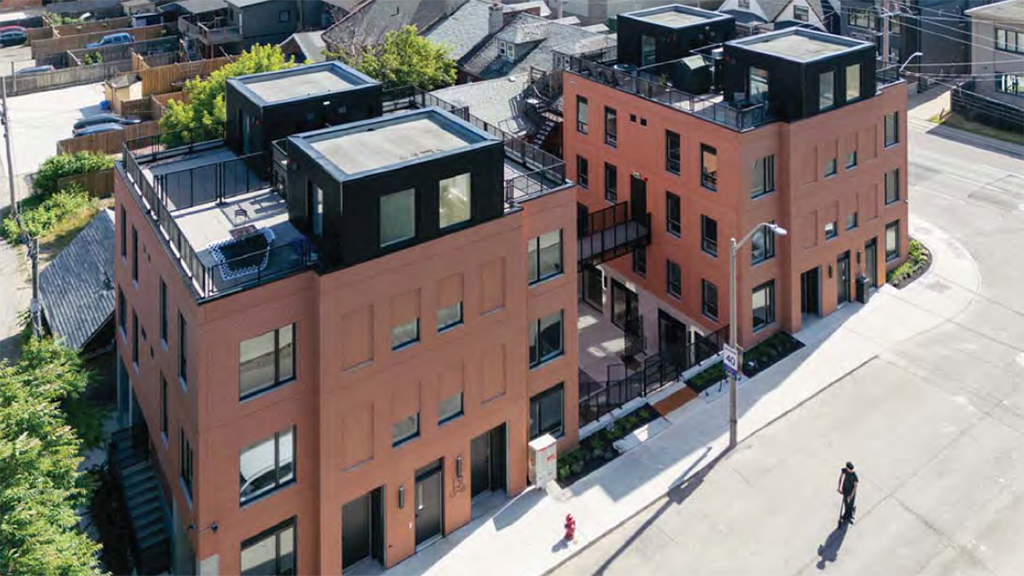
As the highrise condominium market struggles in Ontario, RAW Design is adapting by focusing on smaller, affordable rental projects that integrate innovative design solutions to reduce costs and enhance community living.
The collapse of the highrise condominium market in the Greater Toronto Area and other significant cities in Ontario has prompted designers and developers to seek alternative avenues to stabilize their financial situations. One such firm, RAW Design Inc., based in Toronto, is now concentrating on smaller-scale density developments that frequently include affordable rental options in various communities, including Peterborough, Brockville, Whitby, and larger urban centers like Hamilton and suburban Ottawa.Roland Rom Colthoff, the design director at RAW Design, emphasizes the challenge of making buildings fit into their respective contexts while increasing density, height, or volume. With affordable housing becoming increasingly scarce, finding ways to reduce costs associated with materials like mortar and bricks has become essential. Colthoff notes that one of the most effective strategies is to eliminate underground parking, which has become prohibitively expensive. "No one can afford to build underground parking," he states, explaining that the firm aims to integrate vehicles into the overall design of the building, ensuring they do not dominate the streetscape or consume the entire site.
For instance, RAW Design conceived an award-winning 12-storey affordable rental project in Newmarket, Ontario, that features a four-level above-grade parkade with cladding. This parkade is cleverly designed so that three of its sides are concealed by the residential structure, and it boasts a shared courtyard on its roof. Colthoff describes the design process as intricate, likening it to a "Chinese puzzle," as the team works to fit parking into the building's form while still providing access for residents and maintaining a compact overall design.
While integrating parking innovatively presents one challenge, another lies in persuading developers that these unconventional designs are beneficial. Additionally, RAW Design has been exploring ways to cut costs by minimizing or eliminating common areas and corridors in smaller projects. In a Hamilton complex featuring two four-storey rental buildings, the firm introduced a catwalk bridge connecting the structures at the third floor, which eliminated the need for an expensive full staircase in each building. This design choice not only streamlined costs but also created a sunken courtyard that enhances the communal living experience.
The project was recognized with an Urban Design Award of Merit from the City of Hamilton last year, underscoring the value of innovative design in affordable housing. Colthoff mentions that, despite the unique nature of the project, it offers valuable lessons that can be applied to future developments.
To further keep expenses manageable on a traditional stacked townhouse complex currently under construction in Hamilton, RAW Design has placed the garage partially above ground, covering it and constructing residences above. This project is particularly notable as it is intended for a private affordable rental housing provider.
In the east-end suburban area of Ottawa, the firm has designed a nine-storey building featuring a U-shaped internal shared amenity courtyard and a ramp-down below-grade parkade that is hidden from view. In Kingston, a six-storey residence in a low-density neighborhood has parking tucked away at the back of the building, partially underground. Colthoff remarks that municipalities are increasingly recognizing the urgency of enhancing residential density, making them more open to design solutions that deviate from traditional development standards.
In the Greater Toronto Area, developers of highrise condominiums are now converting their projects into rental units, maintaining the size of the units to ensure they remain affordable. Colthoff notes that the residential market has become significantly more competitive than during the previous boom. "You need to create something unique to market, and you have to navigate the real challenges of financing common areas and underground parking," he explains. He believes that the current climate is favorable for getting design aspects right, as there is no immediate rush. Rather than aiming to deliver 500 units in a high-rise tower, he argues that developing 100 to 150 units in lower midrise structures is more achievable and represents a more humane scale of development.
🏷️
construction innovation
Hamilton
urban design
Toronto
Affordable housing
community living
Residential Development
density design
sustainable development
Ottawa
← Previous Post
Ontario Government Invests $1.7 Billion in High-Demand Education Programs5 months ago