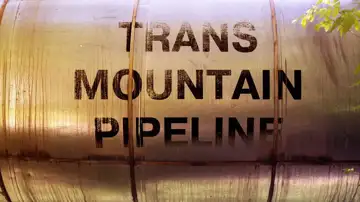
TD Economics Report Suggests Moderate GDP Boost from Proposed Alberta Oil Pipeline
📅 2 months ago

A TD Economics report provides a tempered outlook on the economic benefits of a proposed oil pipeline from Alberta to the West Coast, suggesting that while the project may contribute to GDP growth, the actual impact could be less than government forecasts.
A recent analysis by TD Economics indicates that the proposed oil pipeline from Alberta to the West Coast could provide an uplift to Canada and Alberta's gross domestic product (GDP), although the anticipated benefits may not reach the levels forecasted by provincial and federal governments. According to the government’s analysis, the project is expected to yield a 0.6 percent increase in national GDP by the 2040s, with Alberta set to see a 3.5 percent boost. However, economists Marc Ercolao and Likeleli Seitlheko caution that these projections, while useful as benchmarks, might be overly optimistic, given that they originate from stakeholders eager to see the project advance.In their report, Ercolao and Seitlheko propose that under more conservative estimates, national GDP growth could actually be around 0.3 percent, with Alberta's growth closer to 2 percent. They emphasize that even if the actual impacts are lower than official estimates, the project would still constitute a significant contribution to economic growth, especially when paired with enhanced market access and diversification of exports.
The Alberta government recently submitted its application for the planned pipeline, which is designed to transport one million barrels of oil per day, to the federal major projects office. This office aims to expedite infrastructure projects deemed beneficial to the national interest. The pipeline, which will be constructed and operated by the Crown-owned Trans Mountain Corporation, is projected to cost between $35 billion and $44 billion. Notably, 90 percent of these costs are expected to be borne by federal and provincial governments, while Pembina Pipeline Corporation will initially hold a 10 percent stake in the venture.
The pipeline's route will largely parallel the existing Trans Mountain line, ultimately facilitating a 20 percent increase in Canada’s oil exports and more than doubling the volume currently shipped overseas to Asia. This strategic move aims to enhance Alberta's export capabilities, with the TD report highlighting that Asia's readiness to accept Canadian oil is part of a broader strategy to secure stable supplies from sources outside the Middle East.
However, the report also advises caution, noting that Asia's oil consumption is predicted to plateau as demand in China reaches its peak in the next decade, influenced by the rapid adoption of electric vehicles and a gradual transition towards cleaner energy solutions. Additionally, Canadian heavy oil may face stiff competition from discounted alternatives such as Russian crude.
The Alberta government is optimistic about the pipeline's future, anticipating that it will be designated as a project of national importance this fall, with construction potentially commencing as early as late 2027.
🏷️
oil exports
Alberta
export diversification
TD Economics
oil pipeline
Trans Mountain
economic growth
energy market
Infrastructure
Canada
← Previous Post
University of Toronto Mississauga's New Residence Under Construction with Sustainable Design Focus2 months ago
Related Posts