
Understanding Concrete Curing: The Importance of Real-Time Monitoring
📅 4 months ago
🏷️ Giatec Scientific Inc.
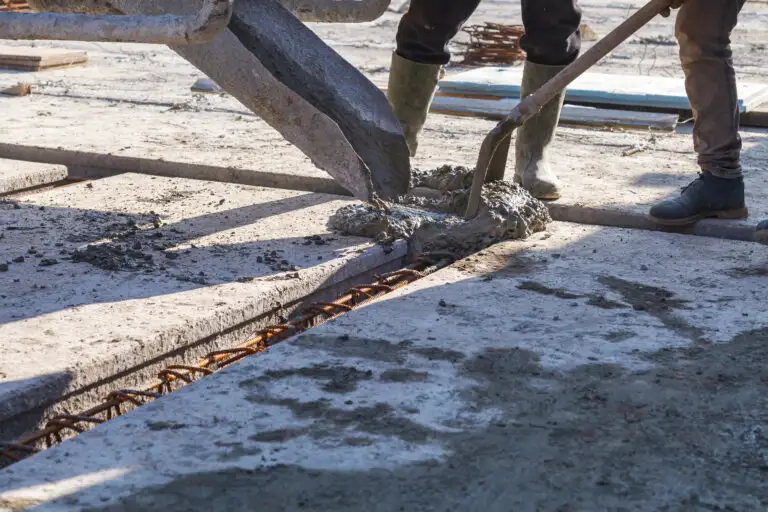
This article explores the critical distinction between concrete drying and curing, outlining how real-time monitoring technologies like SmartRock® can minimize costly delays and enhance structural integrity in construction projects.
Concrete does not simply dry; it undergoes a curing process that is often misunderstood on construction sites. This misconception is a significant contributor to delays, structural risks, and unnecessary rework within the concrete construction industry. On average, rework accounts for an estimated 5% of total project costs, often triggered by concrete that fails to meet its specified strength. The conventional metric for assessing concrete's design strength, designated as f’c, is typically evaluated at 28 days post-pour. However, this timeframe serves merely as a benchmark; high-early strength mixes can achieve design strength sooner, while others may take longer. Concrete starts to gain measurable strength within 24 to 48 hours, and by the end of the first week, it generally reaches about 70% of its specified strength. The actual curing duration is influenced by factors such as temperature, mix design, and moisture availability.To enhance the monitoring of concrete curing, SmartRock® sensors employ the maturity method as outlined in ASTM C1074. This technology allows project teams to continuously estimate in-place strength from the moment of the pour, providing real-time insights into curing performance and reducing reliance on traditional cylinder break tests. For projects that frequently change mix designs, SmartRock Pro includes self-calibrating CEMMA technology, eliminating the need for manual calibration of sensors.
Concrete curing is fundamentally driven by hydration—a chemical reaction between cement and water that causes the material to harden and gain strength over time. The rate of this process can vary significantly depending on various factors for each pour. Here are some general benchmarks regarding concrete cure times:
• 24 to 48 hours: Concrete typically achieves sufficient strength for foot traffic, and formwork for vertical elements may be removed under optimal conditions.
• 7 days: Concrete usually reaches approximately 70% of its 28-day compressive strength, with ACI 308 recommending this duration as the minimum for most elements under specified temperatures.
• 28 days: This is the conventional reference point for design strength in structural specifications, as defined by ASTM and ACI standards.
• Beyond 28 days: Concrete continues to gain strength for months, especially when supplementary cementitious materials like fly ash or slag are included in the mix.
These timelines serve as guidelines rather than guarantees. Actual curing times are subject to unpredictable conditions that cannot be accounted for by any calendar. Various factors can affect concrete cure time, including:
- Temperature: Below 50°F (10°C), strength gain slows considerably, while hot weather can accelerate early gain but may lead to moisture loss. Monitoring internal temperature in real-time is essential.
- Mix design: Higher contents of supplementary cementitious materials can slow early strength gain, while a lower water-to-cement ratio can affect workability and hydration rates, potentially extending the curing period beyond the standard seven days.
- Size and geometry of elements: Mass concrete retains heat from hydration, speeding up internal curing, while thinner sections tend to lose heat more quickly. Strength can vary significantly between different sections of the same pour.
- Moisture availability: Concrete that loses moisture rapidly through evaporation cannot complete its hydration process. Effective curing methods that retain surface moisture are crucial in hot, dry, or windy conditions.
The traditional cylinder break test has long been the standard for verifying concrete strength. This method involves casting cylinders at the time of pouring, curing them under controlled lab conditions, and then crushing them at 7 and 28 days. However, there are inherent issues with this approach: laboratory conditions do not reflect the actual field conditions. For instance, cylinders are cured at a stable 73°F (23°C), while in-place concrete is exposed to temperature fluctuations, wind, precipitation, and variability from batching, transport, and placement. Consequently, when field conditions are colder, the in-place concrete may fail to meet expectations based on cylinder results.
Additionally, the timing of results can be problematic. By the time lab results for the 7-day or 28-day break tests are available, project teams may have already made critical decisions regarding construction activities. For example, contractor PCL discovered that waiting for the first lab break on a 55-story building could result in three or more hours of lost time per cycle, despite the structure potentially having already attained the required strength. Moreover, human error in the testing process can lead to misleading results, where a flawed cylinder might indicate weak concrete, causing disputes and delays unrelated to the actual in-place strength.
To mitigate reliance on cylinder break tests, the concrete maturity method offers an alternative solution recognized by ASTM C1074 and accepted by ACI 318, CSA A23.1, and most U.S. Department of Transportation specifications. This method estimates in-place strength based on the cumulative time-temperature history of curing concrete. However, establishing the maturity-strength relationship for a specific mix requires prior laboratory testing, which is time-consuming and costly, and must be repeated every time the mix design is altered. Furthermore, a maturity curve's accuracy is contingent upon the mix it was calibrated on; any deviation in the delivered mix can lead to inaccurate strength estimates.
SmartRock provides a solution as the leading wireless sensor for real-time monitoring of concrete strength and temperature. Utilizing the maturity method, it continuously estimates in-place strength based on temperature data collected by the sensor, which is attached to the rebar and embedded in the concrete prior to pouring. For instance, in the 35-story ONE Park Tower project in North Miami, SmartRock®Long Range sensors were embedded across approximately 45,000 cubic yards of concrete, resulting in a time savings of two to four hours per pour, equating to 140 to 280 hours of avoided delays from sample collection, break scheduling, and manual reporting.
On Meta's hyperscale data center campus in Fort Worth, Texas, contractors HITT and JE Dunn utilized SmartRock Long Range for massive mass-concrete foundations, replacing field-cured cylinders and using real-time strength data to time wall-tilt and form-stripping operations instead of relying on calendar-based estimates. SmartRock's advantages include its code-recognized methodology, real-time data access through a mobile app and web dashboard, easy installation by attaching to rebar, and AI-assisted notifications when concrete approaches critical strength thresholds.
SmartRock Pro further enhances this process by employing its patent-pending CEMMA method to measure strength directly from the concrete's microstructure, eliminating the need for calibration and reflecting the actual in-place mix. This capability allows it to capture variations that both field-cured cylinders and fixed maturity curves may overlook.
Cold weather poses unique challenges for concrete curing, making the difference between cylinder results and in-place performance particularly critical. Cylinders cured at 73°F (23°C) can significantly outperform concrete placed in colder conditions, sometimes resulting in substantial discrepancies. SmartRock's real-time monitoring captures temperature fluctuations experienced during the pour, allowing teams to assess when strength is on track and identify any delays due to cold fronts before they escalate into issues.
For example, on a 276-unit apartment project in Kansas City, Bottorff Construction faced sub-20°F (-7°C) weather conditions and an inspection agency ruling that a pour was deficient due to freezing. By embedding SmartRock sensors during the pour, the contractor was able to demonstrate with real-time in-place data that the concrete had achieved acceptable temperature and strength levels, allowing them to strip forms a day earlier for each pour.
Concrete cure time cannot be expedited, but waiting blindly is an unnecessary choice. Understanding the difference between estimating and knowing when concrete is ready can have direct implications for schedule performance, structural integrity, and the reduction of rework. For projects with crucial strength milestones, cold weather conditions, or a need for real-time data, SmartRock offers a reliable, code-recognized, and efficient pathway from pour to the next construction phase.
🏷️
SmartRock
Concrete Curing
Cold Weather Concrete
infrastructure projects
Real-Time Monitoring
Hydration Process
Construction Efficiency
construction technology
Cylinder Break Tests
Strength Measurement
Next Article →
Major Affordable Housing Development Set to Transform Downtown St. Catharines4 months ago