University of Houston Pioneers AI-Enhanced Radar Technology for Inspecting Concealed Steel Structures
📅 5 months ago
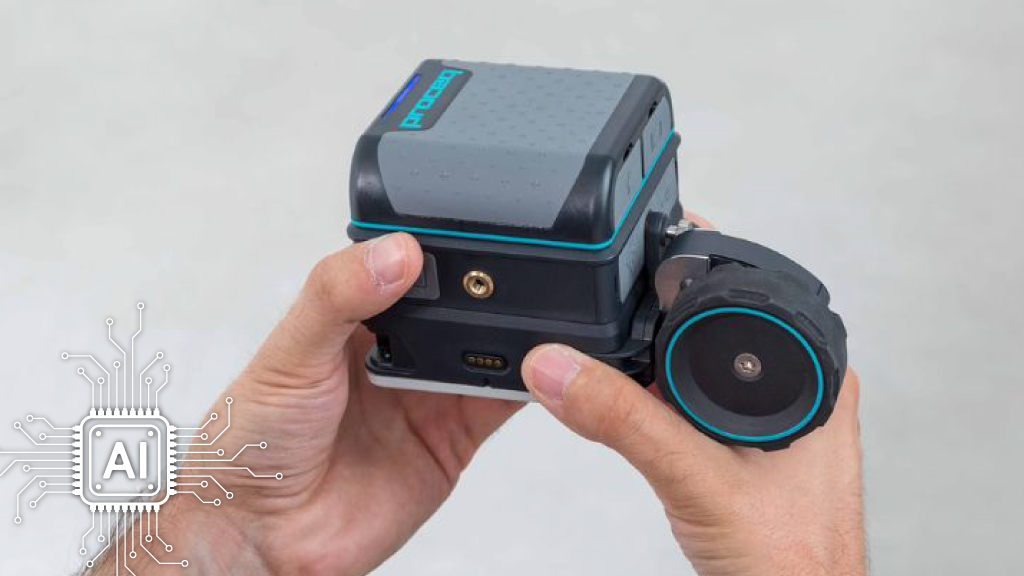
Engineers at the University of Houston have developed a groundbreaking inspection method that utilizes ground-penetrating radar and artificial intelligence to detect hidden structural damage in cold-formed steel buildings, potentially revolutionizing maintenance practices in commercial and institutional construction.
Engineers at the University of Houston have unveiled a novel inspection technology that promises to change how building owners and engineers evaluate concealed structural damage in modern steel-framed structures. By integrating ground-penetrating radar (GPR) with artificial intelligence (AI), this innovative method enables inspectors to identify potential issues within hidden cold-formed steel framing without the need to dismantle walls, ceilings, or cladding. This advancement emerges at a time when the use of cold-formed steel is on the rise in commercial and institutional construction across North America. This material is not only lightweight and cost-effective but also offers improved environmental efficiency compared to traditional hot-rolled steel. Currently, cold-formed steel constitutes approximately one-third of non-residential constructions in the United States. Despite its growing prevalence, the inspection process for this material post-installation has posed significant challenges. Traditionally, inspectors have had to expose concealed steel framing by cutting into drywall or removing cladding systems, a method that is costly, disruptive, and time-consuming—especially in occupied buildings or those needing swift assessments after disasters.The research team, led by Vedhus Hoskere and Kaspar J. Willam, an assistant professor of civil and environmental engineering, believes they have discovered a more efficient approach. Hoskere explained, "To address these limitations, we introduce a new framework that combines a quick radar scan with AI that reads the radar images and points to where the steel is, where damage is likely, and the severity and type of damage." This new method not only saves time and money but also minimizes disruption, which is particularly beneficial for maintenance and rapid post-disaster assessments.
The study detailing this research was published in the Civil Engineering Journal under the title "Concealed Cold-Formed Steel Structural Members and Damage Assessment Integrating Ground Penetrating Radar with Vision Foundation Model." Central to this system is the ground-penetrating radar technology, which is typically associated with locating buried infrastructure. In this innovative application, the radar device is moved across a wall's surface, emitting electromagnetic pulses that penetrate drywall or other cladding materials. When these radar waves hit the steel framing hidden behind the wall, they reflect back, creating unique patterns in the radar imagery.
Hoskere elaborated, "The radar sends pulses into the wall and listens for echoes from what’s behind it. Hidden steel creates a recognizable pattern in the radar scan image. If the steel is damaged – for instance, buckled – it can create a small gap or void that alters the echo pattern in a consistent manner."
The second component of this technological advancement is the AI system trained to automatically interpret the radar signals. Hoskere noted, "The AI is trained to recognize these patterns and draw boxes around them, labeling what it thinks it sees." Essentially, the radar captures the unseen image while the AI decodes its meaning. The researchers employed a large-scale vision foundation model known as InternImage to analyze the radar data. To train the AI, the team developed a specialized dataset that includes radar scans of concealed cold-formed steel members behind various common wall coverings and under diverse damage conditions. This dataset encompasses different member orientations, cladding combinations, and damage types, allowing the AI to understand how hidden steel reacts in real-world scenarios.
Additionally, the team introduced a novel AI training technique dubbed "GPR-CutMix," aimed at enhancing the model's capability to manage variations typically found in actual buildings. This includes discrepancies in stud spacing, wall assemblies, and the often chaotic field conditions that differ from controlled laboratory environments. The researchers highlighted that a key finding was the model's ability to generalize from controlled lab data to real buildings that feature various wall systems and concealed framing configurations. This adaptability could make the technology particularly beneficial following natural disasters such as earthquakes, hurricanes, or severe storms, during which engineers must quickly evaluate the structural integrity of numerous buildings.
Instead of conducting invasive inspections throughout an entire structure, inspectors could swiftly scan walls, pinpoint areas of concern, and direct invasive investigations only where necessary. The implications extend beyond disaster response; the technology could also significantly aid ongoing building maintenance and rehabilitation efforts, especially as older commercial structures increasingly require thorough condition assessments. Muhammad Taseer Ali, the lead author of the research, emphasized the findings' potential to modernize traditional building inspection methods. "These findings highlight the potential of our framework to advance concealed cold-formed steel structural inspection methods by providing a rapid, reliable, and scalable approach for damage detection, ultimately improving building maintenance and rehabilitation," Ali remarked. Although still in the research phase, the implications of this technology for the construction and building management sectors could be substantial.
🏷️
building inspection
artificial intelligence
maintenance technology
disaster recovery
engineering innovation
structural integrity
ground-penetrating radar
cold-formed steel
non-invasive inspection
commercial construction
← Previous Post
April 2026 Marks a Milestone for Low-Rise Home Sales in the Greater Toronto Area5 months ago
Next Article →
The Critical Role of Real-Time Concrete Strength Monitoring in Data Center Construction5 months ago