
The Critical Role of Real-Time Concrete Strength Monitoring in Data Center Construction
📅 5 months ago
🏷️ Giatec Scientific Inc.
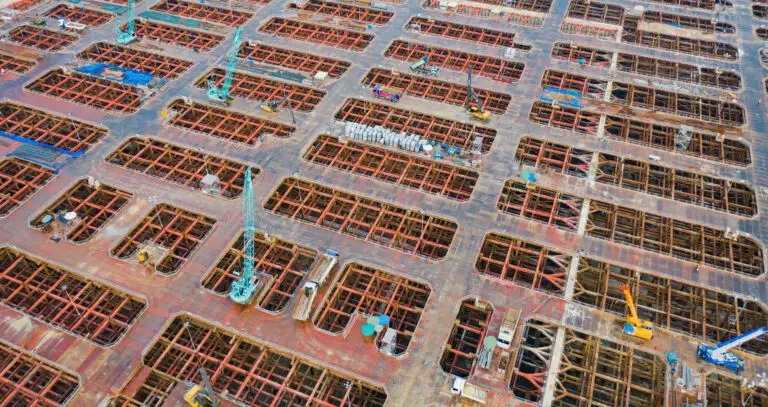
As data center construction becomes increasingly schedule-sensitive, the need for real-time concrete strength monitoring is paramount. This article explores the implications of timely strength data on project timelines and operational efficiency in hyperscale builds.
In the realm of commercial building, data center construction has emerged as one of the most schedule-sensitive segments. Hyperscale operators commit to specific power-on dates years in advance, and even minor delays, such as a single day's slippage on a concrete pour, can create significant ripple effects across subsequent mechanical, electrical, and IT fit-out trades. For general contractors overseeing these massive projects, concrete typically does not represent the largest budget item; however, it consistently occupies a critical position in the overall project timeline.The pressure on how concrete strength is measured and acted upon is immense. Traditional cylinder break tests, which were designed for an era of smaller slab pours measured in dozens of cubic yards, are no longer adequate for the demands of hyperscale construction. Today, the need for real-time, in-place strength data has transitioned from being a luxury to an operational necessity that dictates whether a project adheres to its power-on schedule.
Data center construction is influenced by economic and operational pressures that are unique compared to other commercial projects. A hyperscale facility often involves hundreds of millions of dollars in infrastructure investments, and the operator's revenue model hinges on a specific date when the facility can start accepting power and begin servicing compute loads. This date is typically established in advance through contracts with utility providers, network carriers, and end customers, often years before construction begins. Even a single week's delay can result in direct revenue penalties for the operator and contractual liabilities for the general contractor, making schedule certainty increasingly critical.
The structural sequencing of data center projects compresses traditional construction allowances. For instance, mat foundations that support heavy equipment can require several thousand cubic yards of concrete in a single placement. This generates considerable heat during hydration and necessitates strict thermal control measures that influence curing protocols. Elevated post-tensioned decks must achieve specified strengths before stressing operations can commence, and these stressing windows directly impact the schedule for follow-on trades. In this context, concrete strength is not merely a detail; it is a crucial gating condition that determines when formwork crews, post-tensioning teams, and mechanical contractors can proceed, ultimately affecting the commissioning timeline.
Delayed strength data can lead to cascading delays for all subsequent trades. Conversely, when strength data is available in real-time, the project schedule gains flexibility, enabling adjustments for weather conditions, mix variability, and unexpected field events without jeopardizing the power-on date. The conventional methods of concrete strength testing, such as cylinder break tests conducted at predetermined intervals, are ill-suited for the rapid pace of hyperscale builds. These tests require casting cylinders on-site, transporting them to a lab, and awaiting results—often taking more than 24 hours. This delay is exacerbated on projects where multiple zones are poured within hours of one another, making it impossible to keep pace with the required strength confirmations.
Existing wireless concrete sensors have historically been designed for smaller projects and shorter transmission distances, which creates operational friction on hyperscale builds. Many of these sensors necessitate regular manual data retrieval and can lose signal over large concrete areas, leading to general contractors often making critical scheduling decisions based on incomplete or delayed information, a frequent cause of construction delays in data centers.
The introduction of continuous, in-place concrete strength monitoring fundamentally alters the decision-making landscape for data center builds. With real-time data, formwork can be removed as soon as the concrete reaches the required strength, allowing for quicker transitions to subsequent phases of construction. Post-tensioning operations can be accurately scheduled based on actual strength rather than estimates, reducing one of the main sources of delay in the deck cycle. Additionally, having continuous strength data strengthens the project documentation, simplifying quality assurance processes and minimizing disputes with inspectors.
For instance, the implementation of SmartRock® Long Range sensors enables teams to monitor strength and temperature data continuously, providing insights across distances of up to 1000 feet (300 meters). These sensors comply with the ASTM C1074 maturity method, which is recognized by structural engineers and inspectors throughout North America. This compliance reinforces the credibility of the data reported, which can then be used for quality assurance documentation and discussions with engineers when critical milestones are reached.
Two recent hyperscale projects illustrate the transformative impact of real-time strength monitoring. In North Texas, a project team faced a tight delivery schedule with a focus on sustainability. The use of embedded SmartRock sensors allowed for continuous monitoring of concrete behavior, enabling proactive adjustments to curing protocols to prevent thermal cracking. This capability led to earlier formwork removal and expedited sequencing, ultimately supporting the timely installation of equipment. Similarly, in South Texas, continuous in-place strength monitoring allowed the project team to release formwork as soon as structural conditions permitted, saving valuable time on a project where every day counted.
For general contractors considering concrete monitoring systems for data center projects, several key criteria can distinguish effective tools from those that may hinder progress. These include the ability to function without reliance on site infrastructure, compliance with ASTM C1074, scalability to accommodate numerous sensors, and seamless integration with quality assurance documentation. As the construction landscape continues to evolve, the role of concrete strength monitoring in data center builds has shifted from a quality metric to an essential operational data point that directly influences whether projects meet their committed schedules.
🏷️
thermal control
real-time data
SmartRock Long Range
ASTM C1074
construction technology
project scheduling
hyperscale builds
data center construction
concrete strength monitoring
quality assurance
← Previous Post
University of Houston Pioneers AI-Enhanced Radar Technology for Inspecting Concealed Steel Structures5 months ago
Next Article →
Alberta and Ottawa Forge Energy Accord: The Pathways Project and Its Implications5 months ago