Alberta and Ottawa Forge Energy Accord: The Pathways Project and Its Implications
📅 5 months ago
The energy accord between Alberta and Ottawa aims to facilitate a new pipeline while addressing carbon emissions through the Pathways carbon capture initiative.
CALGARY, ALTA. — The relationship between a new pipeline and the Pathways carbon capture initiative has been laid out in a recent energy accord signed between the Alberta provincial government and the federal government of Canada in November. This agreement emphasizes that a pipeline cannot proceed without the Pathways project, which aims to mitigate the carbon emissions resulting from increased oilsands production. Alberta is currently leading the initial planning and regulatory processes for a proposed pipeline with the capacity to transport one million barrels of oil per day to the West Coast, thereby enhancing exports to Asian markets. However, this "grand bargain" requires a substantial offset to the carbon emissions that the pipeline would generate, which is where the Pathways initiative comes into play.The Pathways project, estimated to cost several billion dollars, is designed to capture and store up to 16 million tonnes of carbon dioxide annually from the oilsands sector by 2035. While the project has been in development for approximately four years, the involved parties—the companies behind the initiative, the Alberta government, and the federal government—have yet to agree on how to allocate the costs and risks associated with the project. The agreement between Alberta and Ottawa stipulates a deadline of April 1 for finalizing a three-party deal, but discussions remain ongoing.
The proposal for the Pathways project comes from the Oil Sands Alliance, formerly known as the Pathways Alliance, which is composed of five significant players in the oilsands industry: Canadian Natural Resources Ltd., Cenovus Energy Inc., Imperial Oil Ltd., Suncor Energy Inc., and ConocoPhillips Canada. Brendan Frank, vice-president of policy at Clean Prosperity, a climate policy advocacy group, noted that carbon capture and storage is likely the most economically viable solution for industrial decarbonization in Alberta.
The technical and economic framework for the Pathways initiative includes several components. Each member of the Pathways consortium will be accountable for installing carbon capture technology at their respective oilsands operations. This technology will collect flue gases from various combustion sources, such as boilers and steam generators. A chemical process will then be employed to extract carbon dioxide, which will subsequently be compressed into a liquid form.
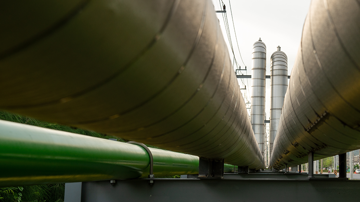
According to a project overview released by the Oil Sands Alliance in March, a pipeline network exceeding 650 kilometers is proposed to transport CO2 from sites as far north as Fort McMurray, Alberta, to a designated storage hub in the Cold Lake region. This plan involves 16 smaller lateral pipelines connecting to 13 different oilsands sites, including both mining locations and steam-driven operations. The liquefied CO2 will flow into a larger transportation line that leads to the storage hub.
At the storage hub, the captured gas will be injected deep underground into the Basal Cambrian Sandstone formation, located one to two kilometers beneath the Earth's surface. This porous sandstone has spaces suitable for CO2 storage, and a thick layer of non-porous rock salt above it will serve as a barrier, ensuring the gas remains contained.
While the project overview did not provide a revised cost estimate, the Oil Sands Alliance previously indicated that the first phase of the Pathways initiative would require an investment of $16.5 billion by 2030. The project has faced delays as the companies involved, along with the provincial and federal governments, negotiate the specifics of cost-sharing. Cenovus CEO Jon McKenzie stated in an April interview that while the company can contribute to the Pathways project, it cannot shoulder the entire financial burden alone.
The federal government currently offers an investment tax credit aimed at supporting carbon capture initiatives, which industry leaders have found beneficial yet insufficient to cover all costs. Alberta has also established a grant program that subsidizes 12 percent of eligible capital expenditures. In contrast, the U.S. model requires companies to manage upfront construction costs while providing extensive tax credits for ongoing operations.
The carbon pricing aspect is critical for the Pathways project. Chloe McElhone, research manager at Clean Prosperity, emphasized the importance of stability and predictability in carbon pricing over the long term. Recently, the Alberta and federal governments targeted an effective carbon price of $130 per tonne by 2040. However, some environmental organizations have criticized this timeline as too extended. Chris Severson-Baker, executive director of the Pembina Institute, argued that the projected carbon price is not aggressive enough to encourage immediate private investments necessary for the Pathways project.
Despite the concerns raised, climate advocates welcomed the introduction of carbon contracts for difference within the federal-provincial implementation agreement. These contracts serve as a form of insurance, providing clean energy investors with assurance regarding the carbon pricing framework for the future. Should either government fail to uphold its commitments or repeal climate policies, they would bear sole responsibility for the contracts. Analysis from Clean Prosperity suggests that carbon prices between $130 and $150 could render the Pathways initiative financially feasible, leading Frank to assert that the implementation agreement signifies significant progress toward the economic viability of the project, offering much more certainty than market participants previously had.
🏷️
carbon pricing
oilsands
environmental policy
pipeline
carbon capture
pathways project
Infrastructure
energy
Alberta
sustainability
← Previous Post
The Critical Role of Real-Time Concrete Strength Monitoring in Data Center Construction5 months ago