
U.S. Trade Representative Announces Non-Renewal of CUSMA in Current Form Amid Ongoing Negotiations
📅 4 months ago
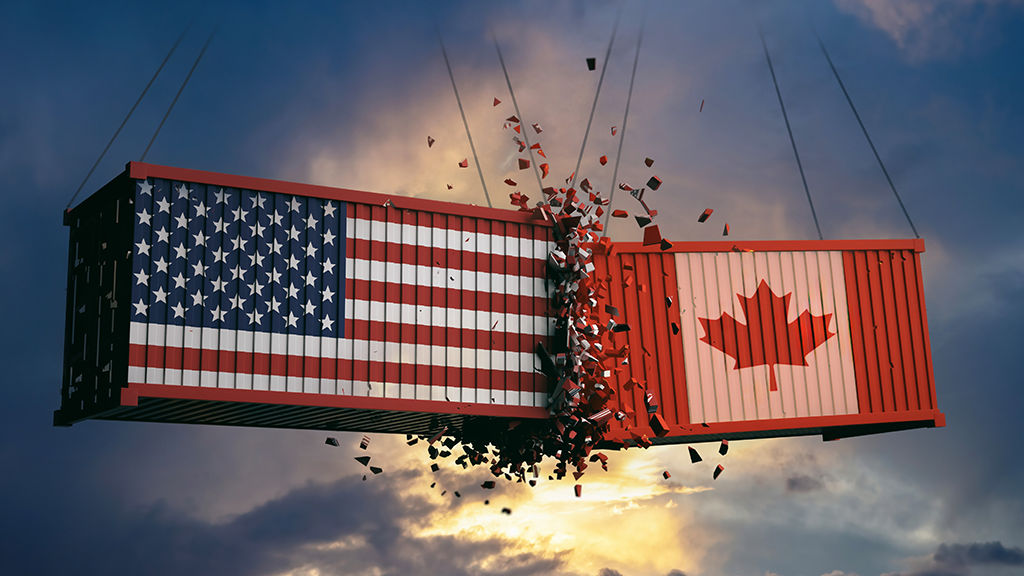
The U.S. Trade Representative has stated that the Canada-U.S.-Mexico Agreement (CUSMA) will not be renewed in its current form, triggering a decade-long review process as negotiations continue with Canada and Mexico.
In a significant development regarding North American trade, U.S. Trade Representative Jamieson Greer announced that the United States will not renew the Canada-U.S.-Mexico Agreement (CUSMA) in its existing format. However, he reassured that the agreement would remain valid while discussions aim to address its shortcomings, particularly trade deficits with Canada and Mexico. "The United States will continue to engage with Mexico and Canada to address the Agreement’s shortcomings and our trade deficits with these countries," Greer stated during a press conference on Wednesday.This announcement initiates a rolling annual review mechanism that could extend for up to a decade, at which point the agreement would expire unless an extension is negotiated. Earlier on the same day, Greer held a virtual meeting with Canada’s Trade Minister Dominic LeBlanc and Mexico's Secretary of Economy, Marcelo Ebrard, to deliberate on the future of the trade pact. The meeting coincided with the deadline for the three partners to express their intentions regarding the renewal of the deal, which has become a cornerstone of trade relations in North America.
Both Canada and Mexico have expressed their desire for a 16-year extension of the agreement. LeBlanc emphasized the importance of sustained discussions to bolster trade and investment frameworks that support North American prosperity and competitiveness. He specifically mentioned the need for substantial discussions with the U.S. regarding sectoral tariffs affecting Canadian steel, aluminum, automobiles, and lumber.
In a social media video, Ebrard indicated that Mexico is not rushing the negotiations but seeks to avoid the uncertainty linked to prolonged annual reviews. The CUSMA has provided a protective layer for Canada and Mexico against various tariffs imposed by U.S. President Donald Trump, including those targeting steel, aluminum, and automotive industries.
Negotiated during Trump’s first term, CUSMA replaced the North American Free Trade Agreement (NAFTA), which had been a source of contention during his presidency. Despite the tumultuous negotiations, the agreement was hailed by all three countries as a success. However, Trump has recently expressed skepticism regarding CUSMA’s future, labeling it "irrelevant" and suggesting it may have fulfilled its purpose.
As it stands, CUSMA will remain effective unless one of the partner nations provides a six-month notice to withdraw. There is uncertainty surrounding whether the Trump administration can execute such a withdrawal without congressional approval. While trade negotiations between Mexico and the U.S. are underway, formal talks between Canada and the U.S. have yet to commence.
Conservative trade critic Shuv Majumdar raised concerns on social media, highlighting the anxiety faced by millions of Canadians regarding job security and business planning amid trade uncertainties. He questioned why Canada was not currently engaged in the negotiations. In response, LeBlanc asserted that Canada approaches these discussions from a position of strength, aiming to preserve and enhance one of the world’s most successful trading relationships.
In light of global economic instability, LeBlanc emphasized Canada’s role as a stable and reliable partner, possessing essential energy and natural resources alongside a skilled workforce. Carlo Dade, from the University of Calgary’s School of Public Policy, suggested that the missed deadline for renewal does not impact CUSMA’s future as long as constructive dialogue continues. He noted that the market is adapting to a new level of uncertainty with the U.S.
Dade warned that prolonged negotiations could lead to diminished competitiveness for North America in the global market. Andrew Hale, from the Advancing American Freedom group, echoed similar sentiments, cautioning that ongoing uncertainty may deter long-term investments due to the deep integration of the economies among the three nations. As discussions proceed, the potential for increased trade friction looms, especially given the historically contentious nature of negotiations with the Trump administration.
🏷️
United States
construction materials
aluminum
Mexico
Canada
automobiles
steel
tariffs
CUSMA
trade agreement
← Previous Post
BC's Future Skills Grant Applications Open for 2026-27 to Boost Training Access4 months ago
Next Article →
Prime Minister Carney and Alberta Premier Smith to Discuss Proposed Pipeline Project in Calgary4 months ago