Victoria LaBillois Advocates for Indigenous Entrepreneurship at Rezolution Summit
📅 2 months ago
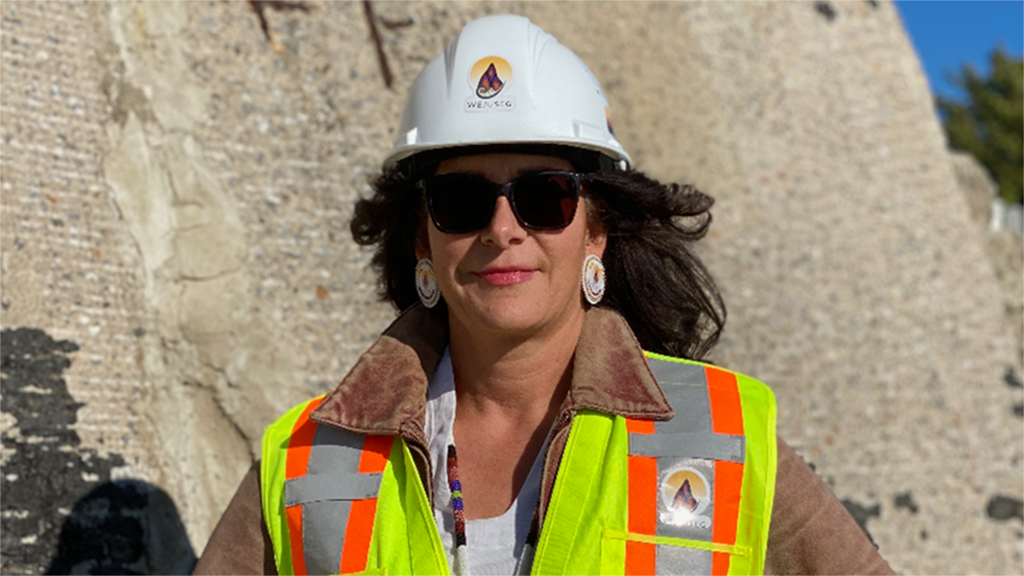
Victoria LaBillois, a trailblazing Mi’gmaq entrepreneur, emphasizes the significance of mentorship for young Indigenous business owners while preparing for the Rezolution Summit in Toronto.
In 2011, Victoria LaBillois made history as the first Mi’gmaq woman to establish a construction company that operated outside her First Nations community in Listuguj, Quebec. Founding Wejipeg Excavation marked the beginning of her entrepreneurial journey, but it was a path fraught with challenges. With limited resources and no mentors to guide her, LaBillois relied heavily on her academic background, specifically her MBA, as she maneuvered through Quebec's regulatory frameworks and jobsite dynamics to sustain her business. "I had to learn pretty much everything from scratch," she recalled, noting that the experience required significant dedication and resilience. "It was a lot of investment of time and energy to figure out a lot of things. I was flying blind." Reflecting on her journey, LaBillois expressed that had she been able to access mentorship, it would have significantly eased her early struggles. "I’m sure it could have saved me hundreds of hours and given me some confidence early on." Today, as a successful contractor, she is determined to ensure that young Indigenous entrepreneurs do not face the same obstacles she encountered. This commitment is one of the driving forces behind her participation in the forthcoming Rezolution Summit, scheduled for August 11 and 12 in Toronto. The summit's overarching theme will focus on Indigenous wealth generation and economic sovereignty, with mentorship being a critical topic. LaBillois has been invited to lead a pre-summit workshop aimed at newcomers, where she will discuss the significance of social capital and its role in fostering business success. "I’ll be sharing practical tips on how to build their networks and I’m going to expect that they will put these tips into use at the event," she stated. Although the barriers for young entrepreneurs in remote Indigenous communities may seem reduced today, LaBillois firmly believes that mentorship remains crucial for achieving success. She highlighted the growing support systems available in these regions, such as economic development officers and Indigenous financial institutions, which provide essential resources on business management and financial literacy. LaBillois reminded the audience that entrepreneurship is not a novel concept for First Nations peoples, citing the established trade networks that existed across the continent long before modern business practices. "We always knew how to save and invest. It’s not new, it is just getting back to it," she asserted. Over her two-decade career, which includes significant experience in Indigenous public service, LaBillois has navigated numerous hurdles, notably dealing with racism. She recounted instances where she faced derogatory remarks, such as being called "the Indian loader," and experienced rejection from companies that refused to do business with her due to her Indigenous background. "Accessing insurance can be difficult for Indigenous businesses," she added, acknowledging the ongoing challenges despite increased awareness of racism in the industry. "I think there is an awareness of the issue and attempts to address it, but it is something that is rarely talked about until it rears its ugly head." LaBillois has maintained a philosophy of perseverance, stating, "I’m just here to do my thing, get the job done." While she does not perceive her gender as a barrier to her success in construction, she recognizes that gender inequality persists in the sector, which has been slow to adapt compared to other fields. Nevertheless, she noted improvements, citing that approximately 23 percent of Indigenous businesses are led by Indigenous women, a rate that surpasses the growth of non-Indigenous women-owned companies. With Indigenous peoples being the largest demographic under 25 in Canada, LaBillois stressed the importance of connecting them with training and employment opportunities to tackle labor shortages. "It’s a solution that is often overlooked," she emphasized. Looking ahead, LaBillois anticipates a rise in Indigenous businesses across various industries in the coming decade. "I see more equity participation in large projects… We’re making strides and my hope is that this becomes normal and that we don’t need to have a special policy to hire Indigenous workers or to engage with Indigenous businesses," she expressed. With Indigenous enterprises contributing nearly $50 billion annually to Canada's economy, LaBillois remains optimistic about the future. "I’m very encouraged about the positive changes in the landscape."
🏷️
Indigenous entrepreneurship
mentorship
economic sovereignty
construction industry
financial literacy
Indigenous women in business
Wejipeg Excavation
networking
Rezolution Summit
labour shortages
Next Article →
Pembina Pipeline Aligns with National Interest Strategy for West Coast Oil Pipeline2 months ago