Winnipeg Begins Decommissioning of Arlington Bridge After Years of Delays
📅 4 months ago
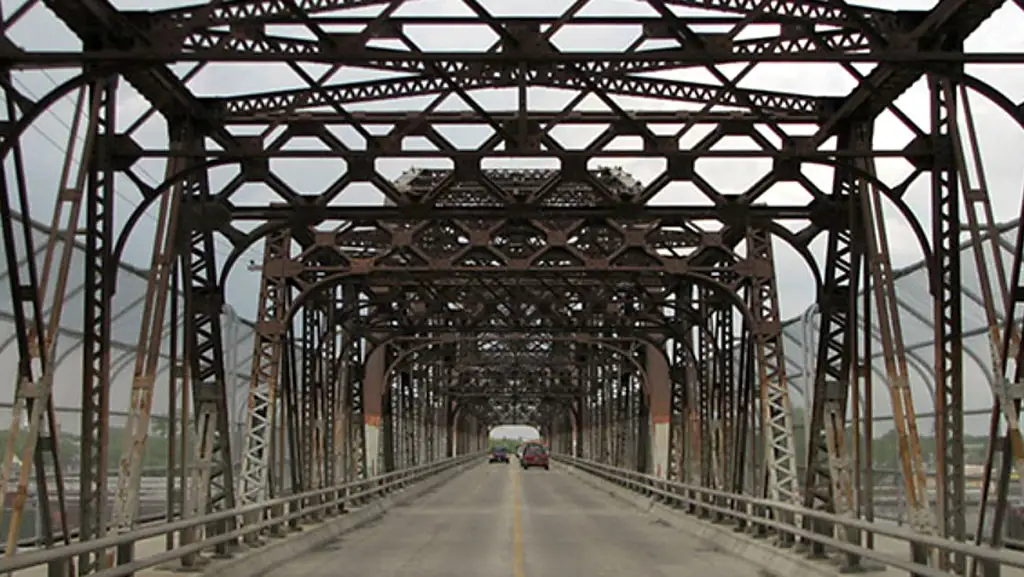
The decommissioning of the Arlington Bridge in Winnipeg has commenced, marking a significant step towards the construction of a new bridge. Mayor Scott Gillingham emphasizes the importance of this project for future accessibility and safety.
The long-awaited decommissioning of the Arlington Bridge in Winnipeg has commenced, following years of studies, discussions, and delays. Work to dismantle the bridge began in June, signaling a critical step towards the construction of a new structure. Originally opened in 1912, the Arlington Bridge spans the expansive 1,149-acre Canadian Pacific Kansas City Limited (CPKC) freight yard and is noted as the longest of the over 100 bridges and overpasses in Winnipeg, measuring 2,155 feet in length. It serves as a vital north-south transportation link, connecting the west end, located south of the freight yard, to the north end, situated north of it.Mayor Scott Gillingham expressed optimism regarding the project, stating, "This is the next step toward building a new Arlington Bridge for the north end. We’re removing the old bridge and designing its replacement. The next bridge will be safer, more accessible, and built to serve Winnipeg for generations." The Arlington Bridge has been a source of concern for many years; an engineering report released in 2016 indicated that the structure was nearing the end of its serviceable life. This finding led to the Better Bridge for Arlington Study and a preliminary design for a new bridge that was established in 2019.
By the end of November 2023, the aging bridge was officially shut down after a study revealed that it was in such disrepair that repairs or rebuilding on the existing foundation were not feasible. In January 2025, the city council approved a budget of $17 million specifically for the decommissioning and removal of the bridge. Damir Muhurdarevic, the bridge projects engineer for Winnipeg, explained, "This year’s work involves decommissioning/demolition of the southern portion of the bridge. This includes removal of the south ramp and the five southern trusses. The south ramp does not extend over the yard; the five southern trusses do."
Muhurdarevic further detailed the timeline for the project, stating that the removal of the south ramp is expected to take four to six weeks. He also indicated that work over the freight yard is scheduled to commence on July 13, with an anticipated duration of six to eight weeks for the removal of the five southern trusses, including spans and piers ranging from south to north.
Kiewit Construction Services ULC has been contracted as the general contractor for the Arlington Bridge demolition, with three out of four of its subcontractors being local Manitoba companies. While the decommissioning project is spearheaded by the City of Winnipeg, CPKC has been actively engaged with the city to ensure that the demolition processes are coordinated effectively, thereby minimizing any potential disruptions to the operational freight yard.
City Councillor Ross Eadie, who represents the north end Mynarski ward, highlighted the complexity and potential costs associated with the project, stating, "The bridge is ready to fail, and the city is liable for damages if it does. There are very few companies in North America that have the expertise to take down a bridge, because it’s very risky. CPKC needs an update on the demolition every 15 minutes, so it can handle safely the logistics of train and freight car movement in the yard."
In addition to the Arlington Bridge removal, the Winnipeg Public Works department has a substantial workload this year, encompassing 175 kilometers of roadway improvements, 50 sidewalks, and 15 kilometers of bike lanes and active transportation routes. This work includes renewing St. Mary’s Road from the south Perimeter Highway to the Floodway, upgrading Lagimodiere Boulevard, and repairing downtown streets, including Edmonton, Kennedy, and St. Mary streets.
Despite these projects, Chris Lorenc, president of the Manitoba Heavy Construction Association (MHCA), noted that there is still room for increased activity among his members. He remarked, "Government budgets have not been keeping up with inflation. For example, the provincial highway capital budget in 2016 was $640 million. In 2026 it was only $525 million. Just to keep up with inflation, the budget should be $1.2 billion."
He acknowledged that the City of Winnipeg is making efforts to keep up with inflation, noting that the city has allocated $156.8 million to improve roads and sidewalks. Lorenc believes this sets a positive example for the provincial government, although he mentioned that there have yet to be any responses to this call for action. Reflecting on the bridge's significance, Lorenc shared a personal connection, stating, "I grew up with the bridge, crossing it many times throughout my life. It’s an iconic Winnipeg structure. Although it was structurally unsound, it would have been nice to keep it in some form, like the High Line in New York. The Arlington Bridge has wonderful character. To lose it is sad.
🏷️
Infrastructure
local contractors
Arlington Bridge
CPKC
Construction
public works
Demolition
Kiewit Construction
Transportation
Winnipeg
← Previous Post
Federal Audit Reveals Slow Disbursement of Hurricane Maria Recovery Funds in Puerto Rico4 months ago