Premiers Smith and Ford Announce Proposed West-East Oil Pipeline Route
📅 4 months ago
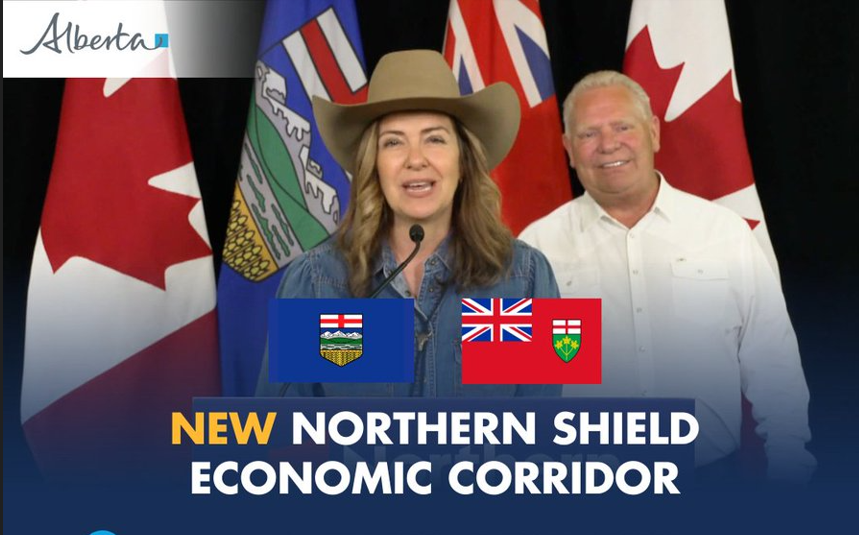
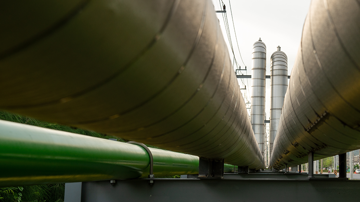
Alberta Premier Danielle Smith and Ontario Premier Doug Ford have proposed a 3,300-kilometre oil pipeline from Hardisty, Alberta, to Sarnia, Ontario, aiming to bolster Canada's energy independence and market access.
CALGARY, ALTA – In a significant development for the Canadian energy sector, Alberta Premier Danielle Smith and Ontario Premier Doug Ford announced on Monday the proposed route for a new west-east oil pipeline. This ambitious project is designed to stretch 3,300 kilometers from Hardisty, Alberta, to refineries in Sarnia, Ontario, without crossing into the United States. The announcement took place at the Calgary Stampede, where the two leaders engaged the public by flipping pancakes at Smith's annual premier's breakfast.According to an Ontario government brochure, the proposed pipeline would have the capacity to transport 500,000 barrels of crude oil per day. Both premiers emphasized the project's potential to reduce Canada's reliance on imported refined oil. "It's a win-win-win," Ford said, highlighting the benefits for Ontario, Alberta, and the entire nation.
The pipeline proposal originates from a commitment made by Ford and Smith during last year’s Stampede to explore the feasibility of an energy corridor connecting their provinces. Ford noted that the study evaluating the corridor is still in progress and is anticipated to conclude by the end of this year. The study will also determine the estimated cost and construction timeline for the pipeline.
Smith pointed out that if constructed, the pipeline would not only facilitate the refining and use of Alberta oil within Canada but would also create opportunities for exporting to European markets. "This pipeline is another signal to investors that Canada is once again open for business and the best country on Earth from which to secure a reliable source of energy," she stated.
Supporting the initiative, Saskatchewan Premier Scott Moe, who attended Smith's breakfast, expressed that the proposal would generate essential revenue for investments in health care, education, and public safety in his province. When asked about the potential involvement of Manitoba Premier Wab Kinew, Ford expressed confidence that they would find common ground, suggesting that a pipeline to Sarnia could lead to additional infrastructure to the Port of Churchill in northern Manitoba.
The backdrop of this announcement includes an earlier proposal by Smith for a new pipeline route from Alberta to the British Columbia coast, which aims to transport over one million barrels per day. This particular project is part of an energy deal signed with Prime Minister Mark Carney, who is expected to make a decision on whether to fast-track the project through the federal review process by October.
"Pipelines have gone from impossible to a national imperative," Smith remarked, asserting that Alberta's oilsands have transitioned from being viewed as a target to being recognized as a national treasure. She proclaimed that Canada is embarking on the most significant expansion of oil and gas infrastructure and production seen in decades.
Currently, both the proposed line to the West Coast and the one to Sarnia lack major private sector backing. Pembina Pipeline holds a 10 percent stake in the B.C. project, while the federally owned Trans Mountain Corp. and the Alberta government control the remainder. Smith indicated that ownership dynamics for the West Coast pipeline could evolve as the project advances.
Ford mentioned that private sector engagement for the Ontario pipeline is being incorporated into the feasibility study, alongside considerations for public financing. He emphasized the investment potential, suggesting that whether funded by the government or private sector, the project would yield significant returns for all Canadians.
However, the announcement has drawn criticism from environmental groups. Keith Stewart from Greenpeace Canada questioned the rationale behind funding these pipelines with public money, suggesting that it would be more prudent to invest in sustainable energy solutions rather than fossil fuel mega-projects, especially in light of the growing prevalence of electric vehicles and renewable energy technologies.
🏷️
Alberta
Hardisty
energy independence
Sarnia
pipeline capacity
Ontario
Construction
energy infrastructure
oil pipeline
environmental impact
← Previous Post
Winnipeg Begins Decommissioning of Arlington Bridge After Years of Delays4 months ago