Innovative Collaboration Turns Forestry Waste into Eco-Friendly Packaging
📅 3 days ago
A partnership between Yinka Dene Economic Development Limited Partnership and the University of British Columbia aims to create biodegradable foam packaging from forestry waste, presenting a sustainable alternative to plastic foam.
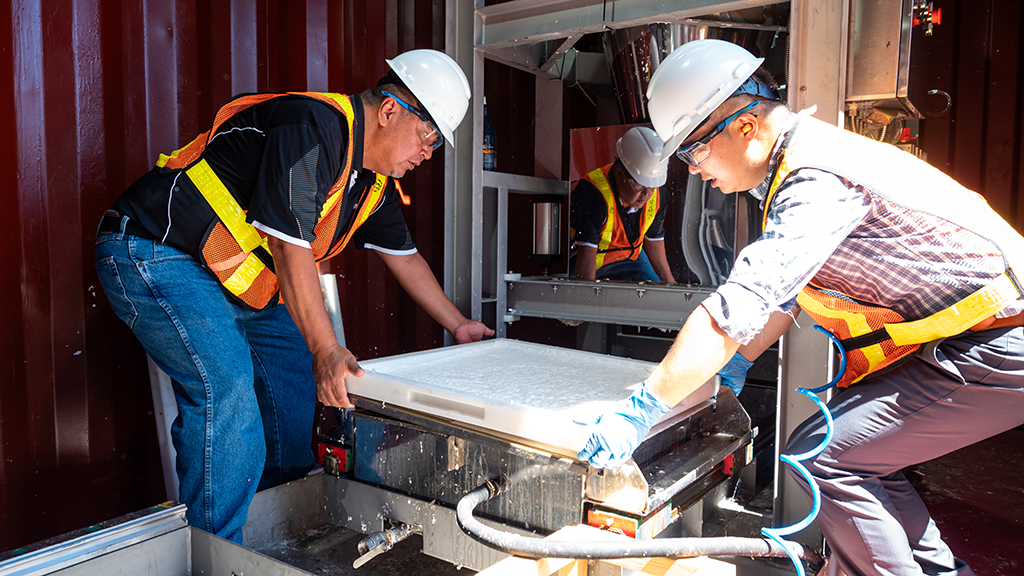
In a groundbreaking collaboration, Yinka Dene Economic Development Limited Partnership (YLP), which represents the business interests of the Wet’suwet’en First Nation in north-central British Columbia, has teamed up with the University of British Columbia (UBC) in Vancouver to develop an innovative product derived from forestry waste: biodegradable foam packaging known as wood foam. This new material serves as an eco-friendly substitute for traditional plastic foam packaging, which, while convenient, contributes significantly to landfill waste, with millions of tonnes disposed of annually and persisting in the environment for over 500 years.The wood foam is crafted from wood waste sourced from B.C. sawmills, municipal solid waste, and recycled paper, as detailed by Reg Ogen, president and CEO of YLP. The initiative stems from a partnership between YLP and Dr. Feng Jiang, a member of UBC’s wood science department. The pilot plant, located in East Vancouver, is operated by DicinFoam, a subsidiary of YLP, which derives its name from the Wet’suwet’en term for wood, 'Dicin'.
Dr. Yale Zhu, the chief technology officer of YLP and co-founder of the technology, elaborated on the process of transforming wood waste into packaging. Initially, wood residuals are cleaned and processed into fibers, which are then mixed with water and non-toxic substances to create a slurry. This mixture is shaped inside molds, de-watered, and oven-dried, resulting in a lightweight foam product. As Dr. Zhu explained, this wood foam is intended to replace Styrofoam for various applications, particularly in protective packaging and thermal insulation. In construction, it can be utilized as thermal insulation panels or loose batting, with ongoing research into organic waterproofing, insecticide proofing, and fireproofing additives.
Currently, wood foam packaging is not available for commercial sale. Dr. Zhu indicated that the team is working towards proving the concept within the next 12 months, and if all regulatory approvals are granted, they anticipate launching products in two years. Initially, the cost of wood foam is expected to be about 20% higher than its plastic counterpart, but there is confidence that prices will decrease with increased production efficiency.
Looking ahead, the next phase of this project involves establishing a larger facility in Burns Lake, B.C., situated within Wet’suwet’en territory, capable of producing 1,000 tonnes of biodegradable foam annually. This facility is envisioned as a central component of a forest-based innovation hub, which is projected to create up to 15 new jobs. YLP is actively seeking government funding to support this expansion, although a response is still pending. Dr. Zhu noted that the timeline for this development is contingent on successfully completing the proof of concept, targeted for 2027.
The Burns Lake facility aims to foster a robust forest bio-economy with considerable participation from First Nations. Dr. Zhu emphasized that this collaborative hub will facilitate research and development of sustainable applications for lumber and forest products. YLP believes that integrating Indigenous perspectives and knowledge can significantly reinvigorate the forestry sector, particularly in value-added manufacturing.
Plans also include expanding operations to a facility on Vancouver Island with a capacity of 15,000 tonnes, which would generate between 35 and 60 new jobs. Established in 2012, YLP's mission is to enhance the welfare of Wet’suwet’en First Nation members both now and for generations to come. Dr. Zhu reflected on the unique partnership between YLP and UBC, highlighting that the project was inspired by Wet’suwet’en Elders who questioned the wastefulness of burning a significant portion of harvested trees.
The intellectual property associated with wood foam is co-owned by YLP and UBC, marking a significant moment in UBC's history as it shares IP ownership of a technology it helped develop. YLP holds exclusive distribution rights to this innovative technology. UBC’s Indigenous Strategic Plan aligns with this initiative, prioritizing research that is community-led and respects Indigenous knowledge and self-determination. Ogen remarked on the pivotal role of UBC in providing essential resources for business development, intellectual property management, and forest management expertise.
🏷️
sustainable materials
environmental innovation
UBC partnership
biodegradable packaging
First Nations
forestry waste
construction insulation
wood foam
packaging solutions
forest bio-economy
← Previous Post
CoolRoofsBC Advocates for Cool Roofing in Municipal Elections Amid Rising Temperatures3 days ago
Next Article →
Massive Refurbishment Project Begins at Pickering Nuclear Generating Station3 days ago
Related Posts