De Havilland Aircraft Breaks Ground on Major Manufacturing Hub in Alberta
📅 3 months ago
De Havilland Aircraft of Canada has commenced construction on a new manufacturing and aviation hub in Wheatland County, Alberta, expected to create thousands of jobs and bolster Canada's aerospace capabilities.
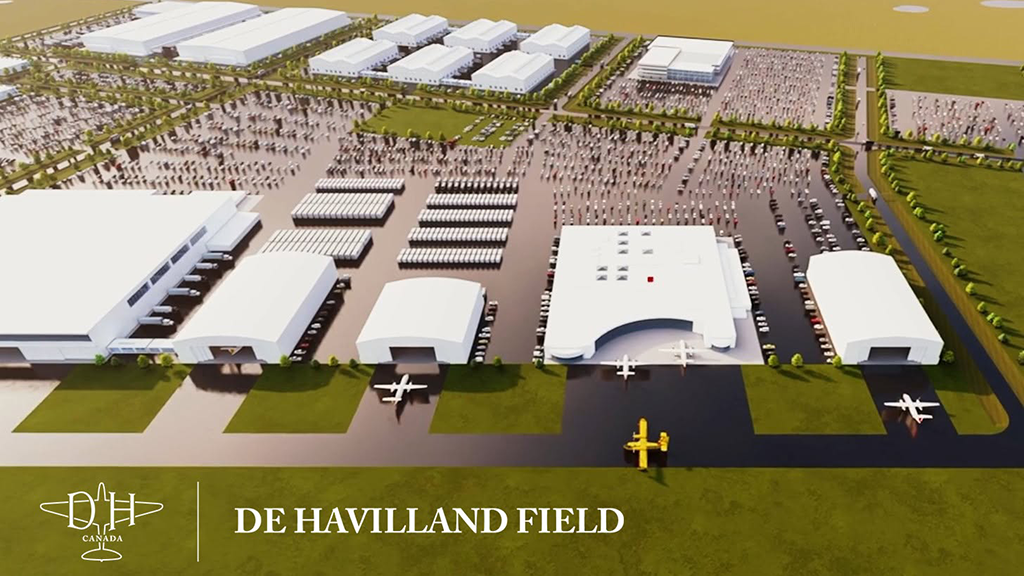
Construction has officially commenced on a significant new manufacturing and aviation hub for De Havilland Aircraft of Canada, located in Wheatland County, Alberta. This ambitious project, known as De Havilland Field, is anticipated to generate thousands of job opportunities and enhance Canada's domestic capacity to design, build, and support aircraft. The manufacturing complex will span approximately 1,559 acres of farmland situated west of Strathmore, and about 30 minutes east of Calgary, making it a strategic location for the aerospace industry.The ground-breaking ceremony for De Havilland Field took place in May, signifying the initiation of a long-term development plan that will unfold in three distinct phases. According to De Havilland, this will be a greenfield site, allowing for the unimpeded development of the next generation of aerospace innovation. Each phase is meticulously designed to enhance the company's capabilities and create a fully integrated aerospace campus.
The first phase of development will primarily focus on supporting the immediate growth and production requirements of De Havilland. This initial stage will encompass aircraft parts manufacturing, the production of aerostructures, and the establishment of a global distribution and logistics hub to cater to customers worldwide. Subsequent phases are set to broaden Canada's aerospace manufacturing capabilities significantly, incorporating final assembly, testing, and certification facilities, along with a dedicated runway for the direct flight of completed aircraft from the site.
De Havilland envisions De Havilland Field as a hub where production, innovation, and progress converge. Plans submitted to the Impact Assessment Agency of Canada (IAAC) reveal intentions for an aerodrome on the southern part of the property, while commercial and industrial developments will occupy the northern and eastern sections. Beyond the manufacturing facilities, the campus will also feature corporate offices, logistics operations, maintenance and repair services, customer support facilities, and infrastructure for aircraft delivery.
The site’s location has been deemed ideal by the company due to its access to a large, youthful, and diverse labor pool, as well as its family-friendly cost of living. Additionally, it is conveniently situated near major transportation routes, including Highway 1, and a world-class international airport, which will facilitate parts distribution. Portions of the property have already received designation as suitable for commercial and industrial development.
The first building at De Havilland Field is projected to open in the spring of 2028. Documentation submitted to the IAAC indicates that this facility is crucial for meeting the rising global demand for De Havilland's three aircraft platforms: the DHC-515 Firefighter, the DHC-6 Twin Otter, and the Dash 8. The new facility is particularly vital for fulfilling a $1.6 billion contract to produce 24 DHC-515 Firefighter aircraft for six European Union countries, while also creating opportunities to supply additional firefighting aircraft to Canadian and international customers.
This project will enable De Havilland to consolidate the assembly of all three aircraft in a single location, streamlining its manufacturing, maintenance, logistics, and support services. The site was strategically selected for its proximity to Highway 1, Calgary International Airport, and land already designated for commercial and industrial use.
The construction and operation of De Havilland Field are expected to generate thousands of jobs across various sectors, including trades, engineering, manufacturing, and aviation services. The Alberta government estimates that the completed development will sustain approximately 3,000 permanent operational jobs while attracting suppliers, aerospace companies, and technological partners to the neighboring region.
According to De Havilland Canada CEO Brian Chafe, this project transcends the mere construction of a new manufacturing facility. It represents a significant step toward building sovereign capabilities in Canadian aerospace, including manufacturing, service support, and training. Chafe highlighted that De Havilland is fully Canadian-owned and relies on an 80 percent Canadian-based supply chain, stressing that government support for domestic aerospace manufacturing could unlock even greater potential.
The initiative aligns with the federal government’s Defence Industrial Strategy, which aims to fortify Canada’s sovereign aerospace capability and lessen dependency on foreign manufacturing. De Havilland asserts that investing in domestic infrastructure is crucial for ensuring that Canadian aircraft are designed, built, and supported by Canadian workers, thereby reinforcing the nation’s position in specialized aircraft manufacturing. The company boasts a fleet of over 5,000 aircraft that have been delivered to operators globally, trusted for a variety of missions such as aerial firefighting, search and rescue, medical evacuation, and surveillance.
🏷️
manufacturing
Alberta
Construction
aerospace
Infrastructure
job creation
aviation
De Havilland
industrial development
Canadian supply chain
← Previous Post
Mass Timber Construction Gains Momentum in British Columbia Municipalities3 months ago