Halifax's Windsor Street Exchange Redevelopment Moves to Major Construction Phase
📅 2 months ago
The Windsor Street Exchange Redevelopment in Halifax, valued at $180 million, has entered its significant construction phase, aimed at transforming a crucial transportation corridor over the next three years.
Construction teams are now advancing into a pivotal stage of the $180 million Windsor Street Exchange Redevelopment in Halifax, Nova Scotia. This redevelopment project is set to significantly alter one of the busiest and most strategically vital transportation routes in the municipality over the next three years. Recently, elected officials, municipal staff, and project partners convened to celebrate the commencement of phase two and to divulge further details regarding future plans.The transition into the second phase signifies a shift from preparatory activities to major construction work that will reshape the gateway to the Halifax Peninsula. The redevelopment aims to enhance connections for commuters, transit users, cyclists, pedestrians, and the Port of Halifax. This initiative represents one of the largest investments in transportation infrastructure ever made by the municipality. Funding for the project is being sourced through a partnership involving the municipality, Halifax Water, as well as federal and provincial governments, and the Halifax Port Authority.
Major construction efforts are projected to persist until 2029, with substantial completion anticipated by the summer of that year. Halifax Mayor Andy Fillmore emphasized the project's essentiality for the city’s future growth, stating, "There are few infrastructure projects more important to Halifax’s future than the Windsor Street Exchange. This project is about keeping people, goods, and our economy moving. It will improve traffic flow, strengthen transit reliability, enhance access to the Port of Halifax, and support one of Atlantic Canada’s most important trade and transportation corridors."
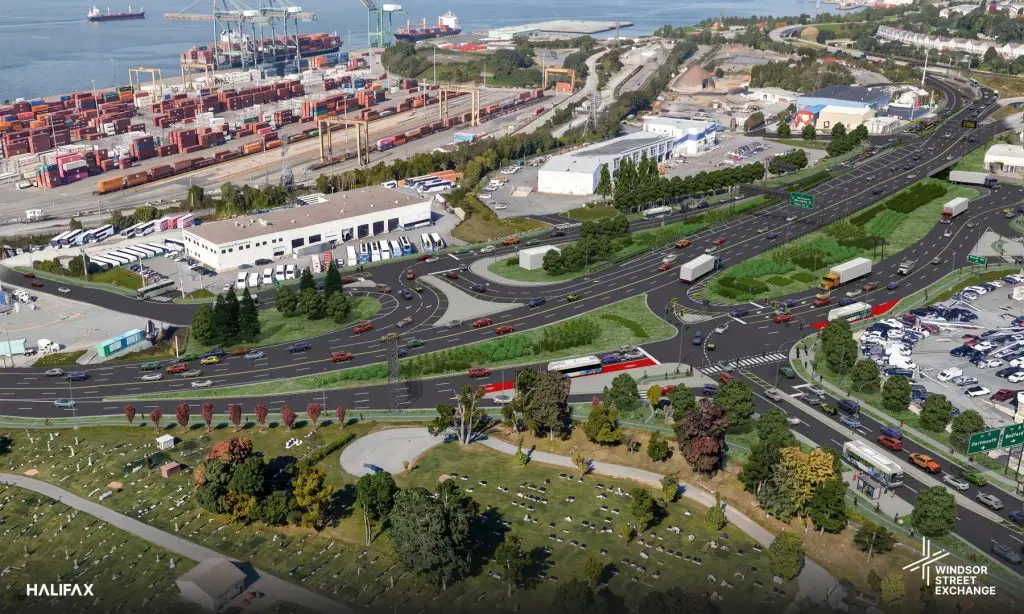
As Halifax continues to expand and assumes a more prominent role within Canada’s economy and defense sector, Fillmore asserts that the city requires infrastructure capable of accommodating that growth. The redevelopment focuses on a crucial transportation hub where Bedford Highway, Windsor Street, and Lady Hammond Road converge, linking to Highway 111 and the MacKay Bridge. Daily traffic statistics indicate that around 48,000 vehicles utilize the Windsor Street intersection, with the broader project area seeing between 92,000 and 110,000 vehicles daily.
Prior to the initiation of the current phase, construction crews dedicated months to completing the groundwork essential for the larger reconstruction effort. Phase one, which commenced in the fall of 2025, focused on enabling works designed to keep the project on track while facilitating traffic movement throughout the area. This work encompassed the construction of detour roads on Highway 111 and Bayne Street, temporary retaining walls, excavation activities, utility relocations, site preparation, foundation work, and upgrades to Halifax Water infrastructure. Additionally, long-lead materials were procured to support the upcoming construction activities.
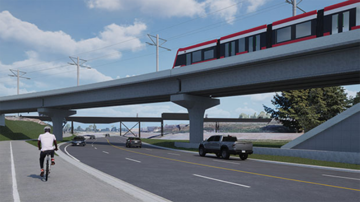
Phase two will introduce the core components of the redevelopment. Among the most visible features will be a new overpass structure aimed at creating direct and uninterrupted travel between Bedford Highway and Highway 111, including access to and from the MacKay Bridge. Municipal officials indicate that this movement represents the highest-volume traffic pattern within the corridor, significantly contributing to congestion during peak hours.
This second phase will also entail extensive reconfiguration of key intersections at Bedford Highway, Windsor Street, and Lady Hammond Road, along with the construction of a new road link connecting Bayne Street and Lady Hammond Road. A new exit to Bayne Street is expected to enhance access to Port of Halifax facilities, while new and upgraded signalized intersections will be installed or enhanced. The work will also involve replacing sidewalks, installing multi-use pathways, realigning roadways, and executing significant upgrades to water, wastewater, and stormwater infrastructure.
Given the exchange's role as a major regional gateway, construction will be meticulously staged to minimize disruption. The municipality has stated that traffic impacts will be managed through detours, lane shifts, construction sequencing, and proactive communication with residents and businesses. Access to properties and commercial operations in the vicinity will be preserved throughout the project whenever feasible.
The project is being executed using a progressive design-build model, a relatively new procurement approach for significant municipal projects. This method allows for simultaneous advancement of design and construction planning, enabling engineers and contractors to refine solutions as more information becomes available. Halifax asserts that this approach enhances cost certainty, better manages risks, and offers flexibility to address site conditions and construction challenges as work progresses. The design-build team, led by Dexter Construction Ltd., was awarded the contract in late 2024. The design itself has evolved over several years, with municipal staff evaluating multiple concepts based on traffic forecasts, anticipated growth, future land-use patterns, and thorough public consultation. Engagement sessions held in 2021 collected feedback on existing transportation challenges and potential design alternatives, while a value-engineering review conducted in 2023 further assessed options and recommended refinements aimed at improving efficiency and project outcomes. The final functional design presented to the regional council in 2024 integrated public feedback, technical analysis, and recommendations from that review. Subsequently, the council directed the project team to continue exploring enhanced active transportation facilities, dedicated transit lanes, and future transportation demands as part of the design-build process.
🏷️
traffic flow
Public-Private Partnership
urban development
Transportation
Infrastructure
design-build
Halifax
Dexter Construction
road construction
Windsor Street Exchange
← Previous Post
New Multi-Use Housing Development in Vancouver's Downtown Eastside Aims to Address Rental Shortage2 months ago
Next Article →
Top Ten Pre-Bid Power Plant Projects in Alberta: An Overview of Upcoming Developments2 months ago