Illinois State University Students Showcase Innovation in NECA-Sponsored Electrical Competition
📅 3 months ago
🏷️ Augmenta
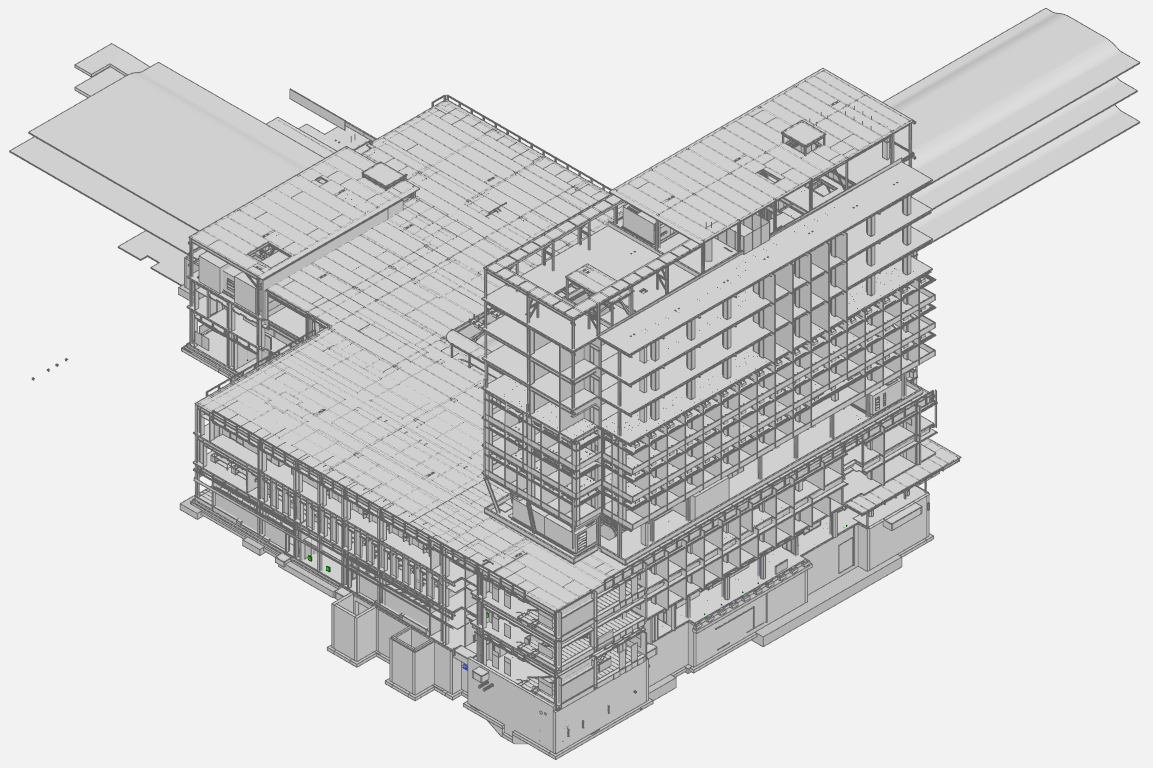
A team of nine Illinois State University students competed in a NECA-sponsored electrical contractor competition, showcasing their skills in project execution, BIM coordination, and innovative problem-solving despite being outmatched by larger teams from established engineering programs.
Earlier this year, a dedicated team of nine students from Illinois State University (ISU) took part in a challenging competition sponsored by the National Electrical Contractors Association (NECA). In this contest, students were tasked with assuming the role of electrical contractors, navigating a project through its entire lifecycle. The competition encompassed various critical aspects such as estimating, scheduling, Building Information Modeling (BIM) coordination, sustainability, and project execution, with submissions evaluated by industry professionals. Notably, ISU faced stiff competition from larger institutions like Purdue and Penn State, whose teams featured 20 to 30 members, while ISU’s contingent was notably smaller and comprised mainly of non-technical construction management students. This presented a significant challenge, as ISU's engineering program was not set to officially launch until the next semester, positioning them as underdogs against competitors with extensive electrical engineering backgrounds and experience in Revit software.The project assigned to the teams involved creating a comprehensive electrical package for a three-story hospital, mimicking the responsibilities of a contractor. This required ISU's team to develop a 3D model, prepare cost estimates, and produce a construction schedule, alongside various supporting documents, all to be submitted for professional review. The project focused on four key areas: bidding and estimating, project management execution, BIM coordination, and design-build innovation. The team, which included members Zach L., Jesus C., Rosario P., Jason T., Jason C., Adrian P., Klarissa C., Yasmine D., and Vinny K., relied heavily on the expertise of Zach and Jesus, who took on the challenge of utilizing Revit for modeling.
Despite their limited prior experience with electrical modeling, both students embraced the learning opportunity. Jesus, a construction management major, admitted he had never engaged in electrical modeling before this competition. He began by thoroughly examining the plans, learning to interpret one-line diagrams, and gaining a solid understanding of the wiring, panels, and equipment necessary for constructing the model accurately. Zach confessed to having only used Revit a couple of times, describing the experience as a steep learning curve.
At the project's kickoff, the team was provided with one-line diagrams detailing the equipment and connections between panels, switchboards, transformers, and other components. This initial task of placing equipment into the Revit model, constructing the feeder schedule, and determining conduit routing was daunting, especially given the complexity of a hospital layout. Recognizing the potential challenges of manual routing, especially with their smaller team size and limited time, they sought guidance from a project sponsor, which led them to utilize Augmenta's technology.
After establishing the feeder schedule and positioning the equipment in Revit, Zach and Jesus imported their schedule into Augmenta to generate conduit routing options. This technology allowed them to refine their routing choices while considering keep-out zones and preferred paths, ultimately leading to more efficient solutions. By employing Augmenta’s AI-powered routing capabilities, they significantly reduced the time required for conduit routing, which would have otherwise taken them five times longer to complete manually. The students estimated that without Augmenta, they would have needed at least three months to finish the routing, a timeframe that was unfeasible given the competition’s schedule.
The competition commenced in January and concluded in early May, coinciding with the students' full academic loads and internships. The model produced by ISU emerged as one of their strongest components in the competition. Last year, ISU had ranked low, primarily due to the model being a weak point in their submission. This year, however, the students were proud of their improved performance. Zach noted, "We did pretty good on the Revit model," while Jesus echoed the sentiment, emphasizing the significant progress they made compared to the previous year.
The students' understanding of AI in construction also evolved throughout the competition. They recognized that AI should not replace human effort but rather serve as a supplementary tool to enhance their work. Zach succinctly described it as an assistant, emphasizing that skilled individuals are still necessary to interpret the project, verify routing, and ensure that the model aligns with coordination and construction needs. The integration of Augmenta allowed the students to engage more deeply with the project, fostering their curiosity and understanding of the construction process.
Although ISU did not place in the top three this year, their performance against larger teams from prestigious universities speaks volumes about their capabilities and the potential for future success. Zach, Jesus, and their fellow team members tackled a full electrical project, navigating new and technical challenges while demonstrating resilience and ingenuity. Their journey provided a genuine insight into the responsibilities of electrical contractors, transforming design information into coordinated, constructible, and ready-to-build models. The results may not have yielded a trophy, but the experience gained is invaluable, and anticipation builds for how the team will fare in the next competition.
🏷️
sustainability
AI in Construction
NECA competition
Augmenta
electrical contracting
Revit
design-build innovation
Illinois State University
construction management
BIM Coordination
← Previous Post
Ontario New-Home Sales Surge 130% in Q2 2026 Driven by HST Rebate Program3 months ago