Development Along London’s Bus Rapid Transit Network: A Look at Foundation Capital’s Ambitious Project
📅 2 months ago
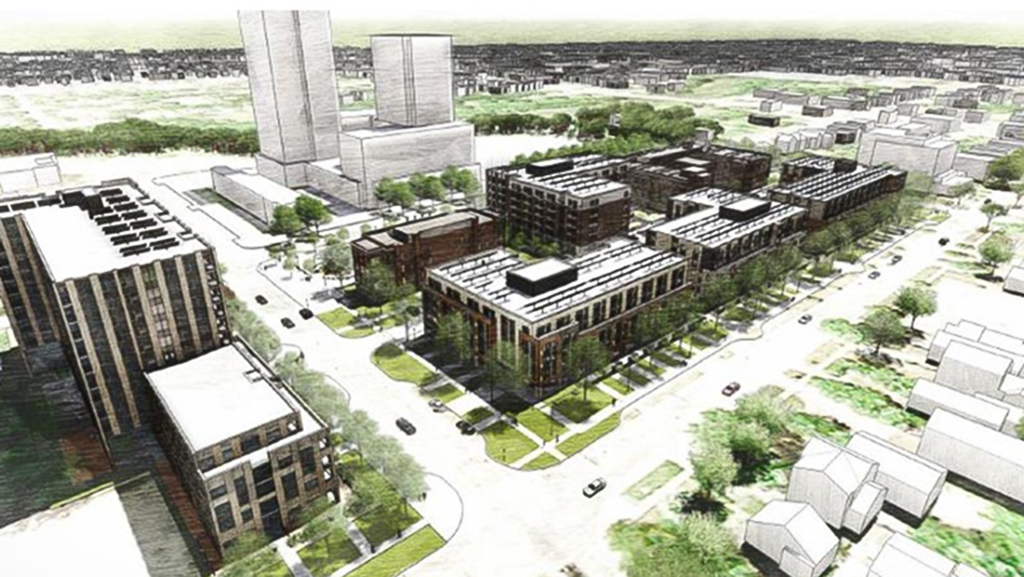
Foundation Capital proposes two 30-storey towers as the largest development along London’s Bus Rapid Transit routes, aiming for a transit-oriented approach.
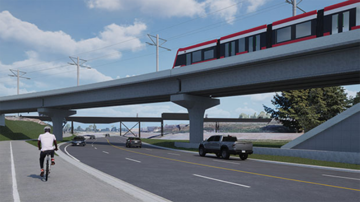
The Bus Rapid Transit (BRT) system in London is still a few years from completion, yet it is already influencing development along its main routes. Despite this potential, developers have been hesitant to embrace the benefits of building near the BRT, likely due to London’s smaller size compared to larger cities that have experienced significant transit-oriented development (TOD) around subways and light rail systems. However, local developer Foundation Capital is stepping forward with a substantial proposal along the Wellington Gateway route, which includes two towers reaching nearly 30 stories and housing a total of 1,004 units located just southeast of downtown in an area known as Old South.These towers are being designed with a focus on sustainability and cost-effectiveness, featuring minimal vehicular parking and ample long-term bicycle parking. Jeff Wybo, a principal at Foundation Capital, shared with local media that the decision to limit parking spaces stems from a desire to help Canadians save money. "We want the Canadians who are going to rent from us to save money, take the bus, and have money left over to invest, not have it all go to the landlord. It’s also going to be environmentally friendly,” he explained.
The BRT routes, which also include the East London Link and a Downtown Loop, have been zoned to encourage developments that promote transit use, such as those with reduced parking facilities. In the case of Foundation Capital, minimizing parking not only supports the goal of affordable housing but also reduces costs for the developer by approximately $60,000 per parking space. This financial strategy allows for more competitively priced apartments.
The proposal will be reviewed by the city’s planning committee in September, with construction anticipated to commence next summer. However, despite the promising developments, Mike Macaulay, the City of London’s manager of community improvement and urban regeneration, noted that there has not been a surge of applicants looking to develop along BRT routes. A consultant’s study identified high land costs as a primary barrier to development.
Macaulay indicated that to achieve viable development within the city, land amalgamation is often necessary, especially in or near the core where older or historic properties are prevalent. This means that developers interested in constructing taller buildings must navigate the complexities of acquiring multiple properties from various owners, complicating the development process.
The city's rapid growth in suburban areas—northwest, southeast, and southwest—has kept the development community busy, with many projects lined up for the next decade. According to Macaulay, developers are generally satisfied with the current market, focusing on large towers in more affordable areas on the outskirts of London where land is more accessible.
Foundation Capital’s project, which involves consolidating five parcels, exemplifies the potential for development in walkable neighborhoods close to downtown, catering to individuals who may not own vehicles. The decision to limit parking aligns with the anticipated demographic of future residents.
Macaulay expressed that while there is some level of transit-oriented development occurring, it is likely to be gradual in London, a mid-sized Ontario city with a population of 625,000. He clarified that significant support is often required for such initiatives, such as the city's Community Improvement Plan (CIP), which offers forgivable loans of $15,000 per unit (up to $1.5 million per project) funded by the London Housing Accelerator Fund, totaling $13 million aimed at facilitating around 700 units.
While the CIP has attracted over a dozen applicants for smaller and medium-sized buildings, Macaulay cautioned that the funding is limited, and the city council will need to consider whether to initiate new programs or increase financial support for future developments.
🏷️
London Ontario
Urban planning
Bus Rapid Transit
Foundation Capital
Affordable housing
land amalgamation
sustainable development
transit-oriented development
high-rise buildings
community improvement plan
← Previous Post
Construction Begins on New Mixed-Use Development in Vancouver’s Downtown Eastside2 months ago