Texas Universities Embark on Ambitious Expansion Plans
📅 2 months ago
Two leading universities in Texas are embarking on significant expansion initiatives designed to shape their future. Texas Southern University (TSU), located in Houston, is gearing up for its centennial celebration next year by unveiling a Campus Master Plan estimated at $1.7 billion. This comprehensive plan sets the stage for future campus growth, facility enhancements, improved educational delivery, and substantial capital investment in infrastructure. The plan outlines over 20 phased projects that will unfold over the next decade, aligning capital investments with the university’s strategic priorities developed through consultations with TSU stakeholders and the community. The objective is to create a roadmap for the future while preserving the institution's historic character, all while remaining adaptable to changing circumstances.
The identified capital projects within the plan aim to bolster student success, enhance workforce preparation, expand research capabilities, and foster community engagement, all integral components of TSU's Ascend 2030 strategic plan. Key priorities will focus on developing student-centered facilities, academic and research infrastructure, as well as residential and recreational amenities, and creating spaces that strengthen the connection between the university and the surrounding community. University president J. W. Crawford III emphasized, "The master plan aligns physical development with institutional strategic priorities, providing a stable framework that can be expanded over time."
The initial phase of TSU’s expansion, which is projected to cost $1.3 billion, will see the construction of three interconnected academic and research facilities: the Catalyst for Urban Transformation, the Nabrit Science Center, and the Health and Wellness Center. Construction is set to commence in 2025, with all three facilities scheduled to open in 2027 to coincide with the university's centenary. This first phase is supported by over $95 million in state funding. The subsequent phase, anticipated to unfold over the next three to five years, will include plans to replace the aging law school with a new Thurgood Marshall School of Law building, supported by a $10 million allocation from the Texas Legislature. Other projects in this phase include a new Aviation and Engineering building, an Ocean of Soul marching band facility, and additional residential housing.
A proposed football stadium with a capacity of 10,000 seats, along with a track complex, is also part of the master plan; however, this project will require private partnerships and fundraising efforts to move forward. Long-term aspirations for the campus include constructing two large multi-level parking garages, additional high-capacity student housing, and expanded museum spaces on campus, funded through university capital, donations, and private investments.
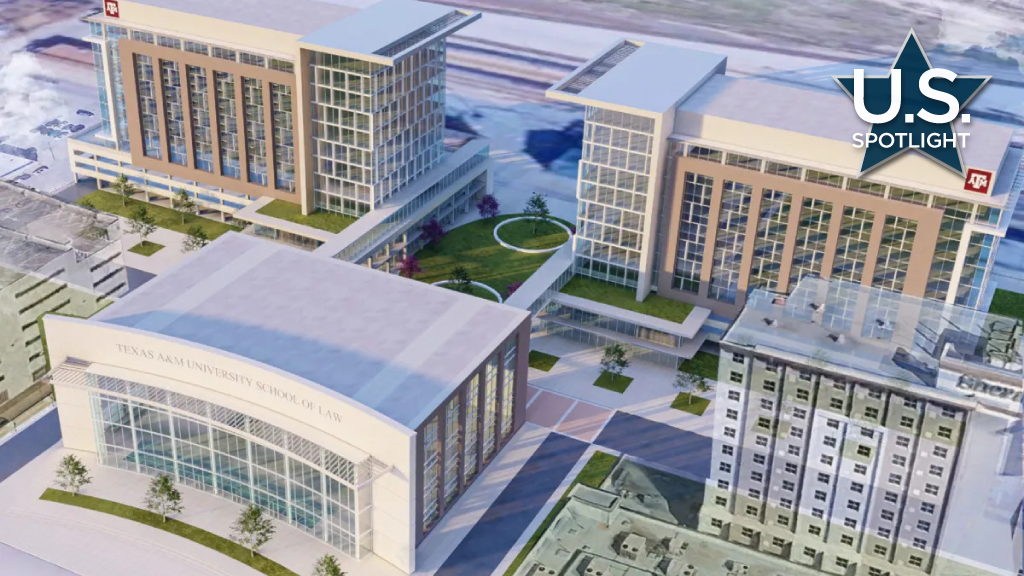
Meanwhile, in Fort Worth, the Texas A&M University System has inaugurated a new eight-story, 228,000-square-foot Law and Education Building. This facility marks a significant step in the expansion of the university's downtown Fort Worth campus. Following the opening ceremony, the university broke ground on the next phase of development, the Research and Innovation Building-A, which is part of a larger investment strategy totaling $1.5 billion in the Switchyard Innovation District. This district aims to create a hub for urban technology, drawing inspiration from renowned academic innovation centers like MIT’s Kendall Square and Georgia Tech’s Tech Square.
The 11-story Research and Innovation Building-A is expected to be completed by 2029 and is designed to foster collaboration among university researchers, state agencies, and private-sector partners. The Switchyard Innovation District will focus on workforce training, graduate-level innovation, and the commercialization of new technologies, moving away from traditional undergraduate campus models.
Local reports indicate that the Switchyard Innovation District could generate approximately 25,000 jobs and an estimated $3 billion in annual economic activity, with developers already purchasing nearby properties in anticipation of the project’s completion. Bobby Ahdieh, the chief operating officer for Texas A&M – Fort Worth, noted the significance of the name 'Switchyard,' which reflects Fort Worth's historical role as a rail hub, while also symbolizing a place of collaboration and innovation. Plans for the district include additional buildings such as a Performance, Visualization and Fine Arts Building featuring a virtual production studio, and a Gateway Building to replace the current law school building, enhancing the campus's connectivity to the city.
These ambitious projects at both Texas Southern University and Texas A&M University in Fort Worth represent a pivotal shift in the construction landscape within Texas, signaling a move toward alternative project delivery methods. The successful execution of the $1.7 billion master plan at TSU will depend significantly on Public-Private Partnerships (P3s), private donations, and further legislative funding, creating opportunities for developers and tier-one contractors who can provide innovative financing and operational strategies. As these projects progress, the construction industry in the Houston area and beyond stands to benefit substantially from the influx of activity and investment.
The identified capital projects within the plan aim to bolster student success, enhance workforce preparation, expand research capabilities, and foster community engagement, all integral components of TSU's Ascend 2030 strategic plan. Key priorities will focus on developing student-centered facilities, academic and research infrastructure, as well as residential and recreational amenities, and creating spaces that strengthen the connection between the university and the surrounding community. University president J. W. Crawford III emphasized, "The master plan aligns physical development with institutional strategic priorities, providing a stable framework that can be expanded over time."
The initial phase of TSU’s expansion, which is projected to cost $1.3 billion, will see the construction of three interconnected academic and research facilities: the Catalyst for Urban Transformation, the Nabrit Science Center, and the Health and Wellness Center. Construction is set to commence in 2025, with all three facilities scheduled to open in 2027 to coincide with the university's centenary. This first phase is supported by over $95 million in state funding. The subsequent phase, anticipated to unfold over the next three to five years, will include plans to replace the aging law school with a new Thurgood Marshall School of Law building, supported by a $10 million allocation from the Texas Legislature. Other projects in this phase include a new Aviation and Engineering building, an Ocean of Soul marching band facility, and additional residential housing.
A proposed football stadium with a capacity of 10,000 seats, along with a track complex, is also part of the master plan; however, this project will require private partnerships and fundraising efforts to move forward. Long-term aspirations for the campus include constructing two large multi-level parking garages, additional high-capacity student housing, and expanded museum spaces on campus, funded through university capital, donations, and private investments.
Meanwhile, in Fort Worth, the Texas A&M University System has inaugurated a new eight-story, 228,000-square-foot Law and Education Building. This facility marks a significant step in the expansion of the university's downtown Fort Worth campus. Following the opening ceremony, the university broke ground on the next phase of development, the Research and Innovation Building-A, which is part of a larger investment strategy totaling $1.5 billion in the Switchyard Innovation District. This district aims to create a hub for urban technology, drawing inspiration from renowned academic innovation centers like MIT’s Kendall Square and Georgia Tech’s Tech Square.
The 11-story Research and Innovation Building-A is expected to be completed by 2029 and is designed to foster collaboration among university researchers, state agencies, and private-sector partners. The Switchyard Innovation District will focus on workforce training, graduate-level innovation, and the commercialization of new technologies, moving away from traditional undergraduate campus models.
Local reports indicate that the Switchyard Innovation District could generate approximately 25,000 jobs and an estimated $3 billion in annual economic activity, with developers already purchasing nearby properties in anticipation of the project’s completion. Bobby Ahdieh, the chief operating officer for Texas A&M – Fort Worth, noted the significance of the name 'Switchyard,' which reflects Fort Worth's historical role as a rail hub, while also symbolizing a place of collaboration and innovation. Plans for the district include additional buildings such as a Performance, Visualization and Fine Arts Building featuring a virtual production studio, and a Gateway Building to replace the current law school building, enhancing the campus's connectivity to the city.
These ambitious projects at both Texas Southern University and Texas A&M University in Fort Worth represent a pivotal shift in the construction landscape within Texas, signaling a move toward alternative project delivery methods. The successful execution of the $1.7 billion master plan at TSU will depend significantly on Public-Private Partnerships (P3s), private donations, and further legislative funding, creating opportunities for developers and tier-one contractors who can provide innovative financing and operational strategies. As these projects progress, the construction industry in the Houston area and beyond stands to benefit substantially from the influx of activity and investment.
🏷️
community engagement
Public-Private Partnerships
Texas Southern University
Houston Construction
Campus Expansion
Research Facilities
Fort Worth Development
Student Success
educational infrastructure
Texas A&M University
← Previous Post
Development Along London’s Bus Rapid Transit Network: A Look at Foundation Capital’s Ambitious Project2 months ago