Tank Hill Project: Rebuilding Infrastructure with Climate Resilience in Mind
📅 2 months ago
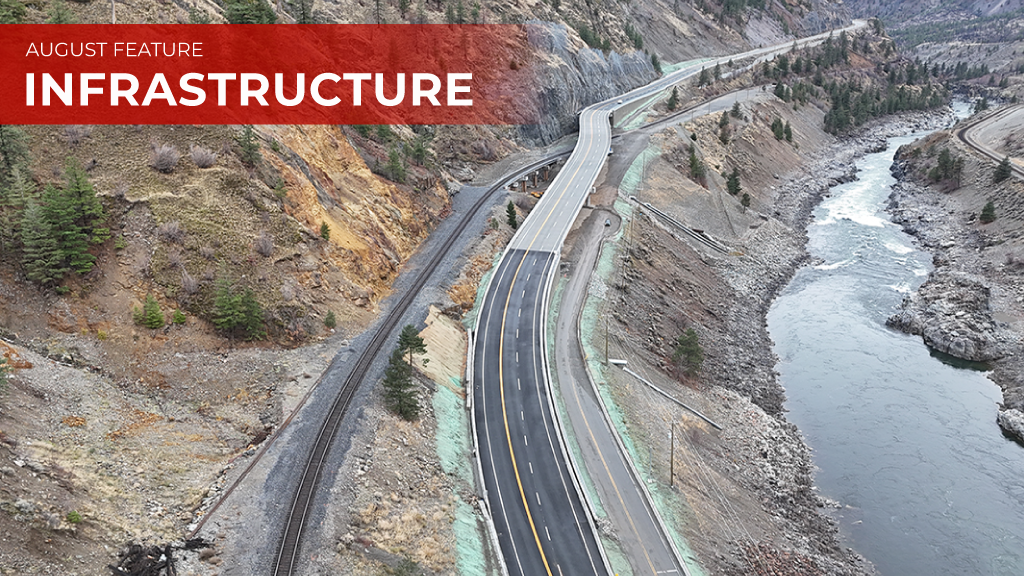
The Tank Hill Project on Highway 1 in British Columbia has successfully restored vital transportation infrastructure following severe damage from a winter storm, employing innovative engineering and collaborative project management.
In November 2021, a severe winter storm wreaked havoc on the Tank Hill Rail Underpass on Highway 1, located near the village of Lytton in southern British Columbia. The storm caused significant destruction to both rail and road infrastructure, effectively severing two of British Columbia's primary transportation corridors. In response to the crisis, the provincial government declared a state of emergency, which remained in effect until January 18, 2022. This flooding disaster followed a tumultuous summer during which Lytton experienced an unprecedented high temperature of 49.6°C, alongside severe wildfires that devastated 90 percent of the village. The extreme heat had weakened the watershed soils, exacerbating the runoff and debris flow that ensued during the storm.Although temporary solutions were implemented quickly to restore traffic flow, the need for a permanent grade-separated solution became evident. The Tank Hill project was ultimately completed in October 2025, one month ahead of schedule, and involved the realignment of a three-lane section of Highway 1 over the railway and creek channel. At the heart of this solution was a newly constructed 279-metre structural viaduct, which was designed with a 24-degree skew to accommodate the challenging geographical constraints of the area. This project successfully reinstated two critical transportation arteries in the Fraser Canyon, an area known for its high-risk and constrained infrastructure.
The Tank Hill project was delivered through a collaborative effort known as the Tank Hill Alliance, which consisted of the BC Ministry of Transportation and Transit (MOTT), Western Highway Infrastructure/Ledcor, McElhanney, and Associated Engineering. The alliance model utilized for this project is a unique project delivery approach where the owner, contractor, and designers work collaboratively as a single integrated team. This method allowed for shared risks, responsibilities, and decision-making, which proved essential given the project's urgency and complexity.
The alliance model facilitated rapid responses to challenges, enabling collaborative decision-making throughout the planning, design, construction, and completion phases. This approach led to several benefits, including enhanced problem-solving capabilities, improved safety during the design phase, better constructability, and a greater capacity for incorporating innovative and climate-adaptive measures. While this model is relatively uncommon in British Columbia’s highway construction projects, its application in the Tank Hill project was deemed particularly advantageous given the specific demands of the site.
Innovative engineering techniques were applied to address the complex challenges faced, including safety requirements, railway clearance constraints, and climate-resilience objectives. The Tank Hill project was recognized for its engineering excellence, winning the 2026 Lieutenant Governor’s Award in the Bridges Category from the Association of Consulting Engineering Companies British Columbia. Key innovations included the construction of a 279-metre structural viaduct to span the Canadian Pacific Kansas City (CPKC) railway and a creek channel, the use of custom variable-depth steel box girders that taper for optimal railway clearance, and the implementation of approximately 290 metres of mechanically stabilized earth retaining walls reaching heights of up to 11 metres. Additionally, extensive rockfall protection systems were incorporated, including anchored mesh, slope scaling, and catchment walls.
Despite the challenges presented by geotechnical uncertainty, slope stability, and the need for effective traffic management, the alliance successfully maintained normal operations for both roads and rail during the project. Careful staging and coordination with CPKC allowed for minimal disruption. The team evaluated 16 alignment alternatives before finalizing the optimal solution, developing customized designs to suit the variable ground conditions while implementing significant rockfall mitigation and slope stabilization measures.
Ultimately, the Tank Hill project represented more than just the reconstruction of a highway following the 2021 atmospheric river event; it embodied a commitment to building back better. The infrastructure developed aims to be safer, more climate-resilient, and more effectively connected to the communities it serves.
🏷️
Tank Hill
climate resilience
Infrastructure
collaborative project delivery
British Columbia
safety measures
engineering excellence
Highway Construction
environmental adaptation
Transportation
← Previous Post
New Affordable Co-operative Housing Project in Cambridge Set to Break Ground2 months ago
Next Article →
Addressing Housing Shortages in Northern Canada: Innovative Solutions for Unique Challenges2 months ago